
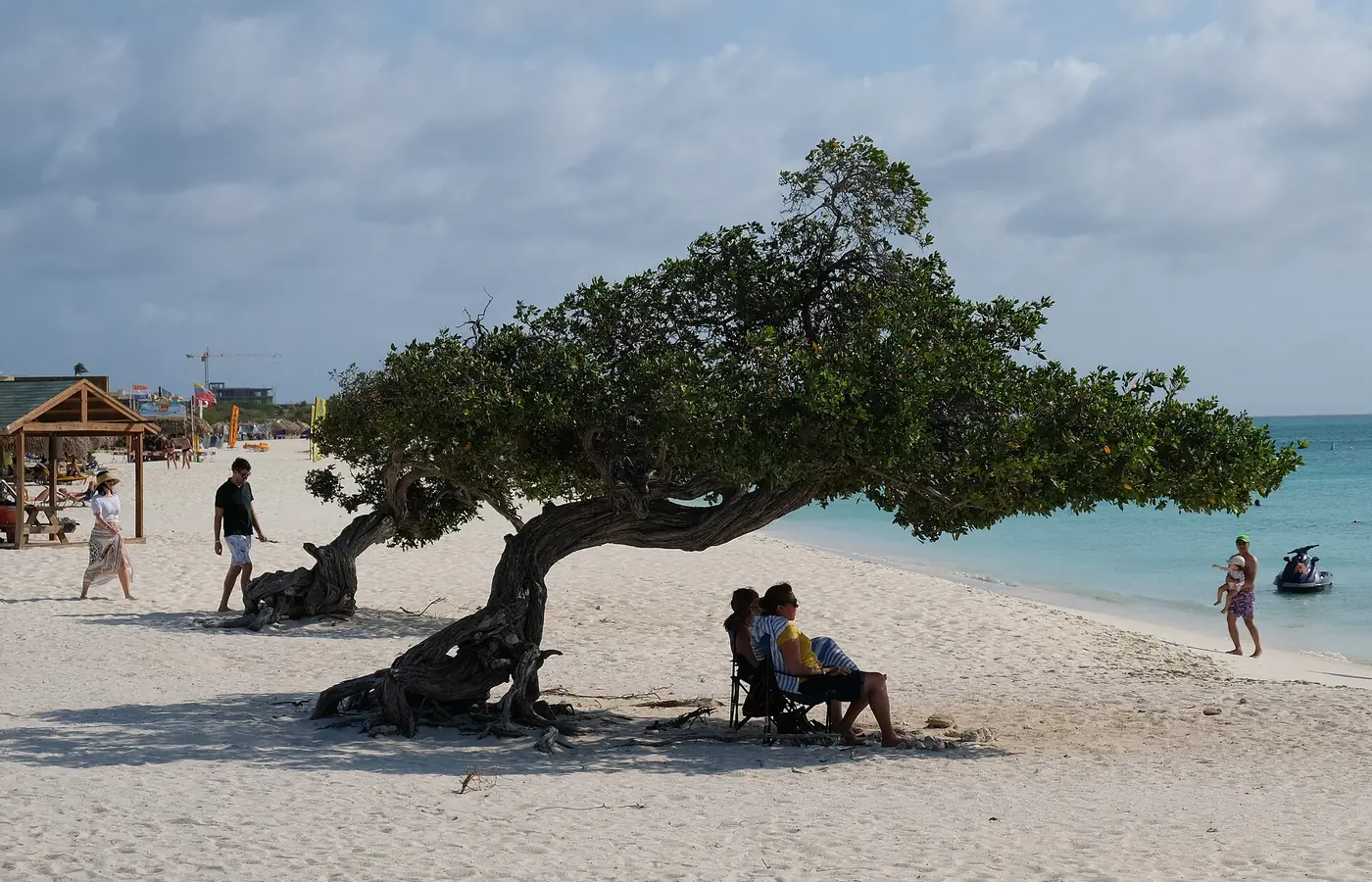
What Aruba is known for
Aruba is celebrated for its warm, sunny weather and reliable trade winds, which keep the southern Caribbean climate comfortable throughout the year. The island's calm leeward coast features expansive stretches of soft white sand, including Eagle Beach and Palm Beach, where turquoise waters meet shoreline dotted with windswept fofoti trees.
Beyond the sheltered resort strips lies a stark and dramatic interior. Arid plains filled with towering cacti, limestone ridges, and wind-sculpted rock formations roll down to the rugged northern coast, where powerful waves break against wild bluffs. This contrast of tranquil shores and desert wilderness defines the island's character.
A short history
The island's earliest recorded inhabitants were the Caquetío people of the Arawak nation, who migrated from South America centuries before European contact. They lived in small fishing and farming settlements and left behind painted pictographs in limestone caves that can still be viewed today.
Spanish explorers arrived in 1499, claiming the territory for Spain. Because the arid island lacked precious metals and had scarce fresh water, the Spanish largely treated it as a ranching outpost. In the 1630s, during the Eighty Years' War, the Dutch West India Company took control, establishing Dutch authority that remains an enduring foundation of the island's civic culture.
During the 19th and early 20th centuries, Aruba's economy shifted through periods of aloe vera cultivation, brief gold mining operations, and large-scale oil refining. The capital, Oranjestad, grew steadily around Fort Zoutman, a defensive structure completed in 1798 to protect the harbour from privateers.
In 1986, Aruba officially separated from the Netherlands Antilles to become an autonomous constituent country within the Kingdom of the Netherlands. This status allowed the island to chart its own course while maintaining strong Dutch institutional and constitutional ties, paving the way for a modern economy anchored in international travel and conservation.
Neighbourhoods
Oranjestad, the island's capital, features pastel-coloured Dutch colonial facades topped with decorative gables alongside breezy pedestrian streets. Visitors can explore quiet civic plazas, government halls, and the historical harbour where fishing vessels and catamarans dock side by side.
Further south along the coast, San Nicolas presents a different atmosphere. Long shaped by the legacy of its former oil refinery, the town has evolved into an open-air art district where large-scale street murals by international and local painters cover the walls of historic buildings, accompanied by community cultural centres.
Food and drink
Aruban food reflects centuries of cross-cultural exchange between Indigenous, European, and Afro-Caribbean cooking styles. A traditional staple is keshi yena, a baked dish of seasoned pulled poultry or beef with raisins and olives, enclosed in a melted crust of Dutch Gouda or Edam cheese. Meals are often served with pan bati, a tender cornmeal flatbread, or funchi, a thick polenta-like corn porridge. Fresh catches such as red snapper and mahi-mahi are typically prepared with Creole sauces made from tomatoes, onions, and sweet peppers.
Music, arts and culture
The island's identity is voiced through Papiamento, a creole language blending Portuguese, Spanish, Dutch, and African dialects that is spoken alongside Dutch and English. Traditional music incorporates distinct island rhythms such as tumba, calypso, and the waltz-like dande folk songs traditionally sung to welcome the New Year. Annual Carnival celebrations mark the cultural calendar with brass bands, costumed road marches, and community street parties that draw participants from across the island.
Top things to do
Spending time along the sheltered leeward coast is a highlight for most visitors, with calm, warm waters suitable for swimming, snorkelling, and paddleboarding. In Oranjestad, Fort Zoutman and the adjoining Willem III Tower stand as the island's oldest surviving Dutch colonial structures, serving as key historical landmarks overlooking the harbour.
On the northern coast, the historic California Lighthouse offers wide viewpoints across sand dunes and the open sea. Inland, the Alto Vista Chapel sits in quiet isolation on a desert hillside, traditionally considered the site of Aruba's first Catholic church, built in 1750; the current chapel dates to 1952.
Day trips
Arikok National Park covers roughly twenty percent of the island and makes an easy day trip to explore protected desert hills, limestone caves with ancient petroglyphs at Fontein Cave, and the rugged windward coast. The Ayo and Casibari rock formations provide walking paths among massive diorite boulders that offer sweeping views across the island. Along the southern shoreline, the protected lagoons of Mangel Halto and Baby Beach offer shallow coral reefs that make rewarding stops for an afternoon of quiet snorkelling.
Before you go
Entry rules and travel advice can change. Confirm details with official sources, including the Government of Canada's advice for Aruba, before you go.
Best time to go
Aruba lies outside the main Atlantic hurricane belt and is generally drier than many Caribbean islands, with a consistently warm climate. The official Atlantic hurricane season is still 1 June to 30 November; the island can be affected, but less often than islands further west or north. Confirm current official advice.
Getting there from Canada
Flights from Canada arrive at Queen Beatrix International, sometimes seasonally nonstop, otherwise via a U.S. or regional hub. The airport is near Oranjestad.
Official travel advice
Read the Government of Canada's Aruba travel advice before you go. Rules and conditions can change.
Search flights, cars, tours and airport rides under Plan your trip below. Checkout is on the partner's site.