
What Banff is known for
Banff is a mountain community set high in the Bow Valley of the Canadian Rockies, completely surrounded by Canada’s oldest national park. Steep limestone peaks, including Mount Rundle and Cascade Mountain, rise directly behind the streets, giving the town a distinct sense of place.
Visitors come to Banff for its immediate connection to wilderness and outdoor life. Clear glacier-fed rivers, evergreen forests, and steaming natural mineral springs sit just minutes away from the town centre, drawing hikers, skiers, and sightseers through every season.
A short history
Long before European settlement, the Bow Valley was an important gathering and hunting ground for Indigenous peoples. Members of the Stoney Nakoda, Siksika, Kainai, Piikani, Tsuut'ina, and Ktunaxa nations travelled the river corridors and used the natural thermal waters for healing and ceremony.
In the 1880s, construction of the transcontinental Canadian Pacific Railway brought railway workers into the valley, where they located thermal hot springs on the lower slopes of Sulphur Mountain. Recognising the tourism potential of the area, the federal government created a small protected reserve around the springs in 1885, marking the birth of Canada’s national park system.
As the railway expanded passenger service, Banff grew as a health resort and mountaineering hub. European mountain guides were hired to teach climbing techniques, trails were cut through the passes, and the settlement developed into a summer retreat.
During the twentieth century, Banff shifted from a seasonal outpost to a permanent alpine town with winter recreation, road links, and international visitors. To balance conservation with community needs, Banff incorporated as a self-governing municipality in 1990, operating under federal park guidelines that strictly limit townsite expansion.
Neighbourhoods
The core of the town centres on Banff Avenue, a wide thoroughfare lined with stone-and-timber architecture, public spaces, and open views north toward Cascade Mountain. Footbridges connect this bustling commercial avenue to the quieter south bank of the Bow River, where green parks and residential lanes wind along the water.
Farther up the valley slopes, the Tunnel Mountain district offers forested viewpoints and trailheads close to cabin-style lodgings and open campgrounds. On the opposite hillside, the Middle Springs area provides a quiet residential perspective, bordering protected wildlife corridors where deer and elk regularly pass through the trees.
Food and drink
Alberta’s ranching traditions shape much of the food culture in Banff, with Alberta beef, bison, and elk taking central billing on local menus. Mountain dining also draws on Canadian wilderness staples like cold-water trout, wild mushrooms, and Saskatoon berries cooked into sauces and baked goods. Drink options regularly feature craft beers brewed locally with Rocky Mountain glacial water, along with regional wines from western Canadian valleys.
Music, arts and culture
Banff holds an active cultural scene that belies its small resident population, anchored by the Banff Centre for Arts and Creativity on the slopes of Tunnel Mountain. This institution hosts international artists, musicians, and writers, as well as the annual Banff Centre Mountain Film and Book Festival, which celebrates wilderness literature and adventure filmmaking. Heritage also features prominently in town at the Whyte Museum of the Canadian Rockies, which preserves mountain art and settler archives, and the Banff Park Museum, a timber building from 1903 showcasing vintage wildlife specimens.
Top things to do
Public sights around the townsite showcase the area’s natural features and history. Visitors can tour the Cave and Basin National Historic Site, the original birthplace of the park, where thermal water still bubbles out of the rock into open-air pools. A short distance away, the warm waters of the Banff Upper Hot Springs provide an open-air bath overlooking the valley from Sulphur Mountain.
Natural landmarks close to town include Bow Falls, where the river crashes over low limestone ledges, and the tranquil Vermilion Lakes, which reflect Mount Rundle in calm morning waters. Walkers can ascend the gentle switchbacks of the Tunnel Mountain Trail for panoramic views across the townsite, or travel northeast to the wide shores of Lake Minnewanka for walking paths along the water.
Day trips
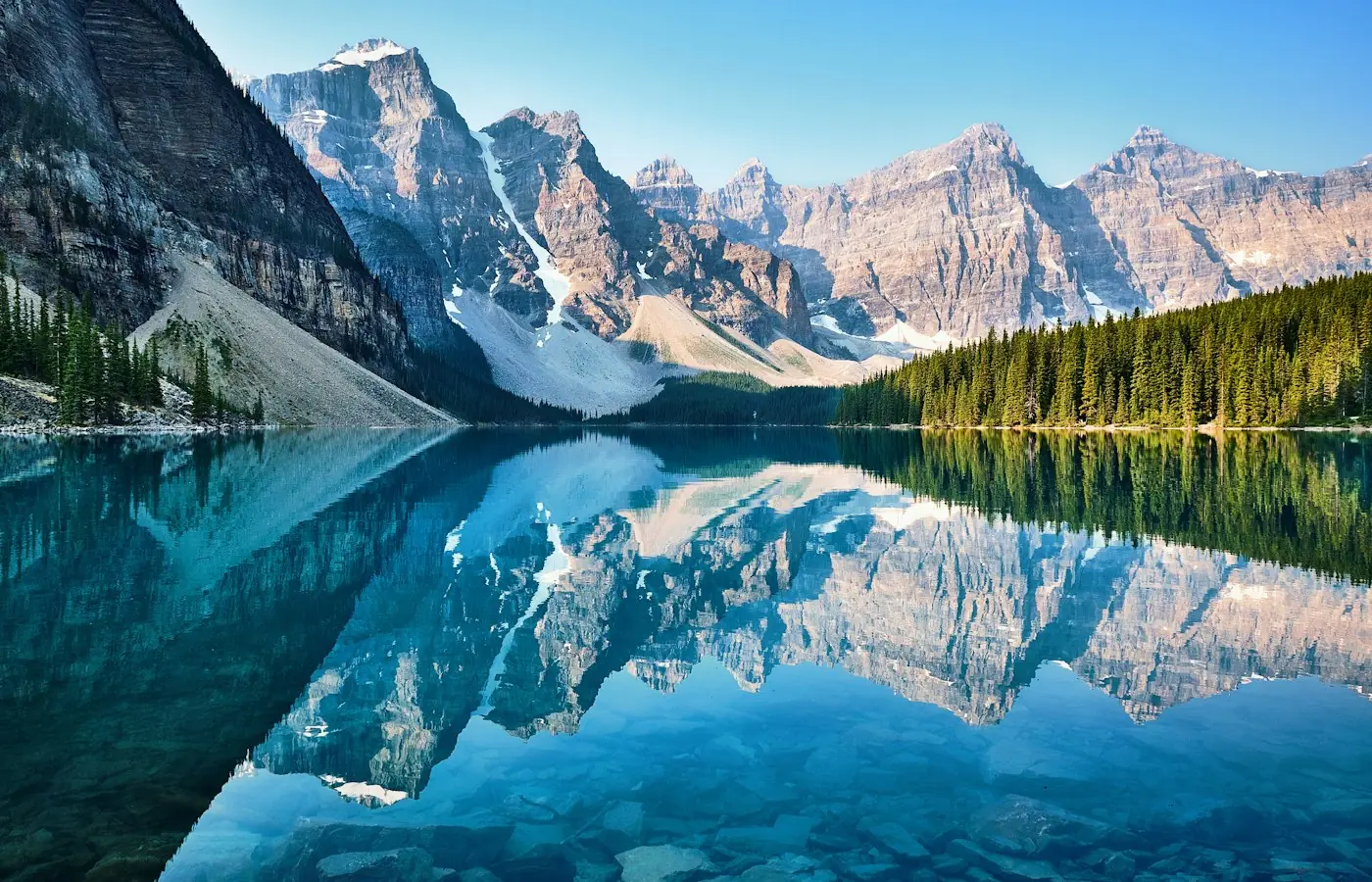
Day trips from Banff offer direct access to some of the most celebrated landscapes in the Canadian Rockies. Lake Louise and Moraine Lake are an easy day trip to the northwest, known for their bright turquoise waters framed by glaciers and sheer rock walls. Continuing west across the Continental Divide brings travellers to Yoho National Park, where the thundering Takakkaw Falls and Emerald Lake await exploration. South along the highway, Kootenay National Park features the dramatic canyon walls of Marble Canyon and mineral pools, while the neighbouring mountain community of Canmore lies just down the valley for further trail walking and quiet riverfront parks.
Before you go
Confirm trail, road and park-entry details with official Parks Canada sources before you go.
Best time to go
Summer is the main hiking and lake season; official Parks Canada shuttle, parking and often reservation rules apply at popular lakes and trails, and they change. Fall can bring colour and quieter trails, with earlier snow at height. Winter is for skiing, ice walks and short daylight. Spring melt and avalanche risk shape shoulder-season plans. Always use Parks Canada notices, not a travel shop, for conditions.
Getting there from Canada
Most visitors fly into Calgary and drive or take a scheduled transfer west on the Trans-Canada (about one and a half to two hours in good conditions). Winter driving in the Rockies needs a real plan. The Banff townsite itself is compact and walkable; a car or official shuttle helps for lakes and trailheads.
Official travel advice
Travelling inside Canada does not use a country travel-advice page. Use official park, ferry and highway notices where they are mentioned above.
Search flights, cars, tours and airport rides under Plan your trip below. Checkout is on the partner's site.