
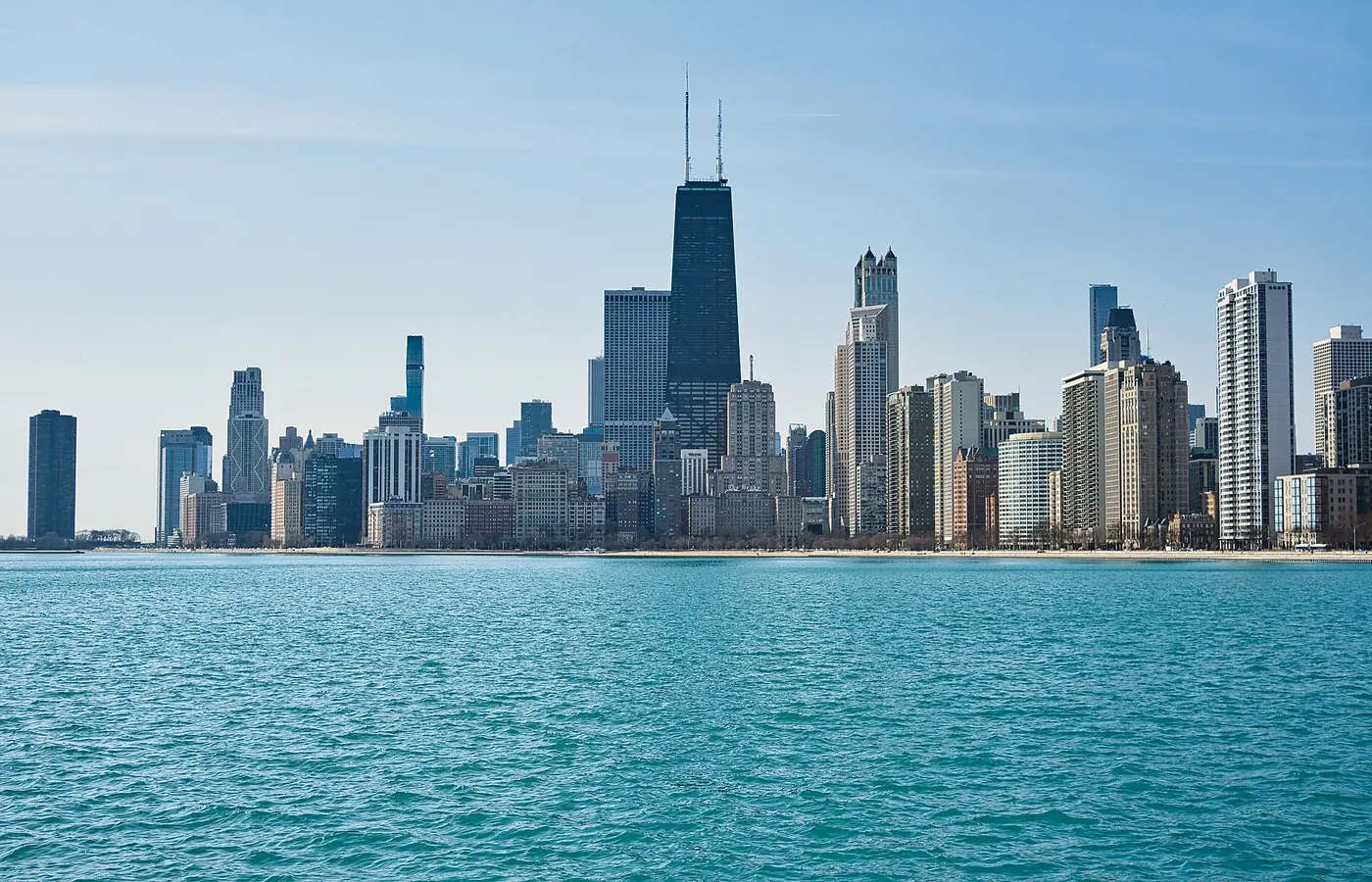
What Chicago is known for
Chicago stands on the southwestern shore of Lake Michigan, where sweeping water views meet a dramatic grid of historic and contemporary architecture. The city's waterfront and downtown core feel expansive, defined by miles of public parks, public sand beaches, and an engineered river that cuts directly through the centre of the metropolis.
Beyond the skyline, Chicago is known for its distinct collection of communities, rich musical heritage, and deep industrial roots. It offers the cultural scale of a global centre while retaining a down-to-earth Midwestern character, making it welcoming and straightforward for visitors to explore.
A short history
The Chicago area was long inhabited by Indigenous nations, including the Potawatomi, Miami, and Illinois, who used the region as a portage connecting the Great Lakes to the Mississippi River basin. The name Chicago derives from the Algonquian word "shikaakwa," referring to wild leeks that grew along the riverbanks. In the late 18th century, trader Jean Baptiste Point du Sable established the first permanent non-Indigenous settlement near the mouth of the Chicago River.
Incorporated as a city in 1837, Chicago expanded rapidly as a transportation hub for grain, lumber, and livestock. In October 1871, the Great Chicago Fire destroyed thousands of buildings and left nearly a third of the population homeless. The massive rebuilding effort drew architects and engineers who pioneered steel-frame construction, giving birth to the modern skyscraper.
The 1893 World's Columbian Exposition showcased the rebuilt city to an international audience. Through the late 19th and early 20th centuries, substantial European immigration and the Great Migration of African Americans from the southern United States reshaped the city's industry, culture, and civic life.
A landmark 1909 city plan by Daniel Burnham helped establish Chicago's extensive network of lakefront parks, ensuring the shoreline remained open and accessible to the public. That civic commitment continues to define the landscape of public spaces and architectural design found across the city today.
Neighbourhoods
The Loop serves as the downtown commercial core, bordered by the Chicago River, Lake Michigan, and elevated train tracks. North of the river, River North features converted warehouses, art galleries, and residential towers, leading into the leafy, historic residential avenues of Lincoln Park, known for its red-brick row houses and lakefront green space.
To the west, districts such as Wicker Park and Logan Square are characterized by historic greystone buildings, independent shops, and community markets. Further south, Bronzeville preserves a significant legacy of African American history and literature, while Pilsen is recognized for its colourful street murals and Mexican community heritage, and Hyde Park surrounds the Gothic-style campus of the University of Chicago.
Food and drink
Chicago's food culture reflects its working-class roots and immigrant history. Deep-dish pizza, baked in a high-sided pan with a crisp crust, mozzarella cheese, and crushed tomatoes, is a well-known local creation, served alongside thin-crust tavern-style pizza cut into squares. Street food traditions are equally prominent, led by the Chicago-style hot dog—served on a poppy-seed bun with yellow mustard, neon green relish, chopped onions, tomato wedges, a pickle spear, sport peppers, and celery salt, without ketchup—and the Italian beef sandwich, piled with thinly sliced, seasoned roast beef soaked in pan gravy.
Music, arts and culture
Chicago has shaped several major musical movements, beginning with the electrification of Delta blues by southern migrants, which gave rise to the Chicago blues sound. The city also fostered foundational scenes in jazz, gospel, and the development of house music during the 1980s. Its cultural life is anchored by classical institutions such as the Chicago Symphony Orchestra and the Lyric Opera of Chicago, as well as a celebrated tradition of improvisational and ensemble theatre that has influenced comedy and stage acting across North America.
Top things to do
Millennium Park sits in the heart of the city and features Cloud Gate, the reflective steel sculpture by Anish Kapoor, alongside open-air concert pavilions and manicured gardens. Immediately adjacent, the Art Institute of Chicago houses an expansive collection of Impressionist and Post-Impressionist art, alongside American masterworks. Architecture-focused river cruises offer an engaging perspective on the skyline, passing landmarks like the Wrigley Building, the Tribune Tower, and Marina City.
Along the lake, the paved Chicago Lakefront Trail provides a car-free route past city beaches and harbours. South of downtown, the Museum Campus groups together the Field Museum of Natural History, the Shedd Aquarium, and the Adler Planetarium on a scenic promontory overlooking the water. To the north, Lincoln Park Zoo operates in a historic garden setting, while Navy Pier extends into Lake Michigan with cultural events and lake viewing points.
Day trips
Several rewarding excursions sit just outside the city. A short train ride north takes visitors to Evanston and the lakefront campus of Northwestern University, as well as the domed Bahá'í House of Worship in Wilmette. West of the city, Oak Park is an easy day trip via the rapid-transit system, featuring a notable concentration of homes designed by Frank Lloyd Wright. For outdoor enthusiasts, Indiana Dunes National Park is an easy day trip around the southern tip of Lake Michigan, offering hiking trails, tall sand dunes, and diverse shoreline ecosystems.
Before you go
Confirm entry rules for the United States, including any documentation Canadians need, with official sources before you go. The Government of Canada's travel advice for the United States is a starting point, alongside U.S. government entry pages.
Best time to go
Summers are warm and winters can be cold, windy and snowy on Lake Michigan. Late spring through early fall is the usual window for waterfront walks; winter still works if you dress for it.
Getting there from Canada
Most flights from Canada arrive at O'Hare International; some use Midway. There are frequent links from Toronto and other Canadian hubs, sometimes with a short connection.
Official travel advice
Read the Government of Canada's United States travel advice before you go. Rules and conditions can change.
Search flights, cars, tours and airport rides under Plan your trip below. Checkout is on the partner's site.