
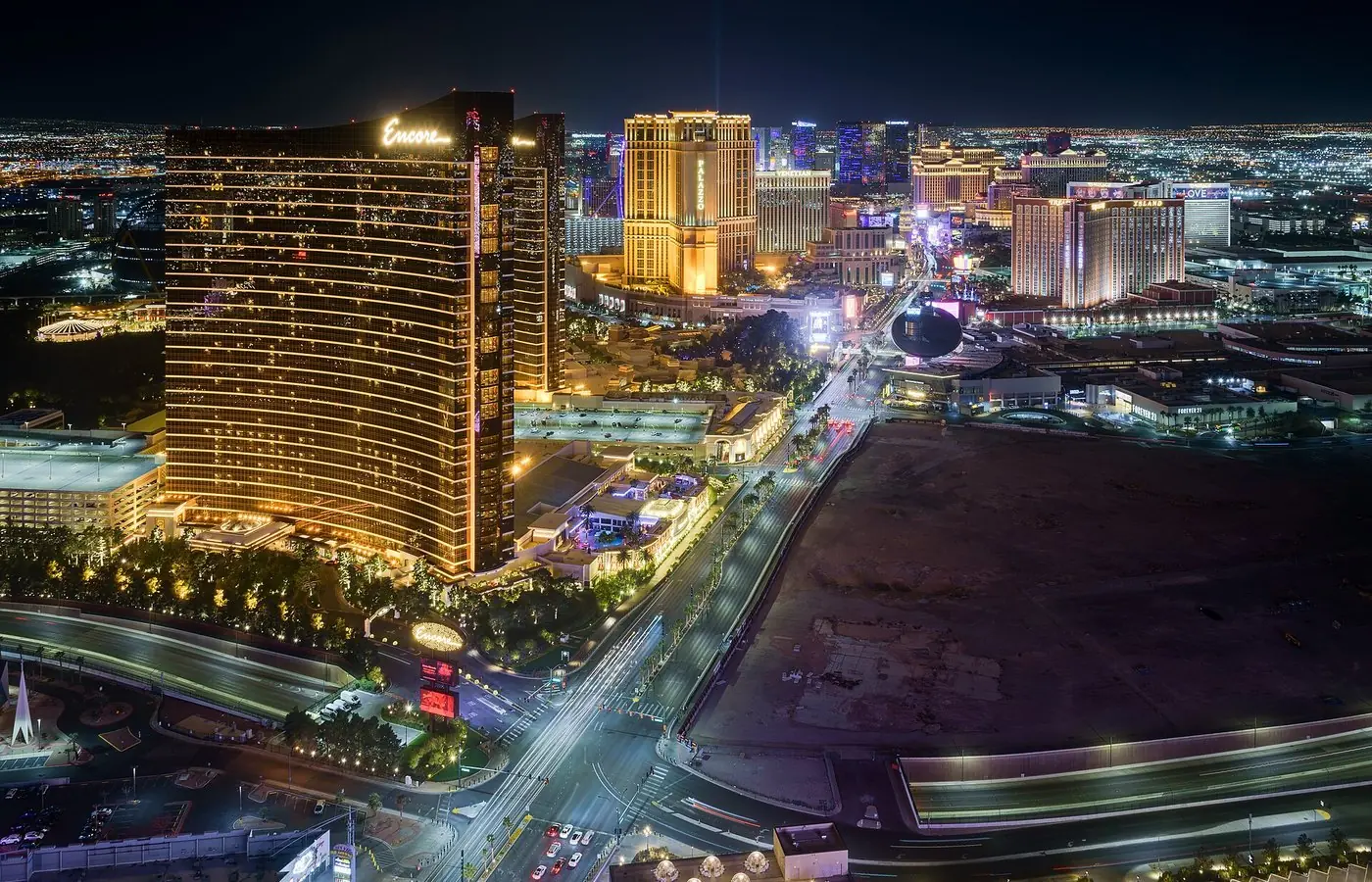
What Las Vegas is known for
Las Vegas is an oasis in the southern Nevada desert, defined by its illuminated skyline and around-the-clock energy. The city draws millions of international visitors each year for its elaborate stage productions, sprawling entertainment complexes, and lively pedestrian walkways.
Beyond the glare of neon signs, the city is framed by the rugged Spring Mountains and the open expanses of the Mojave Desert. Visitors come to experience a unique blend of world-class entertainment, sunny weather, and a distinct atmosphere built entirely around hospitality.
A short history
For centuries before European arrival, the Las Vegas Valley was home to the Southern Paiute, who relied on natural artesian springs that created verdant wetlands in the dry desert basin. Traders travelling the Old Spanish Trail encountered the area in the early 19th century and named it Las Vegas, which translates to "the meadows.", which translates to "the meadows."
The modern settlement began to take shape in 1905, when the San Pedro, Los Angeles and Salt Lake Railroad auctioned off land parcels around the valley's dependable water supply. In 1931, the Nevada state legislature legalised casino gaming, coinciding with the federal construction of the nearby Hoover Dam on the Colorado River, which brought thousands of workers and vital infrastructure to the fledgling desert city.
Following the Second World War, resort development shifted southward beyond the city limits along Las Vegas Boulevard. The opening of large-scale integrated resorts in the late 20th century transformed the corridor into a modern global resort centre, expanding the local economy far beyond its railway and mid-century origins.
Neighbourhoods
The Strip, situated primarily in the unincorporated communities of Paradise and Winchester along Las Vegas Boulevard South, serves as the main entertainment corridor. It features high-density clusters of multi-storey resorts, pedestrian sky bridges, and elaborate street-facing displays designed for foot traffic.
Downtown Las Vegas, located a short distance north, offers a classic urban grid anchored by Fremont Street. This district preserves historic mid-century neon signage and features an open-air pedestrian mall with a modern illuminated canopy. Just south of downtown lies the Arts District, an area of converted warehouses, local art galleries, and colourful murals that provide a quieter, community-oriented counterpoint to the resort corridors.
Food and drink
The food culture of Las Vegas combines heritage resort traditions with regional flavours of the American Southwest. Classic fixtures of local dining history include the traditional shrimp cocktail and extensive buffet spreads, both popularized during the mid-century resort era. The valley's diverse population has also fostered a rich Mexican food scene known for slow-cooked birria and street-style tacos, while an extensive Chinatown district along Spring Mountain Road highlights regional Chinese, Vietnamese, and Korean cooking.
Music, arts and culture
Live performance forms the backbone of cultural life in the valley, ranging from long-running musical headliner residencies to large-scale theatrical acrobatics. The city's visual history is preserved at the Neon Museum, an outdoor exhibition space dedicated to rescued commercial signage, and the Mob Museum, which documents organized crime and law enforcement history in America. Local fine arts flourish through regular gallery walks in the Arts District and classical concerts hosted at downtown performing arts centres.
Top things to do
A stroll along Las Vegas Boulevard lets visitors take in public water fountains, elaborate floral conservatory displays, and architectural tributes to global landmarks. At the southern edge of the boulevard, the historic "Welcome to Fabulous Las Vegas" sign remains a favourite public stop for photos.
In the downtown area, visitors can walk under the illuminated overhead canopy of the Fremont Street pedestrian mall. For a deeper look at the natural and human history of the valley, the Springs Preserve features desert botanical gardens, walking trails, and interpretive exhibits located around the city's original water springs.
Day trips
The surrounding Mojave Desert provides dramatic natural getaways within easy reach of the city. Red Rock Canyon National Conservation Area features towering red sandstone cliffs and a scenic driving loop an easy day trip to the west. Hoover Dam and the Lake Mead National Recreation Area showcase massive civil engineering and desert lake views to the southeast. To the north, Valley of Fire State Park displays ancient petroglyphs and bright Aztec sandstone, while the high elevations of Mount Charleston provide forested hiking trails and cool alpine air within a day's drive.
Before you go
Show schedules, venue hours and road conditions change, check official sources before you go. We don't list prices or reviews here.
Best time to go
The Mojave Desert setting means very hot summers and milder winters. Spring and fall are often more comfortable for walking the Strip. Midsummer heat is intense; carry water and check heat advisories.
Getting there from Canada
Flights from Canada usually arrive at Harry Reid International, sometimes nonstop from larger Canadian cities, otherwise via a U.S. hub.
Official travel advice
Read the Government of Canada's United States travel advice before you go. Rules and conditions can change.
Search flights, cars, tours and airport rides under Plan your trip below. Checkout is on the partner's site.