
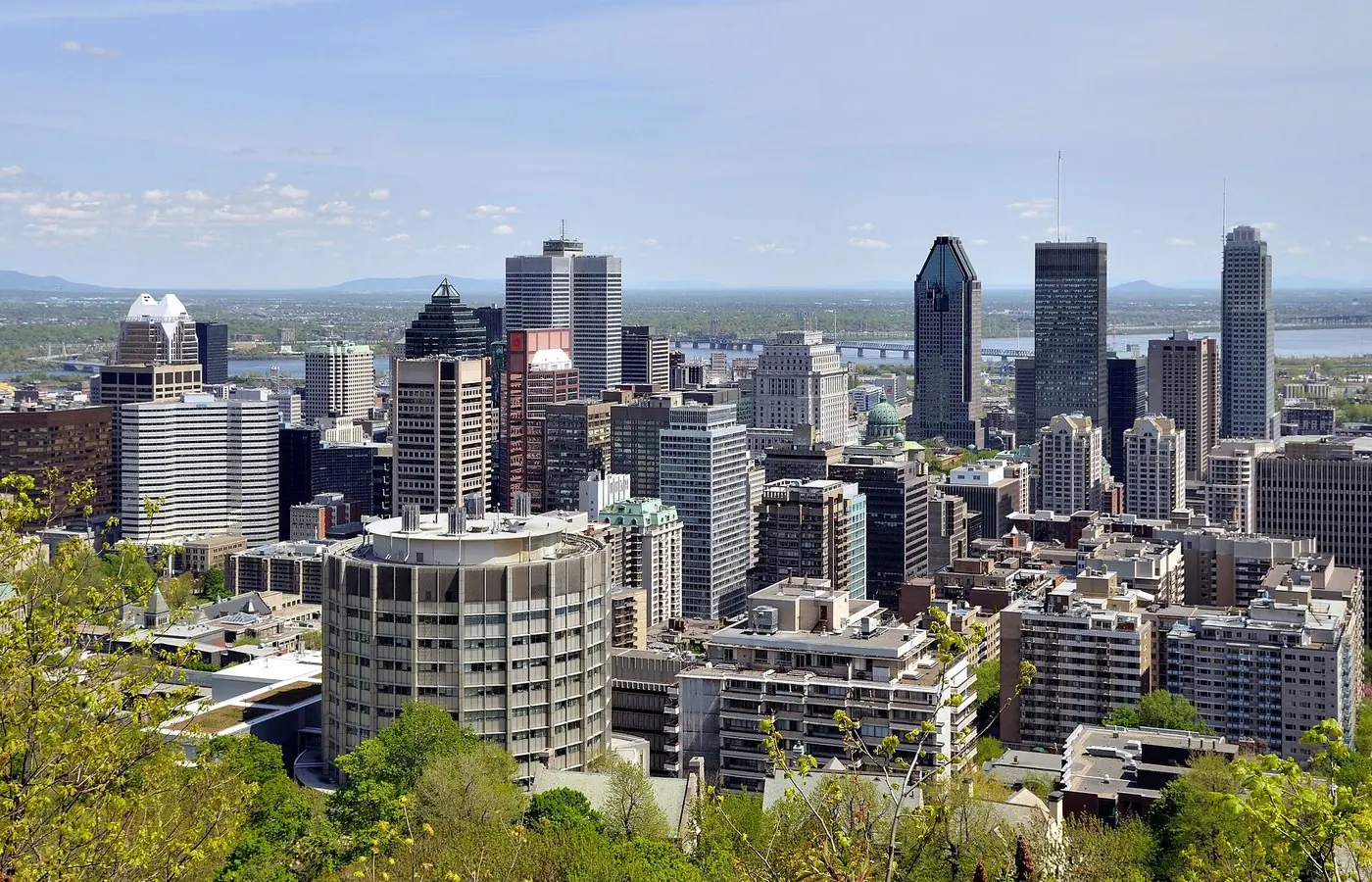
What Montreal is known for
Montreal is Canada's second-largest city and the cultural heart of French-speaking North America. Set on a large island where the St. Lawrence and Ottawa rivers meet, it pairs centuries of stone heritage with North American urban energy and an easygoing street life.
Visitors come for the celebrated food culture, walkable historic quarters, and distinct creative scene. From quiet residential streets lined with winding exterior staircases to lively terrasses in the summer, the city offers an atmosphere unlike anywhere else on the continent.
A short history
Long before European arrival, the island was a gathering place and travel route for Indigenous peoples, including the Kanien'kehá:ka (Mohawk) and the St. Lawrence Iroquoians, who inhabited the village of Hochelaga near Mount Royal. French explorer Jacques Cartier visited Hochelaga in 1535, followed by Samuel de Champlain in the early 1600s.
In 1642, French colonists led by Paul de Chomedey de Maisonneuve and Jeanne Mance founded Ville-Marie as a Catholic mission and trading outpost. Its strategic river position allowed it to flourish as the primary base for the continental fur trade under New France, continuing after British rule began following the Treaty of Paris in 1763.
During the nineteenth and early twentieth centuries, Montreal grew into Canada's commercial and industrial capital, spurred by the opening of the Lachine Canal and transcontinental railways. Large communities of Irish, Scottish, Italian, Jewish, and other international arrivals settled across the island, shaping its neighbourhoods and social life.
International attention arrived with Expo 67 and the 1976 Summer Olympic Games, leaving behind bold civic architecture and public transit systems. Today, Montreal remains an officially French-language metropolis that balances its historic roots with modern arts, technology, and multicultural communities.
Neighbourhoods
Old Montreal lines the riverfront with narrow cobblestone lanes, 18th-century stone buildings, and public squares near the Old Port. Downtown forms the commercial core, characterized by skyscrapers, university campuses, and the extensive Underground City network connecting shopping complexes and metro stations beneath street level.
North of downtown, the Plateau-Mont-Royal and Mile End are famous for classic triplexes, wrought-iron staircases, independent bookshops, and neighbourhood bakeries. Farther southwest along the Lachine Canal, Saint-Henri and Little Burgundy feature converted brick warehouses, community markets, and accessible riverside cycling paths.
Food and drink
Montreal cuisine reflects deep French culinary foundations combined with generations of immigrant food traditions. The city is widely recognized for Montreal-style smoked meat sandwiches, hot poutine made with fresh cheese curds, and wood-fired bagels boiled in honeyed water. Public markets like Jean-Talon Market and Atwater Market feature Quebec artisanal cheeses, maple products, and regional produce, while neighbourhood bistros and long multi-course dinners remain central to local social life.
Music, arts and culture
Creativity is central to everyday life in Montreal, with the downtown Quartier des Spectacles serving as a dedicated gathering place for concerts, outdoor festivals, and theatre. The city is an international hub for contemporary circus arts and maintains strong traditions in orchestral performance, French-language chanson, and independent indie rock. Public murals, installations, and bilingual literary events give colour to neighbourhood lanes and main commercial avenues throughout the year.
Top things to do
Mount Royal Park, created by landscape architect Frederick Law Olmsted, sits above the city centre with forested walking paths and wide views from the Kondiaronk Belvedere. In Old Montreal, visitors can see the detailed woodwork and stained glass of the Notre-Dame Basilica or explore the buried stone foundations of the colony at Pointe-à-Callière, the city's museum of archaeology and history.
Along the waterfront, the Old Port features promenades, public green spaces, and cycling trails heading into the Lachine Canal National Historic Site. To the east, the Olympic Park district houses the Montreal Botanical Garden, home to extensive themed greenhouses and outdoor arboretums, alongside the Biodome with its recreated American ecosystems.
Day trips
Travellers wanting to see more of southern Quebec can head north into the Laurentian Mountains for lakeside villages and hiking trails, an easy day trip from the city. The rolling countryside of the Eastern Townships to the southeast offers quiet farm stands, orchards, and local wineries. For more historic exploration, Quebec City's walled upper town is accessible as a short train ride down the St. Lawrence valley.
Before you go
Transit, hours and event schedules change. Check official sources before you go.
Best time to go
Late spring through early fall is the main outdoor season. Winters are cold and snowy, with a strong indoor restaurant and museum culture. Shoulder seasons can be crisp and quieter.
Getting there from Canada
Travellers from the rest of Canada often arrive at Montreal-Trudeau, by VIA Rail into Gare Centrale, or by road. The airport is in Dorval, west of downtown; the STM metro and buses, plus a walkable centre, cover the core.
Official travel advice
Travelling inside Canada does not use a country travel-advice page. Use official park, ferry and highway notices where they are mentioned above.
Search flights, cars, tours and airport rides under Plan your trip below. Checkout is on the partner's site.