
What Nassau is known for
Nassau serves as the capital and maritime heart of the Bahamas, situated along the northern shore of New Providence Island. The city centres on a sheltered harbour where passenger ships dock alongside working quays, with pastel-painted colonial buildings rising above the waterfront. It offers Canadian travellers an easy transition into island life, pairing urban amenities with immediate access to the Atlantic Ocean.
Visitors come for the combination of calm coastal waters, coral reefs, and accessible history. Just offshore and along the adjacent coastlines, soft white-sand beaches meet clear, shallow water. The city acts as both an open-air archive of Caribbean colonial history and a practical starting point for exploring the wider archipelago.
A short history
Long before European settlement, the Lucayan people, a branch of the Taíno, lived across the Bahamian archipelago. British settlers established a community called Charles Town on New Providence around 1670. After being burned by Spanish forces, the settlement was rebuilt in 1695 and renamed Nassau to honour England's King William III, formerly Prince of Orange-Nassau.
By the early 1700s, Nassau had fallen largely into lawlessness, serving as a base of operations for privateers and pirates who took advantage of the shallow reefs and nearby trade routes. Britain reasserted direct control in 1718 under Royal Governor Woodes Rogers, effectively suppressing piracy and establishing orderly civil governance.
Following the American Revolutionary War, thousands of British Loyalists arrived with enslaved Africans, dramatically increasing the population and shaping the city's architecture and layout. The abolition of slavery across the British Empire in 1834 transformed society, leading to the growth of independent free townships. The country achieved internal self-rule in the mid-20th century, followed by full independence in 1973.
Neighbourhoods
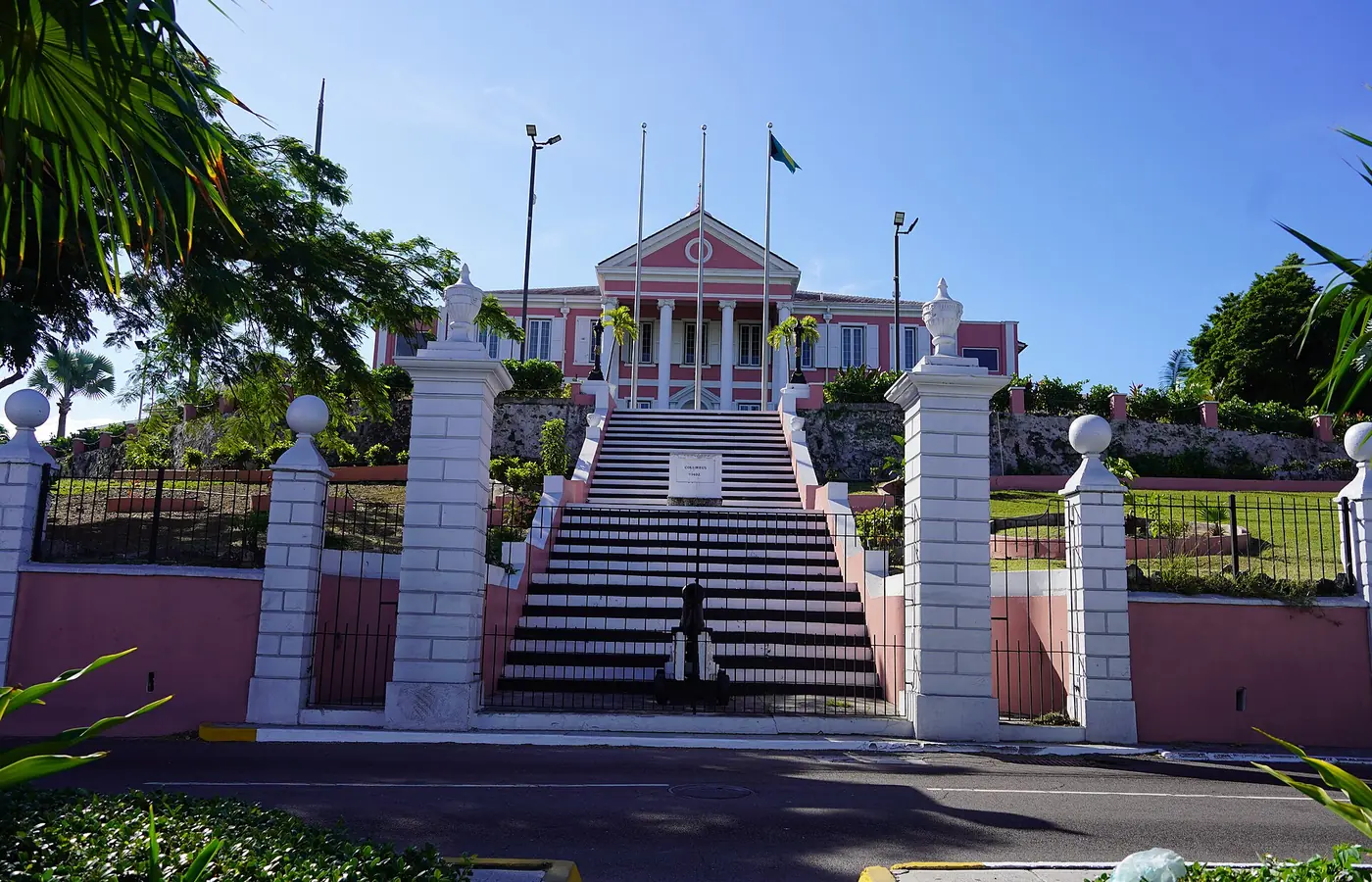
Downtown Nassau surrounds Bay Street and Parliament Square, where pink-and-white government buildings frame active sidewalks and harbour viewpoints. Just south lies Over-the-Hill, an expansive district that includes historic African-Bahamian communities such as Grants Town and Bain Town, which grew from the early 19th century onward as settlements for free Black Bahamians and liberated Africans, known for traditional timber cottages and local gathering places.
To the west, the Cable Beach area features long stretches of sand, coastal walking routes, and residential avenues. Across the harbour bridges lies Paradise Island, known for its resort-lined coastline and the broad Atlantic-facing sands of Cabbage Beach.
Food and drink
Bahamian cooking relies heavily on fresh seafood, particularly conch, a marine mollusc prepared raw in citrus-marinated salads, battered as savoury fritters, or simmered in spiced tomato chowders. Pan-fried or grilled grouper and snapper frequently appear alongside peas and rice, fried plantains, and baked macaroni and cheese. For drinks, locals favour Switcha, a simple limeade sweetened with cane sugar, as well as Sky Juice, a traditional blend of fresh coconut water, sweetened condensed milk, and gin seasoned with freshly grated nutmeg.
Music, arts and culture
The city's cultural year is anchored by Junkanoo, a national street parade held on Boxing Day and New Year's Day featuring large teams in handmade paper-and-cardboard costumes moving to cowbells, goatskin drums, and brass horns. Rake-and-scrape music, driven by accordion melodies and the distinct rhythm of a handsaw scraped with a metal rod, provides a traditional Bahamian sound at community gatherings. The National Art Gallery of the Bahamas, housed in a restored 19th-century residence, preserves historical and contemporary Bahamian painting, printmaking, and sculpture.
Top things to do
A visit downtown typically includes the Queen's Staircase, a 66-step walkway carved by hand out of solid limestone by enslaved workers in the late 1700s. The stairs lead directly up to Fort Fincastle, which was constructed to protect the harbour and offers elevated panoramic views over the town. West of the centre, Fort Charlotte forms the largest fortification on the island, complete with a dry moat, ramparts, and subterranean chambers.
The Nassau Straw Market along Bay Street remains a key site for traditional Bahamian straw-weaving, where vendors sell handwoven baskets, mats, and hats made from dried palm leaves. Nature enthusiasts can stroll through the Nassau Botanical Gardens or the Retreat Garden National Park, a protected sanctuary that contains an extensive collection of rare palm species and native woodland birds.
Day trips
New Providence serves as a natural departure point for exploring nearby waters and secluded cays. An easy day trip by boat reaches Rose Island or the northern cays of the Exuma chain, where visitors can swim across shallow coral heads and sandbars. On the western end of New Providence, an easy drive brings travellers to Clifton Heritage National Park, where hiking trails wind through Lucayan archaeological grounds, Loyalist estate ruins, and quiet coastal bluffs.
Before you go
Entry rules and travel advice can change. Confirm details with official sources, including the Government of Canada's advice for the Bahamas, before you go.
Best time to go
The drier, milder winter is a usual season from Canada. The official Atlantic hurricane season is 1 June to 30 November. New Providence is low-lying; official weather notices matter in storm months.
Getting there from Canada
Flights from Canada often arrive at Lynden Pindling International, including some nonstops. The airport is on the west of New Providence; Nassau and Paradise Island are a drive or short transfer east.
Official travel advice
Read the Government of Canada's Bahamas travel advice before you go. Rules and conditions can change.
Search flights, cars, tours and airport rides under Plan your trip below. Checkout is on the partner's site.