
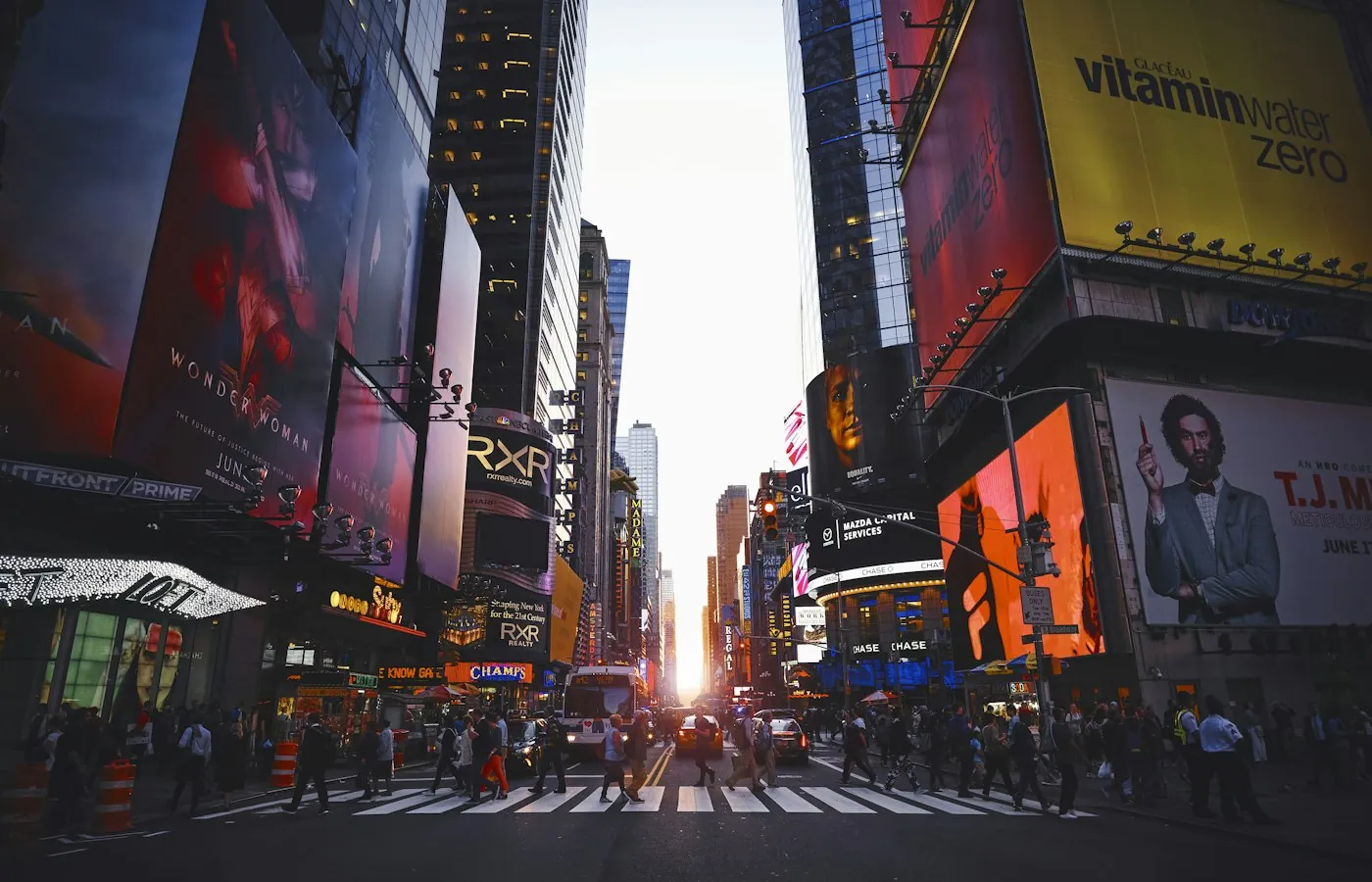
What New York is known for
New York is recognized across the globe for its dense skyline, bustling avenues, and the distinct character of its five boroughs. Manhattan draws visitors with its famous public spaces and theatre lights, while Brooklyn, Queens, the Bronx, and Staten Island add their own communities, parks, and waterfront views.
The city is defined by its walkable street grid, extensive subway network, and cultural diversity. People travel here to walk across historic bridges, explore international art collections, and experience a metropolis where neighbourhoods change character every few blocks.
A short history
Long before European arrival, the Lenape lived throughout the region, fishing the tidal bays, farming, and traveling along paths that later became major city avenues. In the early 1600s, Dutch traders established a post called New Amsterdam at the southern tip of Manhattan, which came under British rule in 1664 and was renamed New York.
During the American Revolutionary period, the city served as a key military base and later briefly functioned as the nation's capital. In the nineteenth century, the opening of the Erie Canal connected New York Harbour to the Great Lakes, establishing the city as the nation's leading port and commercial centre.
The late nineteenth and early twentieth centuries brought millions of immigrants through Ellis Island, transforming the city's labour force and cultural life. In 1898, modern New York was formally consolidated, bringing Manhattan, Brooklyn, Queens, the Bronx, and Staten Island together into a single municipality.
Subway expansion, architectural ambition, and civic planning shaped the twentieth-century metropolis. Sustained investment in parks, waterfront restoration, and historic districts helped the city evolve from an industrial seaport into a global headquarters for commerce, media, and the arts.
Neighbourhoods
Each borough holds distinct quarters that reward walking. Lower Manhattan contains the historic financial district and Chinatown, while the narrow streets of Greenwich Village lie just to the north. Further north, Midtown holds major commercial towers, while Upper Manhattan features the leafy brownstone avenues of Harlem and the quiet heights of Washington Heights.
Across the East River, Brooklyn offers varied pockets, from the historic row houses of Brooklyn Heights and Park Slope to the converted industrial waterfronts of DUMBO and Williamsburg. In Queens, residential districts like Astoria and Jackson Heights showcase communities representing dozens of linguistic backgrounds and culinary traditions.
Food and drink
The local dining scene reflects generations of immigration and quick counter service. Classic dishes include thin-crust pizza sold by the slice, boiled and baked bagels with cream cheese, pastrami sandwiches from Jewish delicatessens, and street-cart pretzels. Beyond the classics, visitors can sample authentic regional cooking across the boroughs, including Cantonese dim sum, Greek seafood, and Latin American street fare.
Music, arts and culture
New York has played an essential role in modern cultural history, serving as the birthplace of hip hop in the Bronx and an influential stage for modern jazz, folk, and punk. The city supports major performing venues, including the Broadway theatre district, Lincoln Center for the Performing Arts, and Carnegie Hall. Fine art thrives in institutions like the Metropolitan Museum of Art and the Museum of Modern Art, as well as galleries in Chelsea.
Top things to do
Visiting New York often starts with classic open spaces and landmarks. Central Park offers hundreds of hectares of green space, walking paths, and lakes right in the centre of Manhattan. Walking the promenade of the Brooklyn Bridge provides open views of the harbour, while a ride on the public Staten Island Ferry offers clear sights of the Statue of Liberty.
Exploring cultural and historic sites is equally rewarding. Travellers can stroll along the High Line, an elevated public park built on a former rail line, or visit the National September 11 Memorial in Lower Manhattan. Uptown, Museum Mile along Fifth Avenue provides access to major collections, while Grand Central Terminal showcases monumental civic architecture.
Day trips
Travelers wishing to explore beyond the five boroughs have several straightforward options. The Hudson River Valley offers riverside towns, forested trails, and historic estates within a short train ride north of the city. Coastal Long Island provides beaches and historic villages an easy train journey to the east, while the seaside boardwalks of the New Jersey coast are reachable by rail as an uncomplicated day out.
Before you go
Transit, hours and event schedules change often, check official or partner sources when you plan, and see today's prices on the supplier's site.
Best time to go
Spring and fall are often milder than midsummer heat and humidity, or midwinter cold and snow. Any month can work; check a current forecast and official event or transit notices for your dates.
Getting there from Canada
Most trips from Canada use Toronto Pearson, Montreal-Trudeau or other major Canadian airports, with frequent flights to the New York-area airports (John F. Kennedy, Newark Liberty and LaGuardia). Some travellers also arrive by rail or road from nearby Canadian cities.
Official travel advice
Read the Government of Canada's United States travel advice before you go. Rules and conditions can change.
Search flights, cars, tours and airport rides under Plan your trip below. Checkout is on the partner's site.