
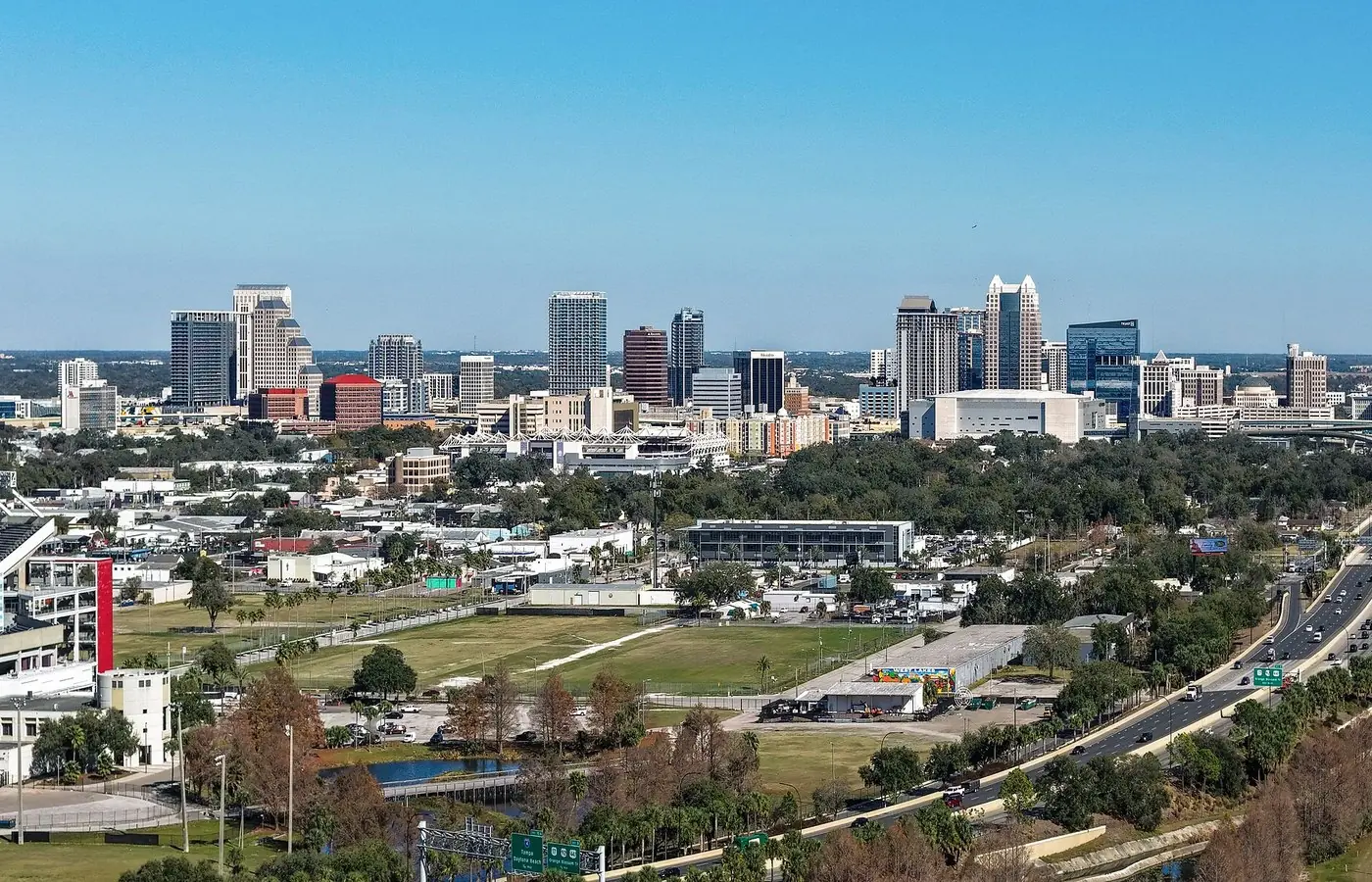
What Orlando is known for
Orlando sits in the heart of central Florida, a region characterized by freshwater lakes, wetlands, and pine flatwoods. Millions of travellers visit each year drawn by its massive entertainment resorts, family-focused attractions, and warm subtropical climate.
Beyond the major attractions, the city offers leafy urban lakes, historic tree-lined avenues, and a thriving local arts and dining scene. It serves as a comfortable, accessible base for exploring both inland Florida's urban centres and the diverse natural environments of the peninsula.
A short history
Long before European colonization, Indigenous peoples including the Timucua lived across the lakes and waterways of central Florida. In the 1830s and 1840s, during the Seminole Wars, the United States military constructed Fort Gatlin south of present-day downtown, which encouraged early settler arrivals to the area.
Originally known as Jernigan after an early pioneer family, the settlement took the name Orlando in 1857 and formally incorporated as a city in 1875. In the late 19th century, cattle ranching, cotton farming, and citrus groves formed the backbone of the local economy, establishing the town as the capital of Florida's citrus industry.
Severe freezes in the late 1890s damaged citrus crops, prompting local leaders to diversify into real estate and winter resort tourism. During the mid-20th century, the opening of military aviation facilities and aerospace engineering centres near the Atlantic coast brought technical industries, government investment, and steady population growth to the region.
The defining turning point arrived in the late 1960s with the construction of Walt Disney World Resort, which opened in 1971. Universal Orlando Resort and other entertainment complexes followed in the subsequent decades, permanently transforming Orlando from a modest agricultural centre into an international capital for hospitality.
Neighbourhoods
Downtown Orlando centres on Lake Eola, where a lakeside walking path winds around a central fountain and open green spaces. Immediately east of downtown sits Thornton Park, a residential district known for brick-paved streets, historic 1920s craftsman bungalows, and shaded sidewalk patios under moss-draped live oak trees.
North of downtown, Winter Park offers an upscale atmosphere defined by brick-paved Park Avenue, quiet residential estates, and a scenic chain of interconnected freshwater lakes. Southwest of downtown, the environment shifts along the International Drive corridor, a commercial boulevard lined with entertainment complexes, dinner theatres, and convention halls.
Food and drink
Central Florida's culinary landscape blends traditional Southern comfort food with prominent Latin American and Caribbean flavours. Regional menus regularly feature Florida staples like fried gator tail, smoked fish dip, boiled peanuts, and fresh citrus fruits including locally grown oranges and grapefruit. Key lime pie remains a classic regional dessert, while an established Puerto Rican community has made dishes such as mofongo, pernil, and tostones popular throughout the metropolitan area.
Music, arts and culture
Orlando supports a wide variety of performing arts venues and cultural institutions. The Dr. Phillips Center for the Performing Arts in downtown hosts touring Broadway productions, orchestral music, and ballet performances. Across town in Winter Park, the Charles Hosmer Morse Museum of American Art houses a world-renowned collection of works by Louis Comfort Tiffany, including leaded glass windows, pottery, and jewellery. Each spring, the Orlando Fringe Festival brings independent theatrical productions and live music to the lawns and theatres of Loch Haven Park.
Top things to do
Walt Disney World Resort and Universal Orlando Resort serve as the primary destinations for most visitors, offering multiple theme parks, water parks, and evening entertainment districts. In the city centre, Lake Eola Park provides a quiet escape from the crowds, where visitors can rent swan paddleboats or walk along the paved lakeside promenade.
Culture seekers can spend a day at Loch Haven Park, home to the Orlando Museum of Art and the Orlando Science Center with its interactive natural history and physics exhibits. Garden enthusiasts can wander the paved pathways of Harry P. Leu Gardens, a fifty-acre botanical park showcasing historic camellias, bamboo forests, and subtropical flora.
Day trips
An easy drive east brings travellers to the Space Coast to tour rocket launch facilities and astronaut exhibits at the Kennedy Space Center Visitor Complex, or spend an afternoon on the sands of Cocoa Beach. North of the city, Wekiwa Springs State Park and Blue Spring State Park offer clear, freshwater springs where visitors can kayak and observe wintering Florida manatees. To the west, the historic coastal town of St. Augustine and the Gulf of Mexico beaches near Tampa are well within an easy day trip.
Before you go
Hours, park rules, and road conditions change. Check official sources before you go. We don't list prices or reviews here.
Best time to go
The climate is humid subtropical. Winters are usually drier and less hot than summer. Afternoon storms are common in the wetter months. The official Atlantic hurricane season is 1 June to 30 November.
Getting there from Canada
Most visitors from Canada fly into Orlando International. Some flights use Orlando Sanford. The city is inland, in central Florida, not on the Atlantic beach like Miami.
Official travel advice
Read the Government of Canada's United States travel advice before you go. Rules and conditions can change.
Search flights, cars, tours and airport rides under Plan your trip below. Checkout is on the partner's site.