
What Puerto Vallarta is known for
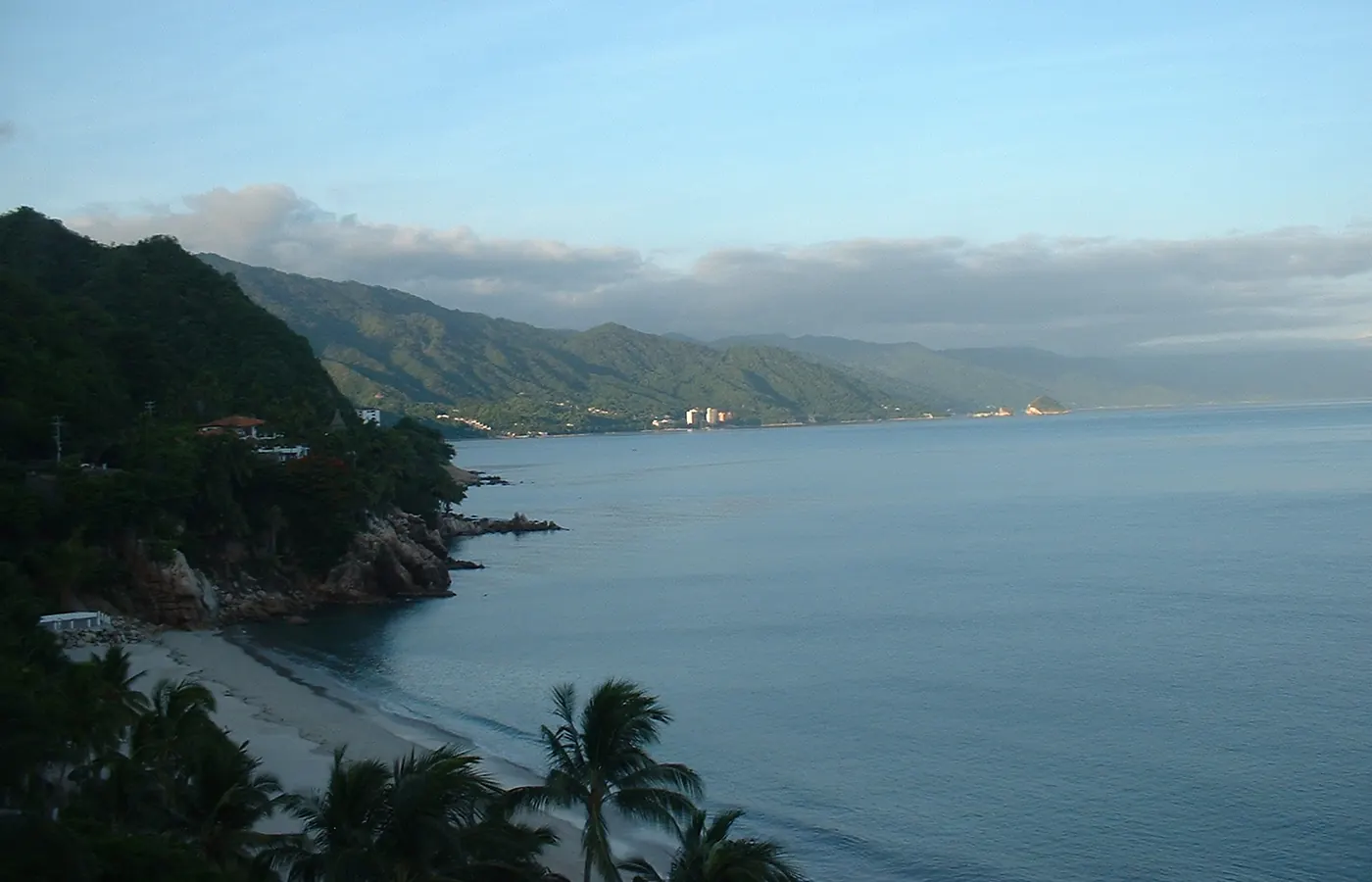
Puerto Vallarta sits where the jungle-covered Sierra Madre mountains meet the curving shoreline of Bahía de Banderas on Mexico's Pacific coast. The city is known for its red-tile roofs, stone-paved streets, and a striking natural setting where green hills drop straight toward the ocean. It retains a distinct Mexican character in its core while offering an established seaside setting for international visitors.
Travellers are drawn to the city's pedestrian oceanfront boardwalk, scenic beaches, and the easygoing atmosphere of its historic quarters. It is also widely recognized as one of the most welcoming destinations in Mexico for LGBTQ+ travellers, with dedicated beach areas, social venues, and community events centred around the southern end of town.
A short history
Before the arrival of Europeans, Indigenous peoples, including cultures tied to the Aztatlán tradition, lived in the river valleys and coastal flatlands surrounding Bahía de Banderas. Spanish navigators charted the bay during the sixteenth century, but the steep surrounding mountains left the area largely unsettled by outsiders for centuries, serving mainly as an occasional haven for fishermen and coastal traders.
The modern town began taking shape in the mid-nineteenth century under the name Las Peñas. Founded as a trading and agricultural outpost along the Cuale River, it supplied salt and provisions to silver-mining towns located high in the nearby mountains. In 1918, the settlement received municipal status and was renamed Puerto Vallarta in honour of Ignacio Luis Vallarta, a 19th-century Jalisco lawyer and politician who served as governor from 1872 to 1876.
The town remained a relatively quiet coastal community until 1963, when American film director John Huston chose the nearby cove of Mismaloya to shoot the film adaptation of The Night of the Iguana. The high-profile international media coverage of the production put the secluded bay onto the world stage.
Following that publicity, the Mexican government invested in an international airport, paved highways, and maritime infrastructure. Tourism grew steadily through the late twentieth century, expanding the city along the bay while preserving the traditional architecture of the original centre.
Neighbourhoods
El Centro forms the historic core of the city, marked by whitewashed brick buildings, wrought-iron balconies, and hilly streets that climb up from the sea. Just across the Cuale River lies the Zona Romántica, also known as the Old Town or Emiliano Zapata. This compact district is a favourite for walking, filled with art galleries, small plazas, open-air markets, and direct access to Playa Los Muertos.
North of downtown, the landscape opens up into the Hotel Zone and Marina Vallarta. Marina Vallarta was developed around a large yacht basin and golf course, featuring a quiet waterfront promenade lined with anchored boats. Further along the bay, modern residential and resort districts extend into the neighbouring state of Nayarit, providing varied settings from lively urban lanes to peaceful coastal enclaves.
Food and drink
Dining in Puerto Vallarta emphasizes regional Jalisco traditions alongside fresh catch from the Pacific. A local classic is pescado embarazado, which is fresh fish or shrimp marinated in lime and spices, skewered on wooden sticks, and roasted over open coals right on the sand. Birria, a savoury meat stew richly seasoned with dried chillies and spices, is a weekend staple served with fresh corn tortillas, onion, and lime. Ceviche vallartense features finely minced fish cured in citrus and tossed with shredded carrots and fresh coriander. To drink, regional spirits take centre stage, including tequila from Jalisco's highland valleys and raicilla, a smoky, traditional agave spirit produced in the local coastal mountains.
Music, arts and culture
Public art is an essential part of the city's character. The seaside malecón functions as an open-air gallery, lined with bronze sculptures by celebrated Mexican artists, while the Los Arcos outdoor amphitheatre is a venue for live performances and civic events. Traditional mariachi music, which originated in Jalisco, is played regularly in public squares such as the Plaza de Armas. Every December, the city marks the Festival of Our Lady of Guadalupe with processions and celebrations through the streets toward the central church.
Top things to do
Taking a walk along the Malecón is the primary civic experience, stretching from El Centro along the oceanfront past public sculptures, stone amphitheatre arches, and panoramic bay views. A few steps inland stands the Parish of Our Lady of Guadalupe, a working church topped by an ornate, sculpted crown that serves as a defining visual landmark on the city skyline.
Visitors also gather at Playa Los Muertos, the city's main public beach, which features the sail-shaped Los Muertos Pier extending out into the water for scenic strolls and boat departures. In the heart of the riverbed, Isla Cuale offers a shaded, pedestrian-only sanctuary with stone paths, tropical gardens, handicraft stalls, and the small Cuale Cultural Centre.
Day trips
For an easy day trip by sea, visitors can travel south along the rugged coast to Yelapa, a quiet village with no car roads, known for its tranquil cove and forested hiking trail leading to a freshwater waterfall. Up in the cool pine forests of the Sierra Madre mountains, the colonial town of San Sebastián del Oeste is an easy day trip inland, where visitors can walk through centuries-old stone lanes and see preserved mining-era architecture. To the north, the coastal towns of Sayulita and San Pancho make an easy day trip across the state line, offering open Pacific surf breaks, relaxed town squares, and lively craft markets.
Before you go
Entry rules, health notices and travel advice can change. Confirm details with official sources, including the Government of Canada's advice for Mexico, before you go.
Best time to go
The dry winter (roughly November to May) is the usual season from Canada. Summers are hot and wetter. This is on Mexico's Pacific coast, so the eastern Pacific hurricane season (officially mid-May to November, per the U.S. National Hurricane Center) matters more than the Atlantic one.
Getting there from Canada
Flights from Canada often arrive at Licenciado Gustavo Diaz Ordaz International, including seasonal nonstops from several Canadian cities. The airport sits just north of the city; stays in the Romantic Zone, downtown or Marina Vallarta are a short drive, while Nuevo Vallarta and Punta de Mita are further along the bay.
Official travel advice
Read the Government of Canada's Mexico travel advice before you go. Rules and conditions can change.
Search flights, cars, tours and airport rides under Plan your trip below. Checkout is on the partner's site.