
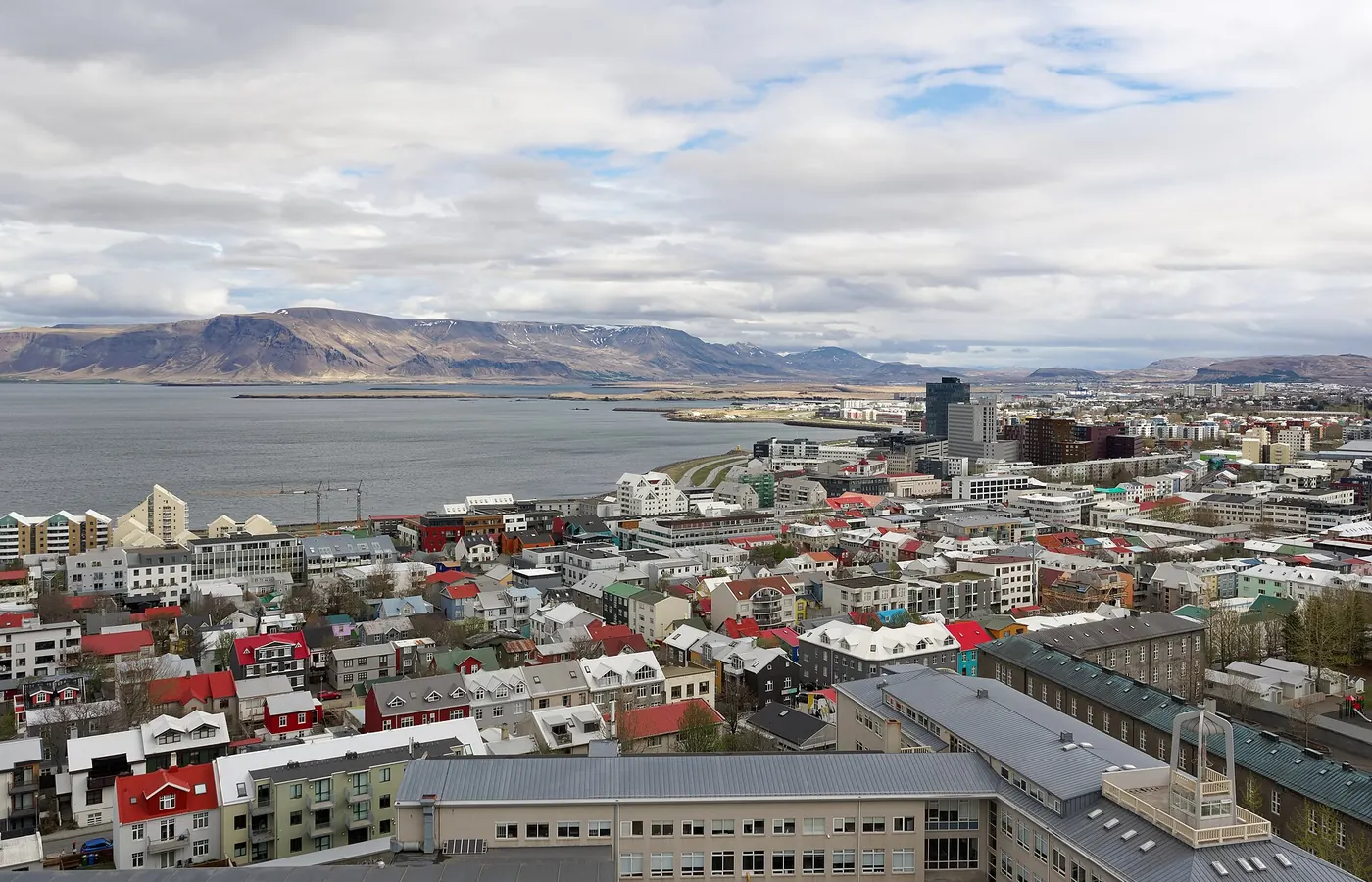
What Reykjavik is known for
As the northernmost sovereign capital in the world, Reykjavik combines the intimacy of a small coastal town with the energy of a national cultural centre. The city sits along the southern shore of Faxaflói bay, framed by the sea and the flat-topped ridge of Mount Esja across the water.
Travellers know the city for colourful corrugated-iron homes, clean sea air, and a city heated almost entirely by geothermal energy. It is appreciated for its municipal outdoor heated pools, a creative community, and its role as the primary starting point for journeys into Iceland's volcanic countryside.
A short history
Settlement tradition records that Norse settler Ingólfur Arnarson established a farmstead here in the late 9th century, around 874. He named the spot Reykjavík, or "Smoky Bay," after the geothermal steam rising from hot springs across the coastal plain.
For centuries, the settlement remained a quiet agricultural estate under Norwegian and later Danish authority. Change arrived in the mid-18th century when royal official Skúli Magnússon founded domestic wool workshops, introducing light industry and setting the stage for the town's official charter as a trading market in 1786.
The 20th century brought rapid modernization. Allied occupation during the Second World War spurred construction, expanded the harbour, and accelerated infrastructure development. When Iceland declared full independence as a republic in 1944, Reykjavik was firmly established as its capital and centre of government.
In the decades that followed, the city evolved from an isolated North Atlantic fishing port into a modern European capital. In the modern city, sustainable district heating, preserved timber buildings, and contemporary architecture reflect that journey from rural outpost to capital.
Neighbourhoods
Miðborg forms the downtown heart of the city, centred on pedestrian-friendly streets like Laugavegur, Bankastræti, and Skólavörðustígur. Painted timber homes and mid-century facades house independent bookstores, galleries, and bakeries, with the area sloping gently down toward the quiet waters of Lake Tjörnin and the modernist City Hall.
To the west, Grandi and the Old Harbour have transformed from industrial fish-packing yards into an engaging waterfront district, where working drydocks share space with maritime heritage sites and design studios. Nearby Vesturbær is a leafy residential neighbourhood known for quiet streets, classic mid-century houses, and a strong community atmosphere centred around its local pool.
Food and drink
Traditional Icelandic cuisine is shaped by island geography, cold North Atlantic waters, and geothermal energy. Fresh cod, haddock, and Arctic char are daily staples, alongside tender Icelandic lamb raised on open pasture and often served in traditional meat soups like kjötsúpa. Travellers will find thick, protein-rich skyr enjoyed with cream and berries, as well as dense rye bread baked in pots buried directly in geothermal earth. During traditional midwinter celebrations, customs include sampling fermented shark washed down with a small measure of brennivín, a clear caraway-infused spirit.
Music, arts and culture
Despite its small population, Reykjavik sustains a renowned arts community that punches well above its weight. Harpa Concert Hall, with its distinctive glass facade inspired by columnar basalt, serves as a central venue for the Iceland Symphony Orchestra and the Icelandic Opera. The city fosters international music gatherings such as Iceland Airwaves, while visual arts thrive in municipal spaces like the Reykjavik Art Museum and the outdoor sculpture garden dedicated to artist Einar Jónsson.
Top things to do
Prominent landmarks define any walking tour of the city. Hallgrímskirkja church rises high above the centre, with an observation deck that provides clear views over the harbour and surrounding mountains. Along the coastal promenade, the stainless-steel Sun Voyager sculpture faces the sea, while the National Museum of Iceland and the Settlement Exhibition offer well-curated looks at Viking-era history through preserved turf foundations and early artifacts.
Taking part in public pool culture is an essential part of daily life. Municipal facilities like Laugardalslaug feature heated outdoor lap pools, steam baths, and communal hot pots that remain busy in every season. For open coastal air, walking paths lead out to the Seltjarnarnes peninsula, where the Grótta lighthouse stands among tidal flats frequented by migrating seabirds.
Day trips
Reykjavik serves as a practical hub for exploring southwestern Iceland within a day's drive. The Golden Circle route loops past the continental rift at Þingvellir National Park, the geothermal area of Geysir, where Strokkur geyser erupts every few minutes, and the roaring falls at Gullfoss. Travel along the south coast brings you to the black volcanic sands near Vík and dramatic waterfalls such as Seljalandsfoss and Skógafoss, while the mossy lava fields and coastal cliffs of the Reykjanes peninsula make for an easy day trip southwest of the city.
Before you go
Weather, daylight hours and road conditions change a great deal through the year. Confirm entry rules and travel advice with official sources, including the Government of Canada's advice for Iceland, before you go.
Best time to go
Summer has the long days (and the usual hiking and highland-road season, when those roads are officially open). Winter has short days, a chance of northern lights (never guaranteed), and serious weather; many waterfalls and coasts are still visited, with ice and wind as real hazards. Shoulder months can go either way. Official road (road.is) and weather (vedur.is) notices should be read every day you drive.
Getting there from Canada
Flights from Canada typically arrive at Keflavik International, including some nonstops. The official Flybus and other transfers cover the 45-minute-or-so road to Reykjavik; the airport is not in the city. A rental car is the usual way to see the Golden Circle or the south coast; winter driving needs experience with wind and ice.
Official travel advice
Read the Government of Canada's Iceland travel advice before you go. Rules and conditions can change.
Search flights, cars, tours and airport rides under Plan your trip below. Checkout is on the partner's site.