
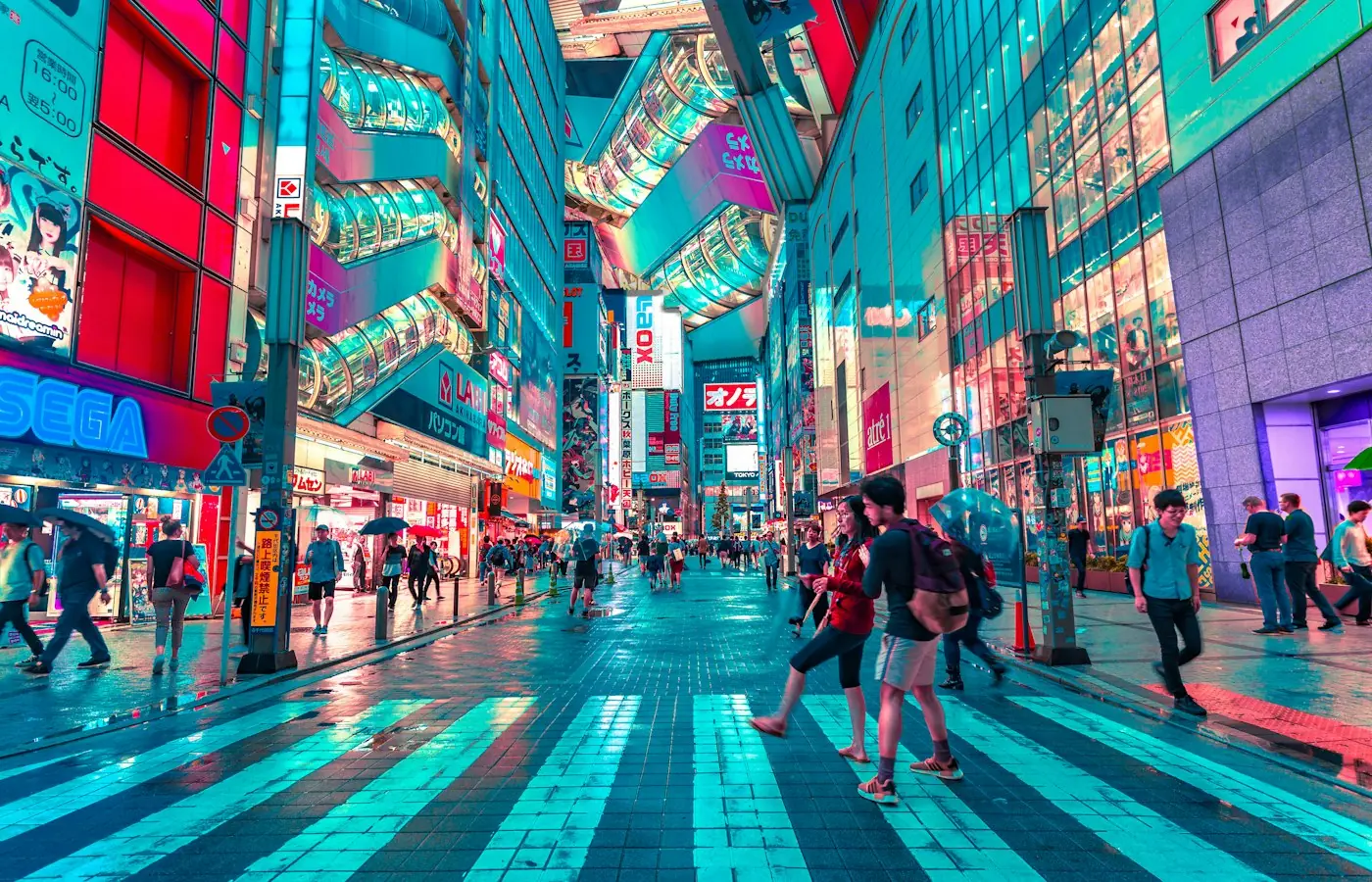
What Tokyo is known for
Tokyo is known for its balance between vast urban density and orderly everyday life. Trains run on precise schedules, quiet residential lanes sit steps away from neon-lit avenues, and public parks provide calm pockets throughout the metropolis.
Visitors are drawn to the city's layered character. Historic Shinto shrines and Buddhist temples share space with modern commercial centres, while dedicated districts for fashion, electronics, and craft traditions offer varied perspectives on Japanese culture within short train rides of one another.
A short history
The area around Tokyo Bay was inhabited for thousands of years, with archaeological traces dating to the Jomon period. For centuries, it remained a modest fishing settlement known as Edo. Its fortunes shifted in 1603 when Tokugawa Ieyasu established his shogunate there, making Edo the political centre of Japan while the imperial court remained in Kyoto.
During the Edo period, the town grew into one of the most populous urban centres in the world. A distinct urban layout separated samurai estates from merchant and artisan neighbourhoods, while a canal network supported regional trade.
The modern era began with the Meiji Restoration in 1868, when imperial rule was restored, the capital moved from Kyoto, and Edo was renamed Tokyo, meaning "Eastern Capital." The city modernized rapidly, adopting brick architecture, modern railways, and industrial infrastructure.
Two major events transformed Tokyo's physical landscape in the twentieth century: the Great Kanto Earthquake of 1923 and the air raids of the Second World War. Rebuilding after each event created the resilient, multi-centred rail metropolis visitors see today.
Neighbourhoods
Tokyo does not revolve around a single downtown core. Instead, it functions as a collection of distinct districts connected by rail. Shibuya and Shinjuku are famous for crowded pedestrian crossings, glowing screens, and massive railway terminals. Nearby, Ginza features wide avenues and architecture, while Marunouchi presents polished corporate towers fronting Tokyo Station.
In contrast, historic quarters such as Asakusa preserve older street patterns around traditional merchant lanes and temple gates. Ueno centres on a sprawling public park and cultural institutions, while Akihabara is recognized for electronics and gaming culture. Neighbourhoods like Shimokitazawa and Yanaka provide a slower pace, known for winding alleyways, vintage goods, and quiet residential charm.
Food and drink
Tokyo's food culture ranges from quick counter meals to elaborate seasonal dining. The city is the birthplace of Nigiri sushi, originally developed as quick street food in the Edo period, alongside local staples such as tempura, soba noodles, and monjayaki, a savoury pan-fried batter dish popular in downtown quarters. Informal drinking establishments serve yakitori skewers, ramen, and regional sake, while basement food halls under major rail stations offer prepared delicacies from across the country.
Music, arts and culture
Cultural traditions thrive alongside contemporary creative industries across Tokyo. Historic performing arts such as kabuki and noh theatre continue in dedicated public venues, while sumo tournaments draw crowds to the Ryogoku district several times a year. Modern creative expressions are equally prominent, with museums displaying fine art, design, and contemporary media, alongside community-centred seasonal matsuri festivals celebrated at neighbourhood shrines.
Top things to do
Exploring Tokyo's religious landmarks is a central part of any visit. Senso-ji in Asakusa is the city's oldest Buddhist temple, entered through the imposing Kaminarimon gate and a lively market street. Meiji Jingu offers a peaceful contrast, situated within a dense forest of evergreen trees planted in the early twentieth century to honour Emperor Meiji and Empress Shoken.
For wide city views, observation decks at Tokyo Skytree and the Tokyo Metropolitan Government Building allow visitors to look out across the urban landscape toward Mount Fuji on clear days. Green spaces like Shinjuku Gyoen National Garden and Ueno Park offer walking paths through formal landscapes, ponds, and seasonal trees, while the grounds of the Imperial Palace preserve stone ramparts and moats from Edo Castle.
Day trips
Several historic towns and natural areas make easy day trips by train from Tokyo. Kamakura, situated along the coast, is home to medieval temples, walking trails, and a large outdoor bronze Buddha. Nikko features ornate shrines and mountain scenery set within deep cedar forests. For hot springs and views of Mount Fuji, Hakone provides mountain railways, cable cars, and scenic lake cruises on a short train ride from the capital.
Before you go
Hours, transit and seasonal closures change often, check official sources before you go.
Best time to go
Spring (including cherry blossom, whose official peak dates change each year and differ by district) and fall (including autumn colour, also variable) are the most popular walking seasons. Summers are hot, humid and include the East Asian rainy season (tsuyu) and typhoon risk, generally from summer into early fall. Winters are often clearer and cooler, with some snow in the wider region but less in central Tokyo.
Getting there from Canada
Flights from Canada typically arrive at Narita or Haneda, including some nonstops from larger Canadian cities. Official airport trains (including Narita Express, Keisei Skyliner and Haneda monorail or Tokyo Monorail links) run into the city. Once there, the JR, subway and official IC-card system are the usual way to move; the city is a dense cluster of centres, not one downtown.
Official travel advice
Read the Government of Canada's Japan travel advice before you go. Rules and conditions can change.
Search flights, cars, tours and airport rides under Plan your trip below. Checkout is on the partner's site.