
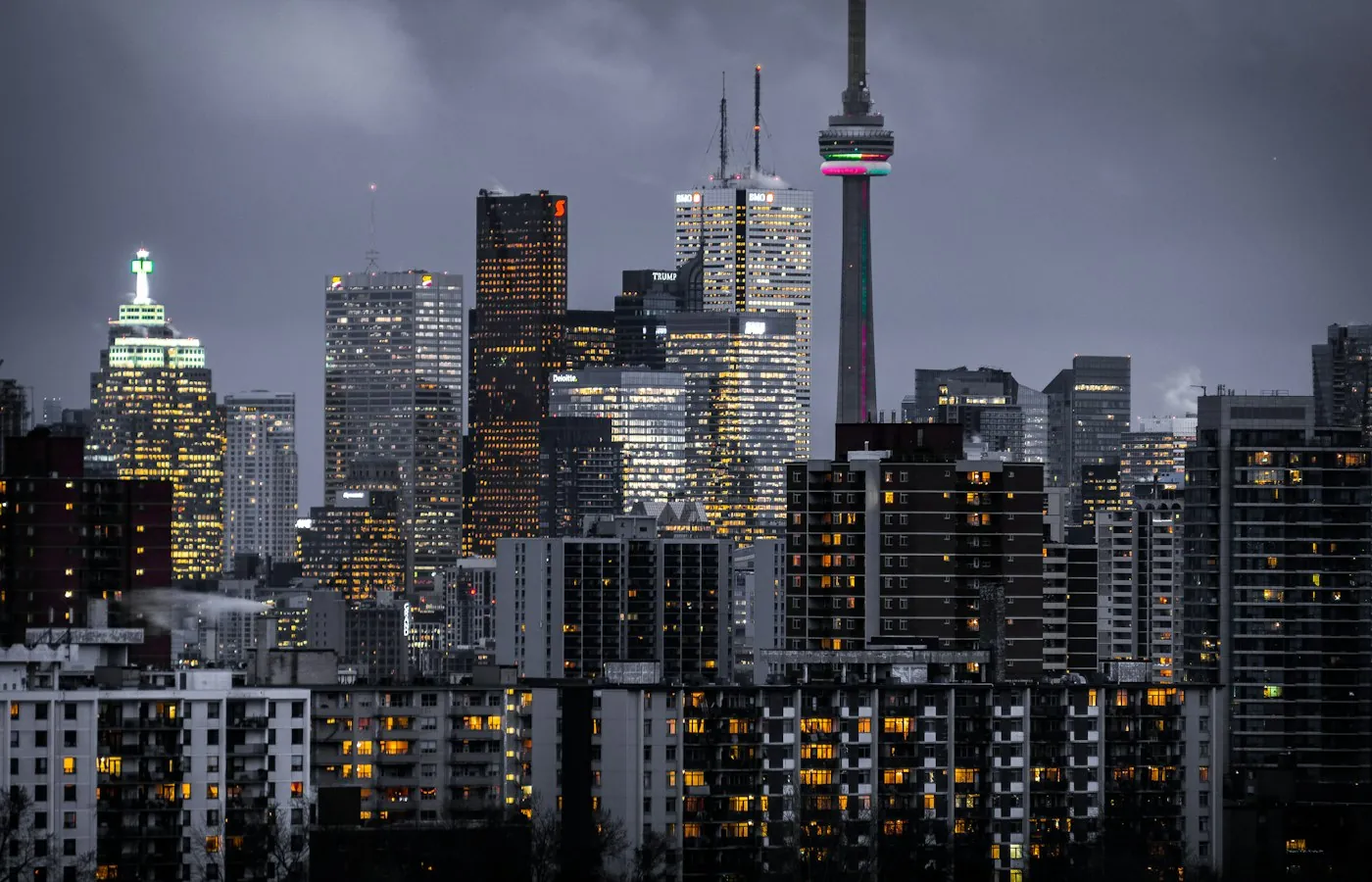
What Toronto is known for
Toronto is Canada's most populous metropolis, defined by its position on the northwestern shore of Lake Ontario and its prominent downtown skyline. It serves as the financial, media, and cultural anchor of English-speaking Canada, drawing visitors with its blend of dense urban towers, historic red-brick streetscapes, and expansive public waterfront.
The city is recognized globally for its extraordinary cultural diversity, with nearly half of its residents born outside Canada. This mix shapes daily life across dozens of self-contained residential districts, where global traditions, diverse languages, and independent markets define the local character.
A short history
For thousands of years, the north shore of Lake Ontario was home to Indigenous peoples, including the Wendat, the Haudenosaunee, and the Anishinaabeg, particularly the Mississaugas of the Credit. The name Toronto likely derives from the Mohawk word tkaronto, which refers to an area where trees stand in the water, marking a traditional fishing weir near Lake Simcoe.
In 1793, British colonial administrator John Graves Simcoe established the settlement of York, which became the capital of Upper Canada in 1796, choosing the site for its sheltered natural harbour. The town was briefly occupied and burned by American forces during the War of 1812. In 1834, York was incorporated as the city of Toronto, adopting its original Indigenous-rooted name.
The twentieth century brought profound change. Following the Second World War, hundreds of thousands of immigrants arrived from Italy, Portugal, Greece, the Caribbean, and later across East and South Asia, transforming a formerly conservative, Anglo-Saxon city into a multicultural centre.
In 1998, the provincial government amalgamated the old city of Toronto with five surrounding municipalities—Etobicoke, North York, Scarborough, York, and East York. This created the unified, sprawling municipality that stands today, balancing high-density core neighbourhoods with extensive residential suburbs.
Neighbourhoods
Toronto functions as a collection of distinct urban enclaves. Kensington Market offers a maze of narrow streets lined with Victorian houses, independent grocers, vintage clothing stalls, and communal courtyards, sitting adjacent to the bustling commercial corridors of Chinatown. To the east, the Distillery District preserves North America's largest collection of Victorian industrial architecture, featuring brick-paved pedestrian lanes filled with artist studios and performance halls.
West of downtown, Queen West and the Ossington Avenue corridor feature low-rise commercial blocks lined with galleries, design studios, and patio dining. Across the city, leafy residential districts such as the Annex and Cabbagetown showcase preserved nineteenth-century brick architecture, while waterfront areas like Harbourfront connect urban streets directly to the open waters of Lake Ontario.
Food and drink
Toronto's dining landscape mirrors its immigrant communities, making regional international specialties the heart of the local food culture. Visitors can find authentic Cantonese dim sum, Jamaican beef patties, South Asian thalis, Somali stews, and Portuguese egg tarts across central and suburban neighbourhoods. The peameal bacon sandwich—served on a soft bakery roll using cured pork loin rolled in cornmeal—is a historic local staple associated with the stalls of the St. Lawrence Market. The city is also a focal point for regional Ontario wines, craft beers brewed in converted warehouses, and seasonal produce from the surrounding Greenbelt.
Music, arts and culture
The city is the centre of Canada's commercial arts scene. Major institutions like the Royal Ontario Museum and the Art Gallery of Ontario house extensive national and international collections, while the downtown Theatre District supports large-scale theatrical productions along King Street West. Toronto is also a celebrated music centre, home to historic venues such as Massey Hall and influential scenes in hip-hop, electronic music, and indie rock. Major annual gatherings include the Toronto International Film Festival, which brings global cinema each September, and the Toronto Caribbean Carnival, which fills the lakefront with music and masquerade each summer.
Top things to do
A visit often starts along the central waterfront. Taking a public ferry across the inner harbour to the Toronto Islands provides quiet parkland, car-free walking trails, beaches, and unobstructed views of the city skyline. Back on the mainland, visitors can ascend the CN Tower to look out over the lake and surrounding region from its observation decks.
Exploring civic landmarks is another essential experience. Wandering through the historic St. Lawrence Market offers a look at fresh regional foods and traditional purveyors. In the west end, High Park covers extensive acreage of oak savannah, recreational paths, and botanical gardens. Historic sites such as Fort York preserve the city's military origins, while Casa Loma, a grand Gothic Revival castle built in the early twentieth century, offers a view into the city's architectural past.
Day trips
Travellers based in Toronto can explore several distinct regional landscapes. Niagara Falls and the surrounding Niagara-on-the-Lake wine region make an easy day trip or a short train ride, known for historic villages, orchards, and limestone trails along the Niagara Escarpment. To the east, Prince Edward County offers rural farms, historic towns, and sandy beaches within a day's drive. Those heading north can reach the rocky shorelines, pine forests, and inland lakes of Muskoka and cottage country within a day's drive.
Before you go
Transit, hours and event schedules change. Check official sources before you go.
Best time to go
Late spring through early fall is the usual window for waterfront and patio days. Winters are cold, with snow and freeze-thaw; indoor museums and neighbourhood walks still work if you dress for it. Summer can be humid.
Getting there from Canada
Most Canadian travellers arrive by air at Toronto Pearson or Billy Bishop (Toronto City), by VIA Rail or GO into Union Station, or by road on the 401 and connecting highways. Pearson is west of the city; Billy Bishop is on the waterfront.
Official travel advice
Travelling inside Canada does not use a country travel-advice page. Use official park, ferry and highway notices where they are mentioned above.
Search flights, cars, tours and airport rides under Plan your trip below. Checkout is on the partner's site.