
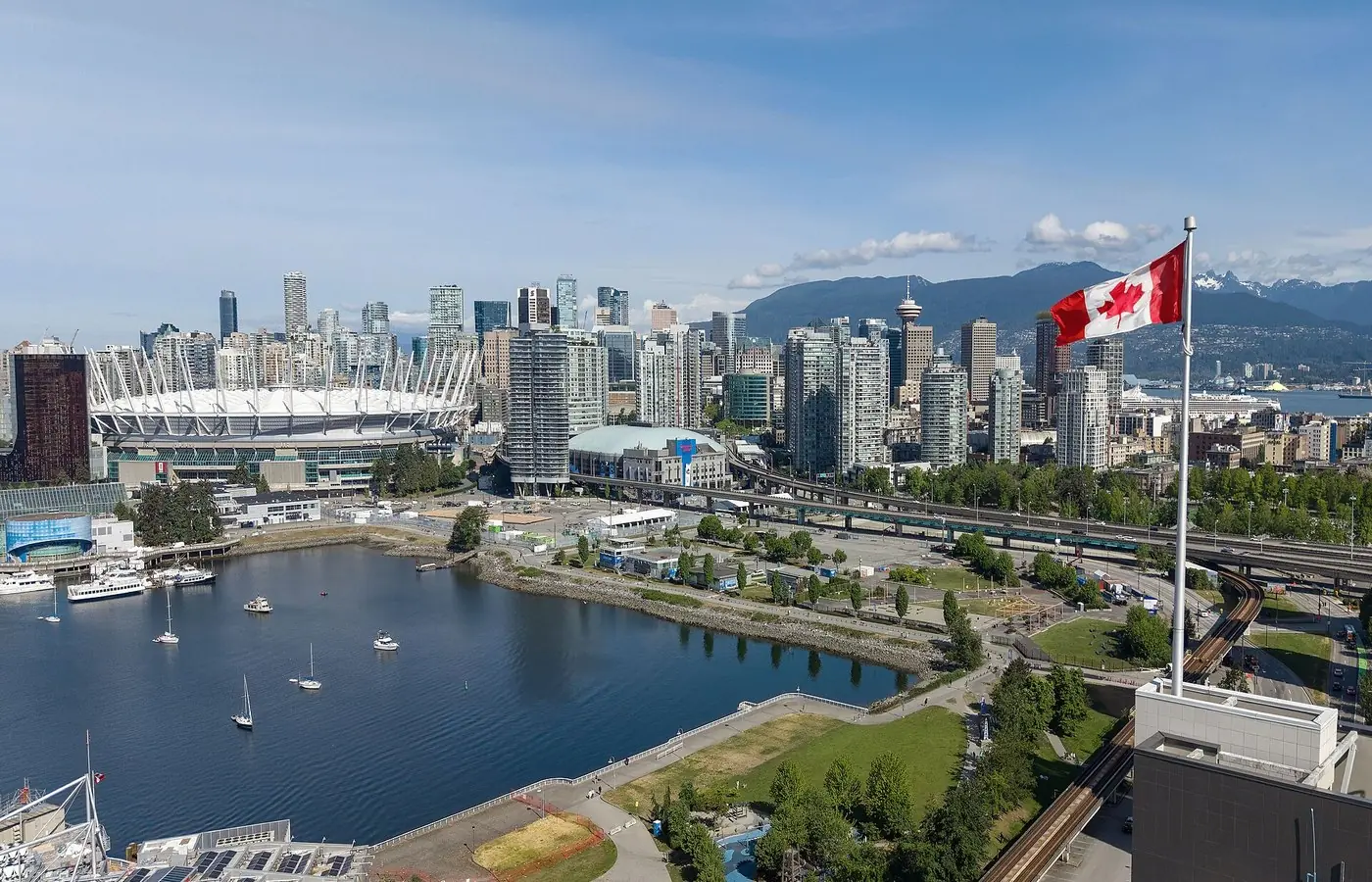
What Vancouver is known for
Vancouver sits on the Pacific coast, framed directly by Burrard Inlet, the Strait of Georgia, and the steep slopes of the Coast Mountains. The meeting of open ocean, temperate rainforest, and glass residential towers gives the city its distinct appearance. Visitors can spend a morning strolling along the saltwater shoreline and reach mountain trailheads later the same day.
The city is also widely recognized as Canada's primary Pacific port and a cultural crossroads. Its maritime shipping industry, expansive public parks, and multicultural population shape daily life, creating a setting where outdoor recreation and city living coexist naturally.
A short history
Long before European arrival, the Coast Salish peoples, including the Musqueam, Squamish, and Tsleil-Waututh Nations, lived throughout the Fraser River delta and Burrard Inlet. Their seasonal settlements, complex oral traditions, and resource harvesting sustained generations across the coastal waters and forests.
Non-Indigenous settlement expanded in the 1860s around a sawmill on Burrard Inlet and an adjacent settlement known as Gastown. The community grew rapidly and was incorporated as the City of Vancouver in 1886, named in honour of British navigator George Vancouver. Later that same year, the Great Vancouver Fire levelled nearly the entire settlement, prompting immediate rebuilding with brick and stone.
The arrival of the transcontinental Canadian Pacific Railway in 1887 linked the city to eastern Canada, transforming Vancouver into a major trade hub. Forestry, fishing, and maritime shipping drew thousands of new arrivals from across Canada, Britain, Asia, and Continental Europe.
In the late 20th century, the city transitioned toward a service- and resource-management economy, gaining international attention through Expo 86 and the 2010 Winter Olympic and Paralympic Games. Urban planning policies encouraged dense residential living in the downtown core alongside public seawall access, creating the modern skyline seen today.
Neighbourhoods
Downtown Vancouver packs distinct districts into a walkable peninsula. Gastown retains its 19th-century brick architecture, cobblestone corridors, and a steam-powered clock, while neighbouring Chinatown features heritage clan buildings and public markets. To the south, Yaletown occupies converted brick rail warehouses that now house residential lofts and patio dining, facing the sheltered waters of False Creek.
To the west, the residential West End features quiet, tree-lined residential streets that lead straight to English Bay Beach and Stanley Park. Across the water, Kitsilano offers broad sandy shores and a relaxed neighbourhood atmosphere, while East Vancouver’s Commercial Drive showcases Italian, Latin American, and countercultural heritage through independent grocers, bakeries, and community cafes.
Food and drink
Vancouver's food traditions stem from local waters and close ties to the Pacific Rim. Wild Pacific salmon, spot prawns, Dungeness crab, and sablefish are seasonal staples throughout the region. Strong Asian immigration has shaped local culinary styles, establishing high standards for Cantonese dim sum, hand-pulled noodles, and regional Japanese dishes, including flame-seared aburi sushi. The Nanaimo bar, a layered chocolate-and-custard confection invented on Vancouver Island, is common in local bakeries, alongside locally roasted coffee and craft beer brewed across East Vancouver.
Music, arts and culture
The city supports an active arts scene that highlights both coastal Indigenous traditions and contemporary works. The Museum of Anthropology on the University of British Columbia campus holds extensive collections of Northwest Coast First Nations carvings, weaving, and totem poles. Downtown, the Vancouver Art Gallery presents works by Canadian painter Emily Carr alongside touring international exhibitions. Live performances fill historic venues like the Orpheum, home to the Vancouver Symphony Orchestra, while the Vancouver International Film Festival and summer theatre festivals attract audiences from across the country.
Top things to do
Cycling or walking the paved seawall around Stanley Park is one of the city's classic activities. The loop circles the perimeter of the 400-hectare urban park, offering open views of English Bay, the Burrard Inlet shipping lanes, and the Lions Gate Bridge, with paths connecting to inland trails beneath tall Douglas firs and western red cedars.
Visitors can also take a small foot ferry across False Creek to Granville Island to explore its public market, artisan studios, and theatres. For garden walks, the classical Dr. Sun Yat-Sen Classical Chinese Garden in Chinatown and the sprawling VanDusen Botanical Garden offer calm green spaces within the city. Across the inlet, the North Shore mountains provide access to suspension bridges, forest trails, and panoramic lookouts over the metropolitan area.
Day trips
Several distinct landscapes lie within easy reach of the city. A drive north along the Sea to Sky Highway follows the fjords of Howe Sound up to the alpine resort municipality of Whistler, passing coastal cliffs and waterfalls. To the east, the agricultural Fraser Valley provides farm stops and heritage sights, including Fort Langley National Historic Site. A short ferry ride across the Strait of Georgia connects travellers to the seaside communities of the Sunshine Coast or the historic harbour of Victoria on Vancouver Island.
Before you go
Check official sources for transit, park and ferry details before you go.
Best time to go
Late spring through early fall is the driest, most popular window for the seawall and mountains. Winters are mild by Canadian standards and often rainy in the city, with snow on the North Shore mountains (ski seasons depend on official hill notices).
Getting there from Canada
Travellers from the rest of Canada arrive at Vancouver International (YVR) on Sea Island in Richmond, by VIA or Rocky Mountaineer-type rail to Pacific Central, or by road or ferry from Vancouver Island and the Interior. SkyTrain, buses and a walkable downtown cover the core.
Official travel advice
Travelling inside Canada does not use a country travel-advice page. Use official park, ferry and highway notices where they are mentioned above.
Search flights, cars, tours and airport rides under Plan your trip below. Checkout is on the partner's site.