
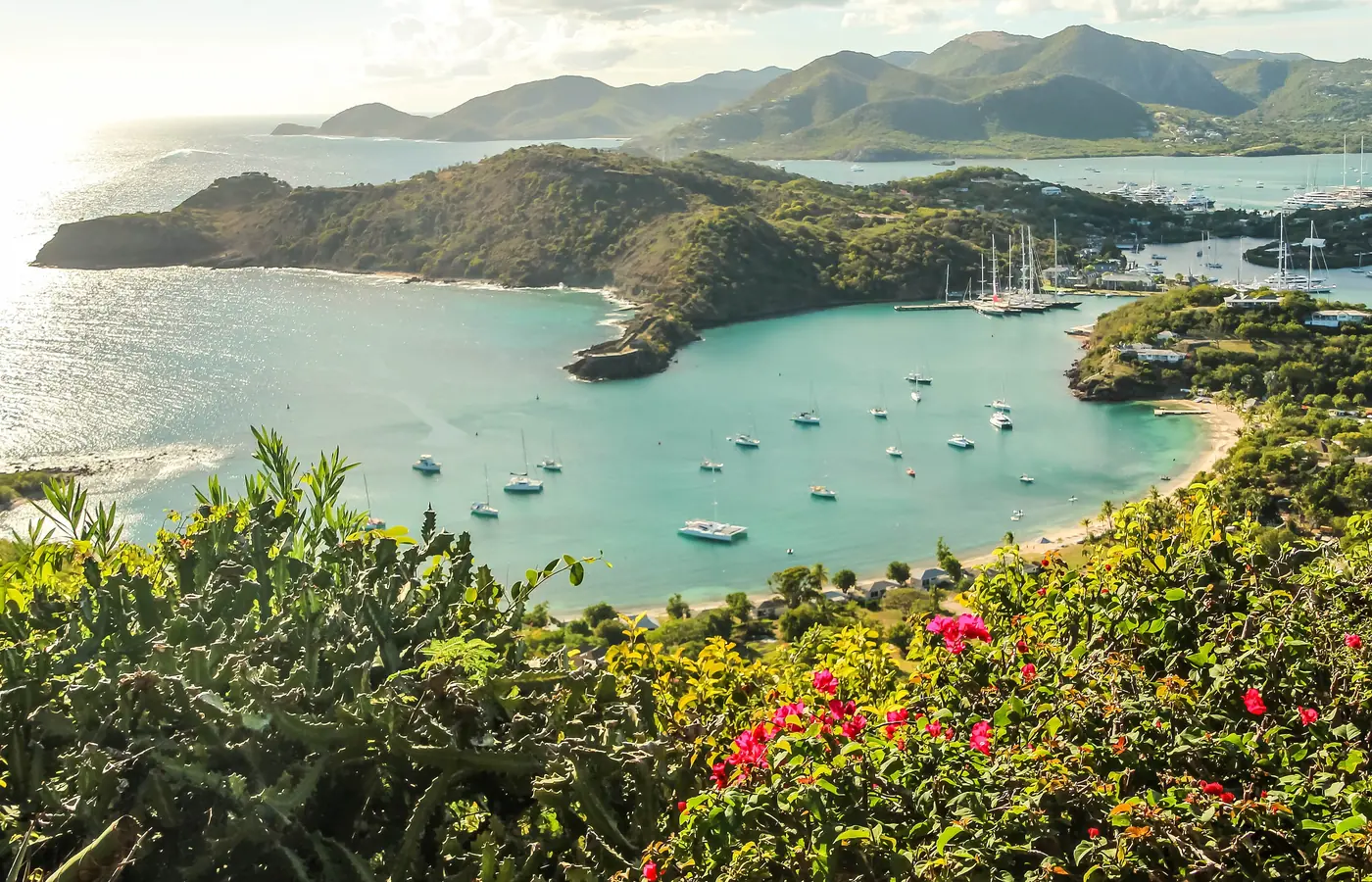
What Antigua is known for
Antigua is known across the Caribbean for its coastline, celebrated for having 365 distinct beaches—one for each day of the year. The island balances calm white-sand coves protected by offshore coral reefs with historic natural harbours, making it a premier regional centre for international sailing and yachting.
Travellers also come for the preserved Georgian architecture and maritime heritage centred around English Harbour and Nelson's Dockyard. Beyond the shoreline, the landscape features rolling green hills, old stone sugar mill towers, and a relaxed, welcoming pace of life that appeals to Canadians looking to escape long winters.
A short history
The earliest known human inhabitants were the Ciboney, who lived on the island thousands of years ago, followed by agricultural Arawak peoples and later seafaring Caribs. Christopher Columbus sighted the island in 1493 during his second transatlantic voyage and named it after the church of Santa Maria de la Antigua in Seville, Spain, though the Spanish did not establish a settlement due to a shortage of fresh water.
English colonists arrived from nearby Saint Kitts in 1632 and established settlements based initially on cash crops such as tobacco and later sugarcane. To clear land and run the labour-intensive sugar plantations, British planters transported thousands of enslaved West Africans to the island under brutal conditions. During the 18th century, Britain heavily fortified English Harbour as its principal naval dockyard in the Leeward Islands, using its sheltered waters to protect warships from tropical storms and rival European fleets.
Slavery was abolished across the British Empire in 1834, though economic hardships and colonial control persisted for many decades. Through the mid-20th century, local labour movements and political leaders successfully organized to secure self-governance, culminating in full independence for the nation of Antigua and Barbuda in 1981 as a sovereign constitutional monarchy within the Commonwealth.
Neighbourhoods
St. John's, the capital on the northwest coast, serves as the island's administrative and commercial centre. The city is laid out in a grid filled with brightly painted wooden buildings, busy public markets, and prominent landmarks such as the twin towers of St. John's Cathedral and the waterfront promenade at Heritage Quay. Just north of the capital, the resort areas around Dickenson Bay and Runaway Bay offer broad beaches, calm surf, and walking paths along the water.
On the south coast, English Harbour and adjacent Falmouth Harbour form the heart of the island's maritime culture. Historic stone naval warehouses and workshops now stand alongside modern marinas filled with sailboats from around the world. Above the harbour basin, the high ridge of Shirley Heights offers panoramic views across the coastline and out toward neighbouring islands.
Food and drink
Antiguan cuisine reflects an appetizing mix of West African, British, and regional Caribbean culinary traditions, heavily reliant on fresh seafood, sweet potatoes, and tropical fruit. The national dish is fungie and pepperpot, a savoury cornmeal paste cooked with okra and served alongside a slow-simmered stew of salted meats, vegetables, and leafy callaloo greens. Other staples include ducana—grated sweet potato and coconut steamed in banana leaves—served with salted codfish, as well as goat water stew, hearty rotis, and the uniquely sweet Antigua Black pineapple. Popular drinks include freshly brewed ginger beer, sorrel tea, mauby made from tree bark, and locally produced rums.
Music, arts and culture
Musical traditions are central to Antiguan identity, with calypso, soca, and steelpan ensembles providing the soundtrack to community gatherings and festivals. The premier cultural celebration is the annual summer Carnival, held between late July and early August to commemorate emancipation with colourful street parades, costumed troupes, and intense musical competitions. Local art centres and craft markets showcase skilled wood carvings, handmade pottery, and woven baskets, alongside paintings that capture the vivid light and coastal settings of island life.
Top things to do
Nelson's Dockyard National Park is the island's most significant heritage destination, recognized by UNESCO for its preserved 18th-century British naval buildings, repair facilities, and historical museum. Visitors can walk among the old stone capstans and sail lofts before taking the road or trail up to Shirley Heights to explore the preserved military ramparts and lookout points. For relaxation by the water, Half Moon Bay on the eastern coast features sweeping sands and ocean surf, while Valley Church Beach and Darkwood Beach on the west coast provide calm, crystal-clear water for swimming.
In St. John's, the Museum of Antigua and Barbuda occupies an 18th-century colonial courthouse, displaying pre-Columbian pottery, colonial tools, and exhibits on national heritage. A visit to the public market near the edge of town reveals stalls piled high with local root crops, spices, and fresh fish caught that morning. Along the rugged eastern Atlantic coastline, Devil's Bridge National Park features dramatic limestone sea arches and natural blowholes carved out by centuries of ocean waves.
Day trips
Barbuda, the country's tranquil sister island to the north, is an easy day trip by passenger ferry or a short flight. The island is known for its quiet pink-sand beaches and the Frigate Bird Sanctuary in Codrington Lagoon, home to a massive nesting colony of magnificent frigatebirds that can be viewed by small boat. Closer to Antigua's northern coast, an excursion by boat into the North Sound lets travellers discover uninhabited mangrove cays and offshore islets such as Great Bird Island, which provides sanctuary for seabirds, tropical lizards, and rare native fauna.
Before you go
Confirm entry rules with official sources before you go, starting with the Government of Canada's Antigua and Barbuda travel advice.
Other Caribbean starting points on this site include Barbados, St. Lucia and San Juan.
Best time to go
The drier months are often December to April; June to November is wetter and is the official Atlantic hurricane season.
Getting there from Canada
Flights from Canada arrive at V.C. Bird International, sometimes seasonally nonstop, otherwise via a regional or U.S. hub. The airport is in the northeast; many beaches and hotels are a drive around the island.
Official travel advice
Read the Government of Canada's Antigua and Barbuda travel advice before you go. Rules and conditions can change.
Search flights, cars, tours and airport rides under Plan your trip below. Checkout is on the partner's site.