
What St. Lucia is known for
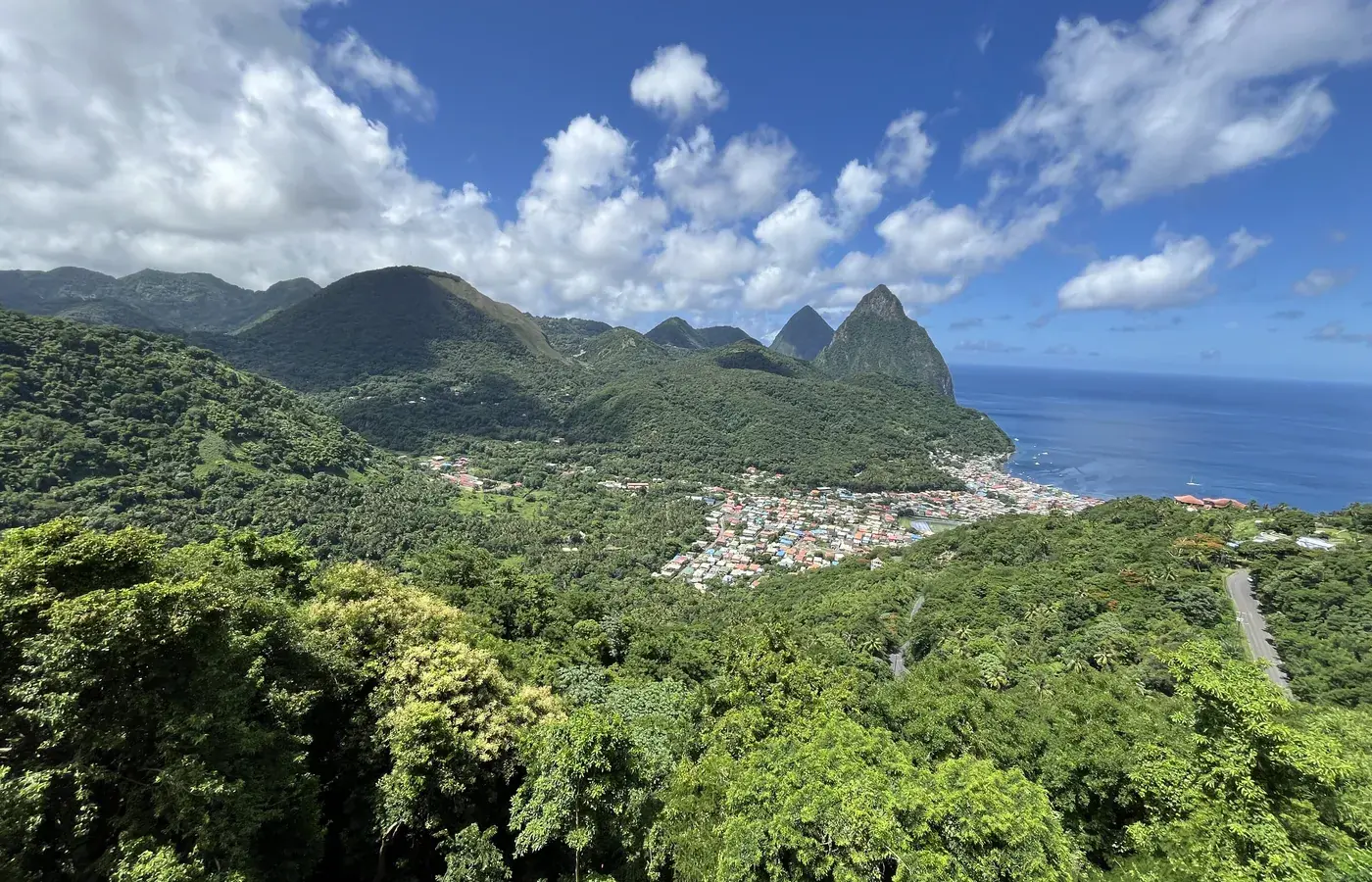
St. Lucia stands out in the eastern Caribbean for its dramatic volcanic geography. The island's signature profile comes from the Pitons, two pointed volcanic spires called Gros Piton and Petit Piton that rise sharply from the sea along the southwest coast near the town of Soufrière.
Beyond its steep peaks, travellers come for sheltered coastal bays, rainforest valleys across the interior, and geothermal features. The island combines Caribbean beach relaxation with outdoor exploring, from quiet anchorages in the north to sulphur vents, hiking trails, and botanical grounds in the south.
A short history
The island's earliest known inhabitants were the Arawak people, followed by the Kalinago, who referred to the island as Hewanorra. European seafarers arrived around the turn of the 16th century, though early attempts at foreign settlement were repelled by the resident Kalinago for decades.
European control shifted frequently throughout the 17th and 18th centuries. France and Great Britain contested sovereignty fourteen times, leading observers to call St. Lucia the Helen of the West Indies. The French established permanent settlements in the mid-18th century, including Soufrière, leaving behind French place names, legal foundations, and a French-based creole language spoken across the island.
Great Britain gained permanent control in 1814 under the Treaty of Paris. The colonial plantation economy, which relied heavily on enslaved African labour to cultivate sugar cane, defined the landscape until the abolition of slavery in 1834. Over time, agricultural production shifted toward bananas and other crops, while African cultural practices remained central to community life.
St. Lucia achieved internal self-government in 1967 and full independence within the Commonwealth in 1979. Modern life reflects this complex background, blending British institutional systems, French cultural roots, and deep Afro-Caribbean traditions across its towns and coastal villages.
Neighbourhoods
Castries, the capital, serves as the commercial and political centre of the island. Centred around Derek Walcott Square and the deep harbour, the city features open-air produce markets, administrative offices, and historic churches. Further north, Rodney Bay and the neighbouring village of Gros Islet present a calmer resort atmosphere, with broad sandy beaches, a sheltered yacht basin, and waterfront promenades.
In contrast, Soufrière on the southwest coast is defined by its dramatic natural setting. Timber-framed colonial buildings and wooden fishing skiffs sit directly below the green cliffs of the Pitons, offering a slower pace and immediate access to nature trails, mineral baths, and old agricultural estates.
Food and drink
St. Lucian cuisine draws on West African, French, and British traditions, using fresh seafood, tropical fruit, and root vegetables. The national dish is green figs and saltfish, which pairs boiled green bananas with salted cod, peppers, onions, and local herbs. Other common meals include callaloo soup, roasted breadfruit, and bouyon, a hearty stew cooked with meat, dumplings, and ground provisions like dasheen and yams. Freshly prepared cocoa tea, made with ground local cocoa sticks and spices, remains a classic morning beverage.
Music, arts and culture
Cultural life on the island revolves around traditional folk music, Creole storytelling, and a distinguished literary history. Calypso, soca, and folk drumming feature prominently during community celebrations, alongside seasonal flower festivals dedicated to the historic fraternal orders of La Rose and La Marguerite. St. Lucia also takes great pride in its intellectual heritage, having produced two Nobel laureates: economist Sir Arthur Lewis in 1979 and poet and playwright Derek Walcott in 1992.
Top things to do
In the north, Pigeon Island National Landmark allows visitors to explore 18th-century British military fortifications, walk coastal trails, and relax on peaceful beaches connected to the mainland by a causeway. In Castries, the Cathedral Basilica of the Immaculate Conception and the colourful stalls of the Castries Central Market offer a look into everyday local trade and religious art.
In the southwest, the Pitons Management Area provides opportunities to view the volcanic spires from coastal lookouts or hike the designated trail up Gros Piton. Nearby, the Sulphur Springs area near Soufrière offers access to steaming geothermal vents and warm mineral pools, alongside Diamond Falls Botanical Gardens, where mineral-rich waters cascade through landscaped tropical grounds.
Day trips
Travellers staying in either the northern resort strip or the southern bays often take an easy day trip by catamaran to view the opposite coast from the water. For an overland journey, taking a scenic day drive to east coast fishing villages like Dennery and Micoud reveals rugged Atlantic coastlines, banana farms, and protected coastal mangroves around Savannes Bay.
Before you go
Confirm entry, health and document rules with official sources before you go, starting with the Government of Canada's Saint Lucia travel advice. We don't list visa rules or fees here.
Other Caribbean starting points on this site include Aruba, Nassau, Punta Cana and Curaçao.
Best time to go
The drier months are often December to May; June to November is wetter and is the official Atlantic hurricane season.
Getting there from Canada
Flights from Canada arrive at Hewanorra International (near the south end of the island), sometimes seasonally nonstop, otherwise via a regional hub. George F. L. Charles in the north is a smaller airport. The drive between the south and the northwest resort areas is long and winding; many stays arrange a transfer.
Official travel advice
Read the Government of Canada's Saint Lucia travel advice before you go. Rules and conditions can change.
Search flights, cars, tours and airport rides under Plan your trip below. Checkout is on the partner's site.