
What Curaçao is known for
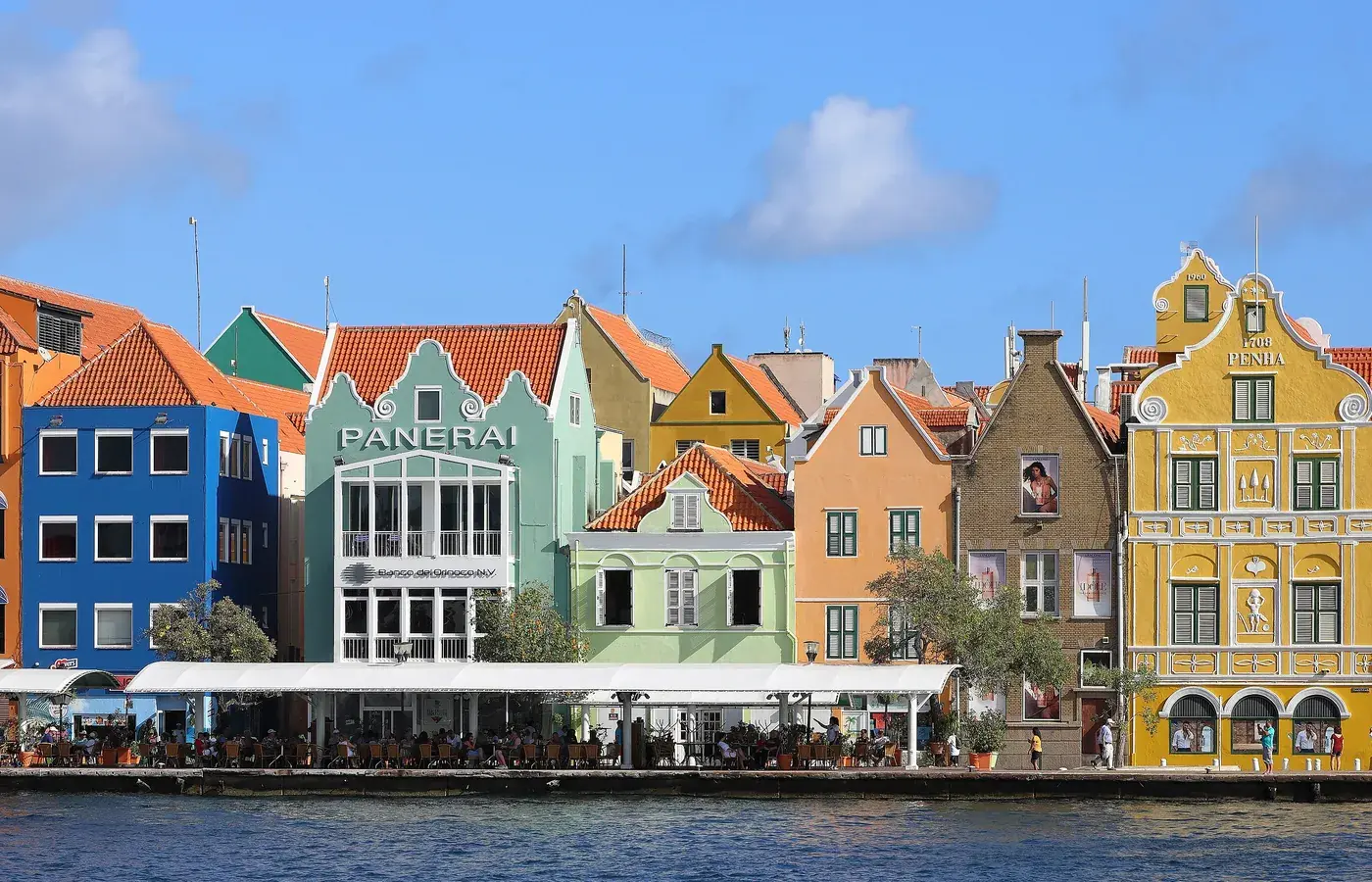
Curaçao is distinctive in the southern Caribbean for Dutch colonial architecture set against a tropical coastal landscape. The capital, Willemstad, is defined by pastel-painted gabled merchant houses along St. Anna Bay, reminiscent of Amsterdam in bright Caribbean colours. Sheltered sandy coves line the south and west coasts, while coral reefs encircle much of the shoreline.
The island is also known for its multilingual, multicultural population. Centuries of maritime trade brought together Arawak, European, African, and Jewish influences, shaping customs and everyday speech. With an arid climate, steady trade winds, and a historic urban core, the island balances heritage walking tours with relaxed coastal swimming.
A short history
The Caquetío people, part of the Arawak language family, were the earliest known inhabitants, migrating from mainland South America. Spanish explorers arrived in 1499 under Alonso de Ojeda. Finding no gold, the Spanish established small settlements and livestock ranches, eventually deporting much of the Indigenous population to work across the Caribbean.
In 1634, the Dutch West India Company seized the island to secure a naval base and deep-water harbour. Fort Amsterdam was constructed at the entrance to St. Anna Bay, forming the core around which Willemstad grew. The island soon developed into a major commercial centre, heavily involved in regional trade and the transatlantic slave trade.
Slavery was abolished in the Dutch colonies in 1863, transforming the island's economy and society. In the early 20th century, the discovery of crude oil in nearby Venezuela brought industrialization, as a large oil refinery opened on the Schottegat harbour. This boom attracted workers from across the Caribbean, Latin America, and Europe.
Curaçao was part of the Netherlands Antilles until that entity dissolved in 2010, when it became an autonomous country within the Kingdom of the Netherlands. Willemstad's historic inner city and harbour were recognized as a UNESCO World Heritage site in 1997, protecting centuries of Dutch and Caribbean architectural history.
Neighbourhoods
Willemstad is divided into historic districts by St. Anna Bay. On the eastern shore lies Punda, the oldest quarter, laid out in a grid of pedestrian streets with colonial buildings, the Handelskade waterfront, and lively public squares. On the opposite bank sits Otrobanda, founded in the early 18th century, featuring winding residential lanes, colourful vernacular houses, and public street art.
Just east of Punda, the Pietermaai district was laid out in the 18th and 19th centuries as an affluent residential quarter outside the city walls. Restored neoclassical townhouses and courtyards make it a popular area for strolling. Nearby Scharloo, along the Waaigat inlet, features grand 19th-century mansions originally built by merchants, many now housing cultural institutions.
Food and drink
Local culinary traditions, known as kuminda krioyo, blend African, Dutch, and Caribbean influences. Hearty stews called stobá, made with goat, beef, or vegetables like papaya, are commonly served alongside funchi, a savoury cornmeal mash similar to polenta, or tutu, which combines cornmeal with beans and sugar. Fresh fish, including fried red snapper and wahoo, is a staple along the coast. The island is also the historic home of Curaçao liqueur, an orange-flavoured spirit distilled from the dried peel of the Laraha, a bitter citrus fruit descended from Spanish Valencia oranges.
Music, arts and culture
Culture in Curaçao is deeply connected to Papiamentu, a creole language incorporating elements of Portuguese, Spanish, Dutch, and African tongues that serves as the everyday language of most residents. Musical heritage includes tambú, an Afro-Curaçaoan tradition of drumming, singing, and dancing that originated among enslaved people, and tumba, the lively rhythm that defines the annual Carnival season. Visual arts are widely visible in the public murals, galleries, and sculpture displays that animate the historic districts of Willemstad.
Top things to do
A visit to Willemstad often centres on crossing the Queen Emma Bridge, a floating pontoon footbridge that swings open to allow ships into the harbour. In Punda, the Mikvé Israel-Emanuel Synagogue, consecrated in 1732, is the oldest continuously functioning synagogue in the Americas and is noted for its sand-covered floor. On the Otrobanda side, the Kura Hulanda Museum covers several historic buildings and houses exhibits on African history, the transatlantic slave trade, and Antillean culture.
Outside the capital, travellers explore the natural landscape of the western coastline, where protected coves like Grote Knip and Playa Lagun provide sheltered swimming and snorkelling over coral heads. Christoffel National Park protects the interior hills, featuring hiking trails that climb to the summit of Mount Christoffel for panoramic views over the island. On the rugged northern coast, Shete Boka National Park offers trails overlooking dramatic limestone cliffs and blowholes where ocean waves crash into sea caves.
Day trips
An uninhabited coral island known as Klein Curaçao lies off the southeast coast and makes an easy day trip by boat across open waters. The flat, windswept coral island features long white-sand beaches, an abandoned pink early 20th-century lighthouse, and the rusting hulls of shipwrecks along its exposed windward shore. On the main island, the quiet rural region of Westpunt is accessible within a day's drive from Willemstad, offering secluded rocky inlets, sea turtle spotting at Playa Piskado, and peaceful coastal walking tracks.
Before you go
Confirm entry, health and document rules with official sources before you go, starting with the Government of Canada's Curaçao travel advice. We don't list visa rules or fees here.
Another Dutch Caribbean starting point on this site is Aruba. See also St. Lucia and Punta Cana.
Best time to go
Like its neighbours, Curacao is generally drier than many eastern Caribbean islands, with a warm climate year-round. The official Atlantic hurricane season is 1 June to 30 November; the southern Caribbean is affected less often, but official notices still apply.
Getting there from Canada
Flights from Canada usually arrive at Curacao International (Hato), typically via a U.S. or regional hub, with occasional seasonal nonstops. The airport is a short drive from Willemstad.
Official travel advice
Read the Government of Canada's Curacao travel advice before you go. Rules and conditions can change.
Search flights, cars, tours and airport rides under Plan your trip below. Checkout is on the partner's site.