
What Bali is known for
Bali stands apart from the rest of Indonesia as a predominantly Hindu island, known for its ornate temple architecture, volcanic peaks, and terraced rice paddies. Visitors travel here for the warm tropical climate, well-known surf breaks along the southern coast, and the quiet forested hills of the interior.
Daily life on the island revolves around spiritual customs, visible in hand-woven palm-leaf offerings placed along pathways and colourful temple festivals held year-round. Whether you want to spend your days by the ocean, hike up volcanic slopes, or explore craft villages, Bali combines ancient traditions with outdoor recreation.
A short history
Austronesian peoples migrated to Bali thousands of years ago, establishing irrigated rice farming and village councils. Over the first millennium, seafaring trade routes brought Hindu and Buddhist influences from India, which blended with local animist beliefs into a distinct Balinese religious practice.
In the 14th century, the East Javanese Majapahit Empire extended its authority over Bali. When the empire declined in the late 15th and early 16th centuries, Javanese nobles, priests, artisans, and performers crossed the strait to settle on the island, leaving an enduring mark on Balinese court literature, dance, and architecture.
European contact began when Dutch sailors arrived in the late 16th century, though local royal kingdoms retained control for centuries. The Netherlands asserted direct colonial rule in the early 20th century following military campaigns against southern Balinese courts. After the end of the Second World War and Indonesia's war of independence, Bali was incorporated into the Republic of Indonesia.
Western painters and anthropologists in the 1930s helped introduce the island's painting, sculpture, and music to international audiences. With the opening of an expanded international airport in the late 1960s, Bali grew into Indonesia's leading international holiday destination.
Neighbourhoods
The southern plains and coastal strips hold the island's most developed travel districts. Seminyak and Canggu draw visitors for ocean waves, boutique shops, and seaside sunsets, while Nusa Dua offers broad white-sand beaches, manicured gardens, and calm waters sheltered by offshore reefs. Kuta remains an active centre with busy market streets and a long public beachfront.
Inland in the central hills, Ubud serves as Bali's artistic heart, surrounded by river ravines and terraced fields. Its central streets are lined with art galleries, craft workshops, and traditional stone courtyards. Farther along the coast, towns like Amed in the east and Lovina in the north provide a relaxed tempo, with volcanic black-sand beaches and traditional outrigger fishing boats.
Food and drink
Balinese cooking is built on complex spice pastes called basa gede, combining shallots, garlic, galangal, turmeric, ginger, and hot chilies. Festive meals often centre on babi guling, a whole pig roasted on a spit and seasoned with spices, or bebek betutu, duck wrapped in banana leaves and slow-cooked until tender. Casual neighbourhood food stalls serve nasi campur, a mound of steamed rice accompanied by small portions of spiced meats, vegetables, fried tempeh, and chili sambal. To drink, locals enjoy fresh young coconut water, freshly pressed tropical fruit juices, and jamu, a traditional herbal preparation made with turmeric and ginger.
Music, arts and culture
Balinese artistic expression remains deeply tied to temple life and village ceremonies. Gamelan ensembles, composed of bronze metallophones, hanging gongs, and double-headed drums, provide rhythmic accompaniment for theatrical plays and social gatherings. Classical dances such as the refined Legong and the dramatic Barong storytelling performance portray Hindu epics and mythological spirits through precise hand gestures and expressive eye movements. Regional craft specialities also thrive across the island, including intricate woodcarving in Mas, silverwork in Celuk, and stone sculpture in Batubulan.
Top things to do
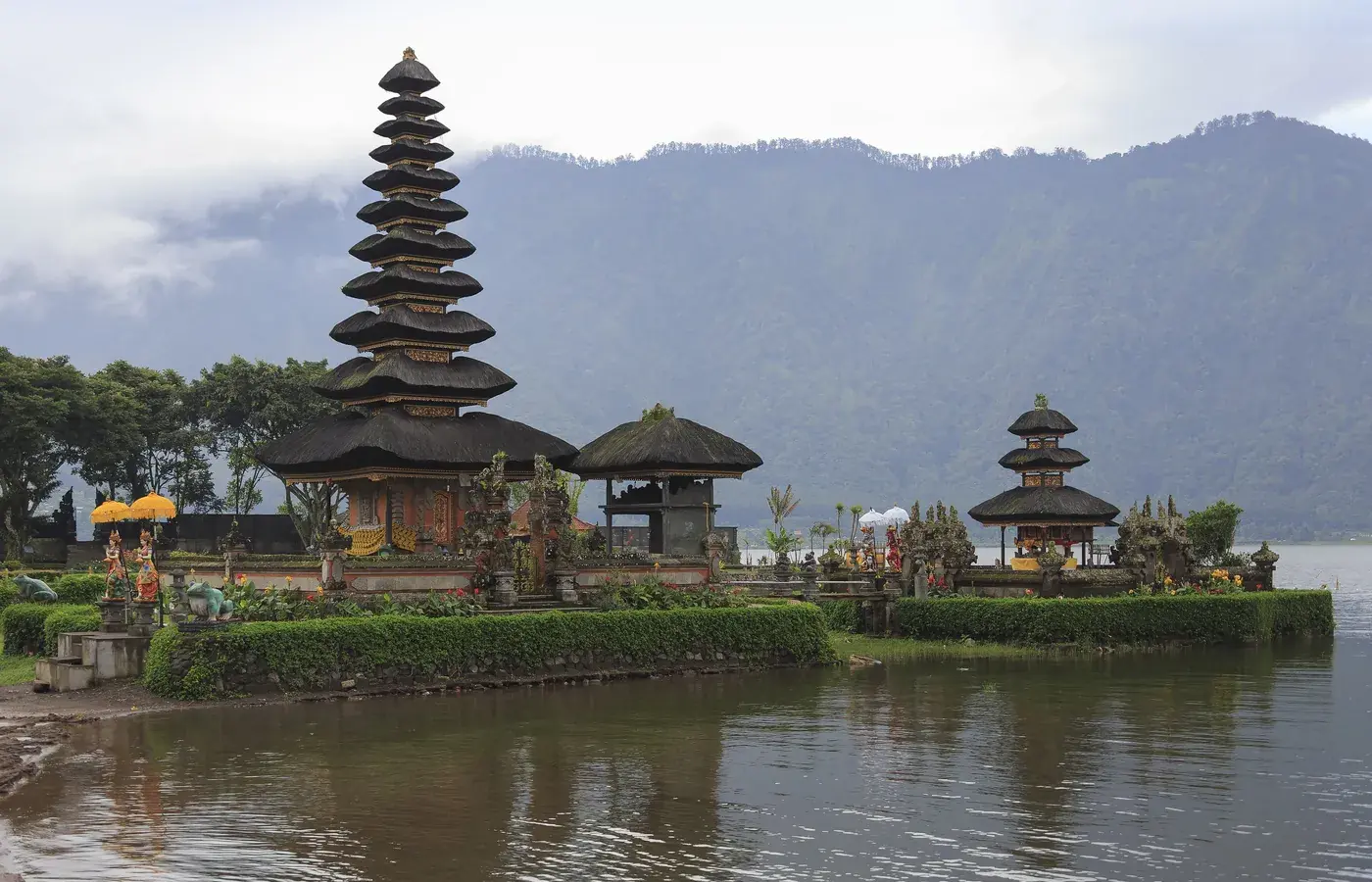
Exploring coastal and highland temples is a primary highlight of any visit. Uluwatu Temple sits atop sheer sea cliffs on the southern Bukit Peninsula, where spectators gather in an open-air amphitheatre at dusk to watch the rhythmic Kecak fire dance. Along the west coast, Tanah Lot stands on a dramatic offshore rock that becomes an island at high tide, while in the misty mountains of Bedugul, the tiered shrines of Pura Ulun Danu Bratan appear to float on Lake Bratan.
Travellers also spend time outdoors walking through the countryside and wildlife reserves. The terraced rice landscapes of Tegallalang and Jatiluwih showcase Bali's subak irrigation system, a community-run cooperative method that dates back over a thousand years. Other popular stops include walking the shaded paths of the Sacred Monkey Forest Sanctuary in Ubud, climbing the volcanic trail of Mount Batur at dawn, and swimming at southern beaches such as Padang Padang.
Day trips
A short boat ride across the Badung Strait leads to Nusa Penida, an island known for dramatic coastal viewpoints like Kelingking cliff, clear bays, and offshore waters where giant manta rays swim. Neighbouring Nusa Lembongan offers a quieter base for coastal walks, snorkelling, and paddling through mangrove forests. On the main island, an easy day trip north into the Kintamani highlands brings cooler mountain air, roadside fruit orchards, and wide panoramas over Lake Batur and its surrounding volcanic caldera.
Before you go
Confirm entry, health and temple-visit rules with official sources before you go, starting with the Government of Canada's Indonesia travel advice. We don't list visa rules or fees here.
Another Southeast Asia starting point on this site is Phuket.
Best time to go
Bali has a tropical monsoon climate. The drier months are often April or May through September; November to March is generally wetter, with short, heavy rains possible on many afternoons. The official Australian Bureau of Meteorology and other meteorological agencies describe an Australian-monsoon / wet-season pattern; local timing varies by coast and highland. Official Government of Canada advice for Indonesia should be read in full, including any regional notes.
Getting there from Canada
Flights from Canada typically arrive at I Gusti Ngurah Rai International in Denpasar, usually via an Asian or Middle Eastern hub (often 20 hours or more including connections). The airport is in the south; stays in Seminyak, Canggu, Ubud or the east coast then need a road transfer, which can be slow in traffic.
Official travel advice
Read the Government of Canada's Indonesia travel advice before you go. Rules and conditions can change.
Search flights, cars, tours and airport rides under Plan your trip below. Checkout is on the partner's site.