
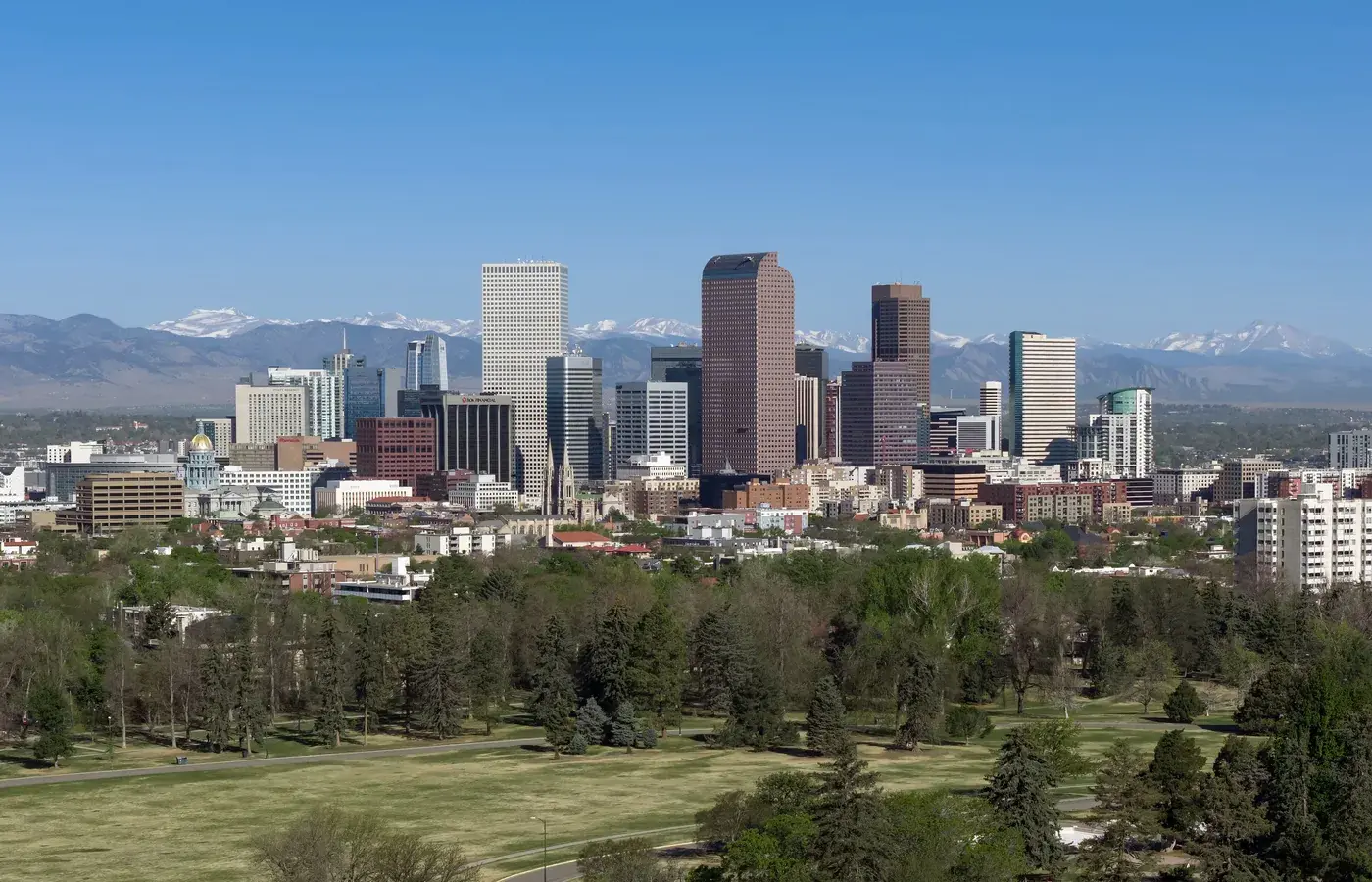
What Denver is known for
Denver sits at the foot of the Rocky Mountains, roughly 1,600 metres above sea level, earning it the longstanding nickname of the Mile High City. It serves as both Colorado's state capital and a primary gateway to outdoor recreation, pairing urban museums and green spaces with expansive views of the Front Range.
The city is also recognized for its sunny high-plains climate, active craft beer scene, and enthusiastic sporting culture. Visitors find a walkable downtown that balances historical red-brick architecture with modern civic spaces, making it an appealing stop before or after venturing into the high country.
A short history
Long before European settlers arrived, the South Platte River valley was a seasonal camping and hunting ground for Indigenous peoples, notably the Arapaho, Cheyenne, and Ute. They followed game trails and gathered resources along the waterways where the plains met the foothills.
The modern town emerged during the Pikes Peak Gold Rush in 1858, when prospectors established settlements along Cherry Creek. The town was named in honour of Kansas Territorial Governor James W. Denver. Although early gold deposits were quickly exhausted, the settlement survived as a supply and trading hub for mining camps deeper in the mountains.
The arrival of the railroad in 1870 linked Denver to the transcontinental rail network, spurring rapid growth in silver mining, commerce, and agriculture. Grand Victorian mansions, public brick buildings, and rail infrastructure began defining the streetscapes during this prosperous era.
Through the twentieth century, Denver diversified into regional federal administration, aerospace, energy, and tourism. Careful preservation of historic districts like Lower Downtown helped revive the core in the late 1900s, shaping the relaxed, service- and recreation-oriented metropolis seen today.
Neighbourhoods
Downtown and Lower Downtown, known locally as LoDo, form the historic heart of the city, centred around the restored 1914 Union Station and the pedestrian-friendly 16th Street Mall. Brick warehouses throughout LoDo and the nearby River North Art District, or RiNo, have been transformed into art studios, galleries, and gathering spaces marked by large outdoor murals.
To the southeast, Capitol Hill surrounds the Colorado State Capitol with historic mansions, tree-lined residential streets, and cultural institutions. Adjacent neighbourhoods like Baker and the Highlands offer quiet blocks of Victorian cottages, local craft workshops, and community green spaces.
Food and drink
Denver's dining scene reflects its Western heritage alongside influences from the American Southwest and Mexico. Colorado green chile—a hearty stew of roasted green chiles, pork, and broth—is a regional staple served in bowls or smothered over breakfast burritos. Bison, locally raised lamb, and Rocky Mountain trout frequently appear on local menus, while the city's pioneering microbrewery culture has established it as a major centre for craft beer brewing and the home of the Great American Beer Festival.
Music, arts and culture
Arts and culture thrive across dedicated civic districts and outdoor venues. The Golden Triangle Creative District hosts several major institutions, including the Denver Art Museum, recognized for its expansive collections of Indigenous art and modern architecture, and the Clyfford Still Museum. For live performance, the city is well known for Red Rocks Amphitheatre, an open-air venue carved into natural sandstone formations in the nearby foothills that has hosted concerts for over a century.
Top things to do
Visitors can explore the grounds of the Colorado State Capitol, where a step marked at precisely one mile above sea level offers views west toward the mountains. Nearby, City Park houses both the Denver Zoo and the Denver Museum of Nature & Science, surrounded by broad lawns and lakes that frame views of the city skyline.
The Denver Botanic Gardens provides peaceful paths through diverse plant collections, including native alpine flora adapted to high elevations. Walking or cycling along the paved South Platte River and Cherry Creek trails gives travellers a pleasant, car-free way to explore the urban core and observe local park life.
Day trips
The Front Range offers rewarding excursions within an easy day trip of the city centre. To the northwest, Boulder features walking paths along Boulder Creek and views of the sandstone Flatirons, while the historic mining towns of Golden, Central City, and Georgetown offer a look into the region's nineteenth-century gold-rush past. Further west, Rocky Mountain National Park provides mountain passes, alpine tundra, and wildlife viewing within a day's drive.
Before you go
Confirm entry rules with official sources before you go, starting with the Government of Canada's United States travel advice. If you are heading into the mountains, check official trail and road sources; we don't list fees or reviews here.
Other starting points on this site include Seattle, Calgary and Banff.
Best time to go
The high-plains and foothills setting means strong sun, four seasons, and afternoon storms in summer. Winters can be cold with snow; spring and fall are often used for city walks and Front Range day trips. Altitude is about 1,600 metres; pace yourself on arrival.
Getting there from Canada
Flights from Canada usually arrive at Denver International, often via a connection, with some nonstops from larger Canadian cities depending on the season.
Official travel advice
Read the Government of Canada's United States travel advice before you go. Rules and conditions can change.
Search flights, cars, tours and airport rides under Plan your trip below. Checkout is on the partner's site.