
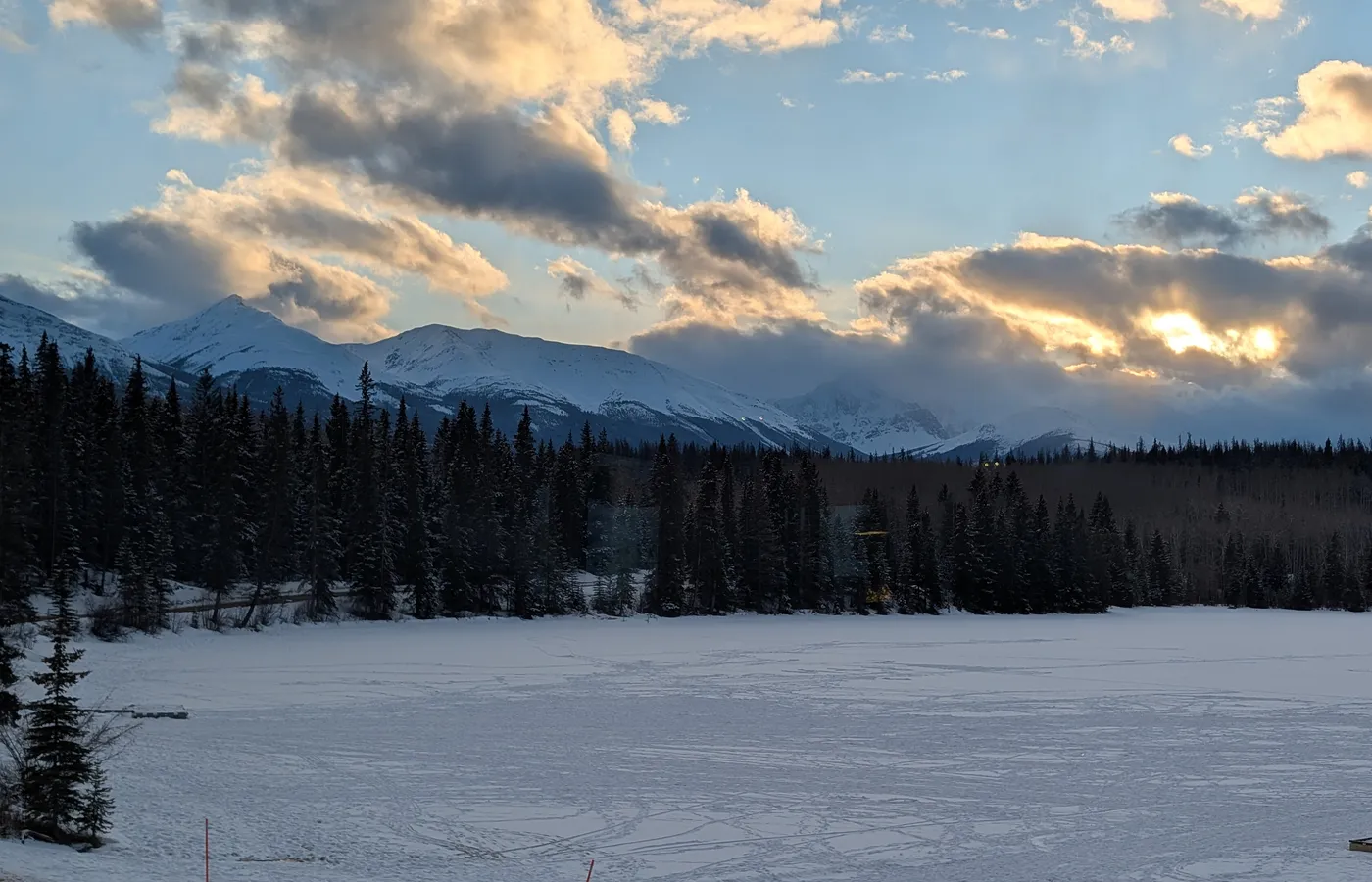
What Jasper is known for
Jasper is known for its wide mountain valleys, quiet pine forests, and a grounded atmosphere that sets it apart from busier resort towns. Located in the Athabasca River basin, the town serves as the heart of Jasper National Park, the largest national park in the Canadian Rockies. Travellers come to see wildlife like elk and bighorn sheep wandering near the townsite, and to explore rugged peaks and glacial waters.
The area is also recognized around the world as an official Dark Sky Preserve. With minimal light pollution across thousands of square kilometres, Jasper offers exceptional stargazing and views of the northern lights. Whether on foot along the river or looking up at Pyramid Mountain, visitors experience an authentic connection to the Canadian wilderness.
A short history
Long before European traders arrived, Indigenous peoples including the Stoney Nakoda, Cree, Secwépemc, and Métis lived in and travelled through the Athabasca valley. They used the mountain passes for hunting, trade, and seasonal travel, establishing trails that shaped future travel routes across the Rockies.
In the early 19th century, the fur trade expanded into the region. The North West Company established a trading post known as Jasper House along the river, named after company clerk Jasper Hawes. It became an important supply stop for traders crossing the Athabasca Pass toward the Pacific coast.
The federal government established Jasper Forest Park in 1907 to protect the region's natural beauty. When transcontinental railway lines were built through the Yellowhead Pass a few years later, a service town called Fitzhugh was established along the tracks. In 1913, the townsite was surveyed and renamed Jasper to honour the old fur-trade post.
The opening of the highway between Jasper and Banff in 1940 (later named the Icefields Parkway) turned the quiet railway outpost into a hub for outdoor tourism. Today, the town remains an active railway community and a centre for conservation, balancing park protection with welcoming visitors from around the world.
Neighbourhoods
The Jasper Townsite is compact and easy to explore on foot. Connaught Drive and Patricia Street form the commercial backbone, lined with stone-trimmed municipal buildings, outfitters, and bakeries. Residential streets branch off the main avenues, where mid-century houses and gardens sit against a backdrop of pine-covered ridges.
Just beyond the core, several quiet areas line the perimeter of town. The Pyramid Lake area to the north offers quiet wooded grounds and shorelines beneath the slopes of Pyramid Mountain. Along the Athabasca River flats, cabin grounds and quiet walking loops give visitors space to take in the water and open valley views.
Food and drink
Dining in Jasper draws heavily on Western Canadian agricultural traditions. Menus across town feature Alberta beef, bison, and game meats like elk and venison, often paired with root vegetables and hearty grains. Wild berries, particularly saskatoon berries, are baked into pies and crisps or simmered into compotes. Breweries and tasting rooms use mountain meltwater to craft crisp ales and lagers, making a cold local brew after a day on the trails a classic mountain ritual.
Music, arts and culture
Jasper maintains a creative community shaped by alpine history and outdoor life. The Jasper Yellowhead Museum and Archives preserves stories and artifacts from early mountaineering, the fur trade, and railway construction. Each autumn, the Jasper Dark Sky Festival draws scientists, storytellers, and stargazers for public talks and telescope viewings under the night sky. Indigenous artists and local craftspeople display carving, photography, and landscape painting that reflect the natural heritage of the northern Rockies.
Top things to do
Exploring the local waters is central to a trip here. Visitors can walk the perimeter trails at Pyramid Lake and Patricia Lake, or paddle across the clear water beneath the mountains. Nearby, Maligne Canyon provides walking paths and footbridges over a deep limestone gorge where waterfalls rush into the rock far below.
Hiking trails lead up Whistlers Mountain for expansive views across the Athabasca valley and surrounding mountain ranges. Along the river corridors, Athabasca Falls and Sunwapta Falls offer powerful displays of glacial runoff carving through bedrock. In winter, downhill skiers head to Marmot Basin, while groomed cross-country ski trails wind through the surrounding parkland.
Day trips
Maligne Lake is an easy day trip from the townsite, known for its deep blue water, mountain peaks, and views toward Spirit Island. Heading east, Miette Hot Springs lets travellers soak in mineral pools situated in the Fiddle River valley. Driving south along the Icefields Parkway leads directly to the Columbia Icefield, where visitors can stand near the toe of the Athabasca Glacier. To the west, across the provincial border into British Columbia, Mount Robson Provincial Park is within a day's drive, home to the highest peak in the Canadian Rockies.
Before you go
Trail, road and park-entry details change with the season, confirm them with official Parks Canada sources before you go.
Other mountain starting points on this site include Banff and Calgary.
Best time to go
Summer is the main park season, with the Icefields Parkway usually at its most open (the road can close in any season for weather, fire or collisions; check official notices). Fall is shorter and can be quiet and cold at night. Winter is long, cold and beautiful, with fewer services and serious driving and avalanche considerations. The town of Jasper was affected by a major wildfire in 2024; check official Parks Canada and town recovery notices before you go, because access and services can change.
Getting there from Canada
Most visitors fly into Edmonton or Calgary and drive (Edmonton is generally the shorter road to Jasper). The VIA Rail Canadian also stops at Jasper. A car or a scheduled tour is the usual way to see the park beyond the townsite.
Official travel advice
Travelling inside Canada does not use a country travel-advice page. Use official park, ferry and highway notices where they are mentioned above.
Search flights, cars, tours and airport rides under Plan your trip below. Checkout is on the partner's site.