
What New Orleans is known for
Built along a sharp bend in the Mississippi River, New Orleans is defined by its deep cultural traditions, distinct architecture, and unhurried pace. Visitors come for historic streetscapes with cast-iron balconies, open public squares, and street life where music and social gatherings happen naturally outdoors.
The city is recognized for its Creole and Cajun culinary heritage, brass bands, and long-standing community celebrations. Its position between the river and Lake Pontchartrain gives it a subtropical character shaped by French, Spanish, West African, and Caribbean influences.
A short history
Long before European colonizers arrived, Indigenous peoples including the Chitimacha, Houma, and Choctaw lived and traded along the waterways of the lower Mississippi. In 1718, French colonists founded the settlement on high ground along the river bend, creating what is now the French Quarter.
Spain took control of Louisiana in the 1760s, overseeing the rebuilding of much of the town after devastating fires in 1788 and 1794. The territory briefly returned to France before the United States acquired it in the Louisiana Purchase of 1803, bringing rapid expansion and newcomers from across the continent and the Caribbean.
During the 19th century, New Orleans grew into a major shipping port, heavily shaped by river commerce and the trade in enslaved people. Union forces occupied the city early in the American Civil War, leaving its historic buildings intact while postwar decades brought dramatic social and economic changes.
By the early 20th century, African American musicians in neighbourhoods like Tremé created jazz by blending brass band traditions, blues, and spirituals. This rich mix of ancestry and cultural endurance continues to shape the community today.
Neighbourhoods
The French Quarter serves as the historic heart, laid out in a grid with Spanish-era architecture, interior courtyards, and wrought-iron balconies. Just downriver, Faubourg Marigny features colourful Creole cottages and a relaxed evening atmosphere centred around live music along Frenchmen Street.
Upriver along the streetcar tracks lies the Garden District, recognized for grand 19th-century homes, shaded sidewalks, and massive live oak trees. Tremé, among the earliest African American neighbourhoods in the United States, holds deep ties to brass band traditions, civil rights history, and neighbourhood social clubs.
Food and drink
The local food culture draws from French, Spanish, West African, Indigenous, and Sicilian cooking. Classic dishes include rich bowls of gumbo, seafood jambalaya, crawfish étouffée, and red beans and rice slow-cooked on Mondays. Hearty po'boy sandwiches on French bread and round muffulettas layered with cured meats and olive salad are popular everyday fare, often paired with sugar-dusted beignets or traditional local drinks such as the Sazerac.
Music, arts and culture
Music is part of everyday community life, heard from corner brass bands, neighbourhood second-line parades, and traditional jazz halls. The city hosts prominent gatherings throughout the year, including Mardi Gras with its community krewes, the New Orleans Jazz & Heritage Festival, and the French Quarter Festival. Long-standing social aid and pleasure clubs and Mardi Gras Indian tribes maintain cultural practices passed through generations.
Top things to do
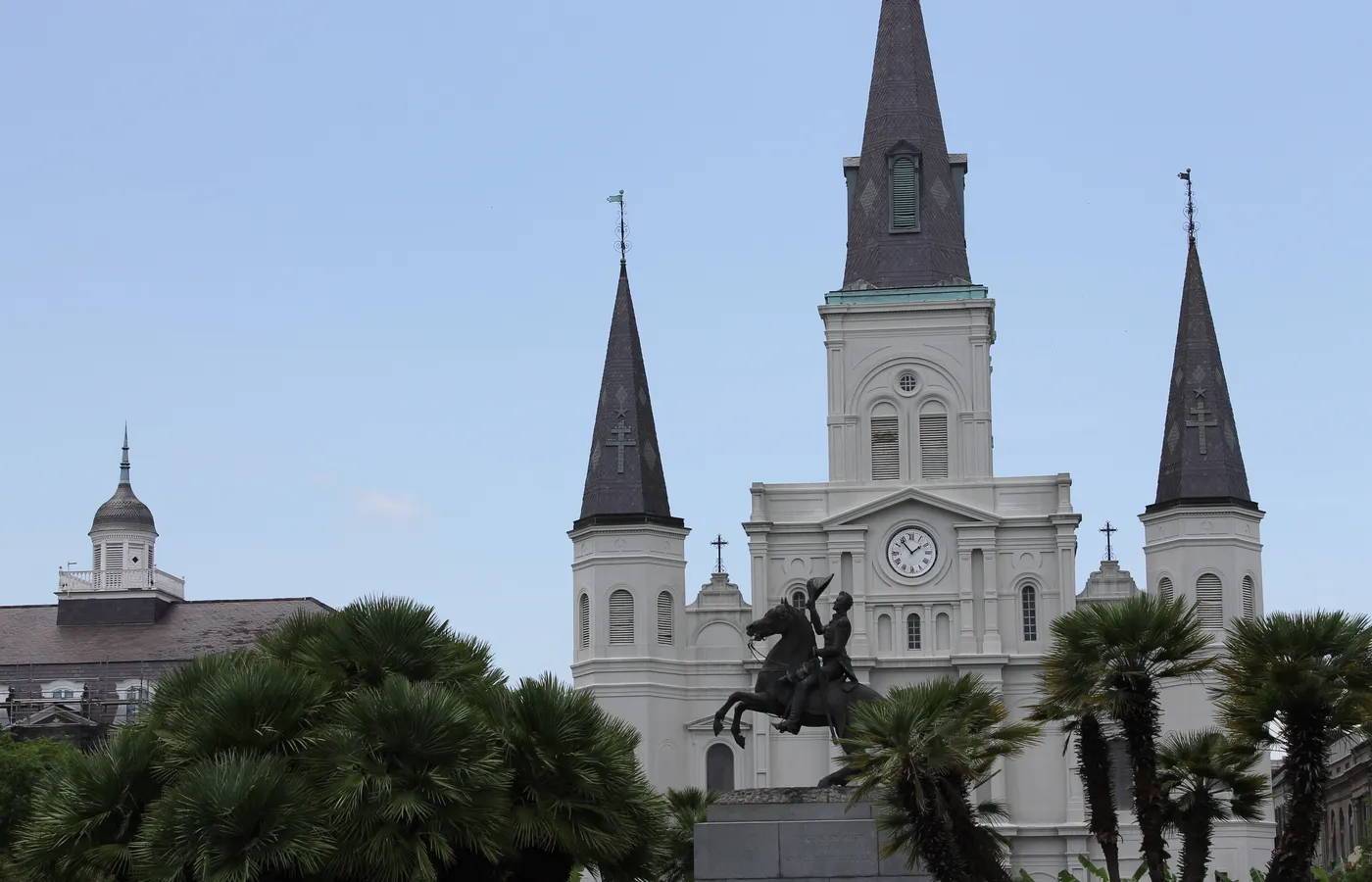
A walk through Jackson Square leads directly past street artists and the facade of the historic St. Louis Cathedral, with the riverfront promenade along the Mississippi just steps away. Riding the green streetcars along St. Charles Avenue offers an open-window journey past historic mansions and university grounds.
Visitors can also explore the National WWII Museum in the Warehouse District or the New Orleans Museum of Art inside expansive City Park. Walking tours through historic above-ground cemeteries, with their whitewashed tombs, show how the region's high water table shaped local burial customs.
Day trips
An easy day trip into the bayous and wetlands outside the city allows travellers to see cypress swamps and native wildlife, including American alligators and coastal birds. Also an easy day trip away, the historic River Road corridor features preserved historic properties that interpret the complex agricultural history and slavery of the lower Mississippi River valley.
Before you go
Confirm entry rules with official sources before you go, starting with the Government of Canada's United States travel advice. Hours and closures change, we don't list them here.
Other starting points on this site include Austin, Miami and Nashville.
Best time to go
Fall through spring is often more comfortable than a hot, humid summer. The official Atlantic hurricane season is 1 June to 30 November. Festivals such as Mardi Gras move with the church calendar; confirm dates officially each year.
Getting there from Canada
Flights from Canada typically arrive at Louis Armstrong New Orleans International, usually via a U.S. hub.
Official travel advice
Read the Government of Canada's United States travel advice before you go. Rules and conditions can change.
Search flights, cars, tours and airport rides under Plan your trip below. Checkout is on the partner's site.