
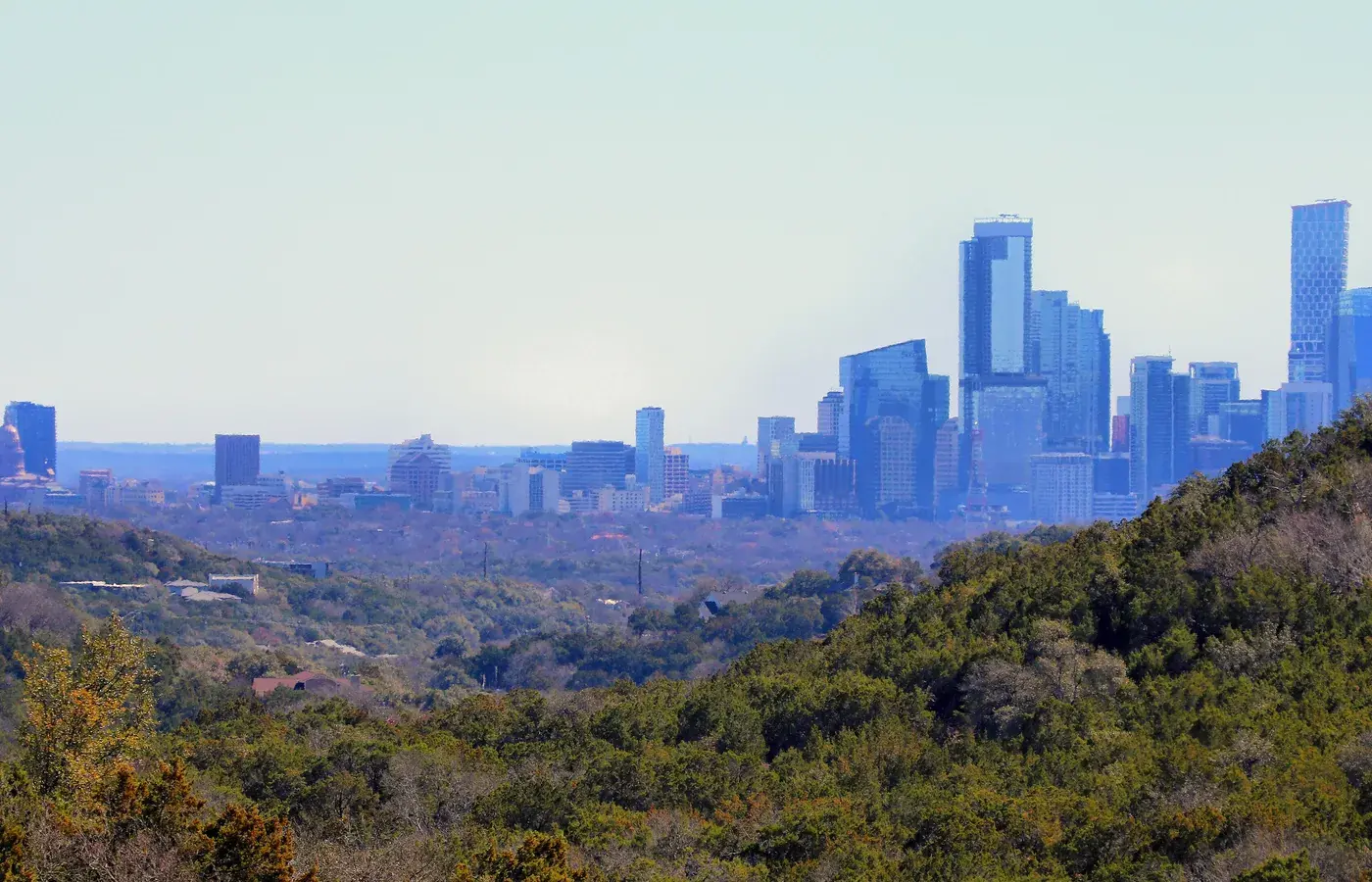
What Austin is known for
Austin stands apart from other major Texas cities for its balance of government, creative arts, and outdoor life. Positioned where the blackland prairies meet the limestone hills of the Texas Hill Country, the city is shaped by the Colorado River, tree-lined parks, and spring-fed swimming waters that draw locals outdoors year-round.
It is widely recognized as a live-music centre and home to the main campus of the University of Texas. Travellers come to experience music drifting from open-air venues, enjoy regional barbecue and Tex-Mex traditions, and take in a welcoming community atmosphere with an easygoing pace.
A short history
Long before European settlement, the Colorado River basin and nearby natural springs provided freshwater and game for Indigenous peoples, including Tonkawa, Comanche, and Lipan Apache groups who camped and hunted throughout the central Texas hills.
In the late 1830s, the Republic of Texas selected the riverside village of Waterloo to serve as its permanent capital, renaming the site Austin in honour of Stephen F. Austin. The city developed steadily around government business, surviving political disputes that nearly saw the seat of government returned to Houston.
Key developments in the late 19th century established Austin as an educational and political hub. The University of Texas opened in 1883, and the massive pink granite Texas State Capitol was completed in 1888, becoming the architectural anchor of the city centre.
During the late 20th century, Austin cultivated a distinct counterculture and a thriving independent music scene. In subsequent decades, a rising research and technology sector brought substantial growth and investment, turning the state capital into a major technology centre while preserving its artistic character.
Neighbourhoods
Austin's districts each carry a distinctive atmosphere. Downtown centres on the Texas State Capitol, government offices, and high-rise developments that run south to the edge of Lady Bird Lake. Just across the river, South Congress Avenue offers broad, walkable sidewalks lined with independent clothing boutiques, folk art shops, and outdoor patios.
East Austin, shaped by decades of Mexican-American and African-American heritage, features quiet residential streets, community art spaces, and local food venues. Further west, the Zilker neighbourhood adjoins extensive green space and riverfront trails, providing a calm setting close to natural swimming areas.
Food and drink
Dining in Austin centres heavily on Central Texas barbecue, defined by prime cuts of beef brisket slowly smoked over native post oak wood, as well as pork ribs and house-made sausages. Tex-Mex cooking is an everyday staple, with breakfast tacos served on fresh tortillas across the city each morning, accompanied by warm tortilla chips, chile con queso, and house-made salsas. Outdoor eating is common, supported by communal food-truck parks serving regional and international dishes under shaded patios.
Music, arts and culture
Music plays an active role in daily life, with performances running nightly across genres such as country, blues, indie rock, and Americana along streets like Red River and East Sixth. Austin hosts major cultural gatherings, including South by Southwest and the Austin City Limits Music Festival in Zilker Park. Visual arts thrive in venues like the Blanton Museum of Art and the Mexic-Arte Museum, while public murals, music clubs, and open studio tours reflect the city's informal artistic community.
Top things to do
Visitors often start with a walk through the Texas State Capitol and its shaded grounds, followed by the nearby Bullock Texas State History Museum, which chronicles the state's past. Outdoor activity revolves around Lady Bird Lake, where a wide gravel trail accommodates runners and walkers, and paddleboarders and kayakers cruise the open water.
In Zilker Park, Barton Springs Pool offers a swimming experience in natural, spring-fed water that stays fresh year-round. Between spring and autumn, large crowds gather along the Ann W. Richards Congress Avenue Bridge at dusk to watch hundreds of thousands of Mexican free-tailed bats take flight into the twilight sky.
Day trips
The surrounding Texas Hill Country makes an easy day trip into the countryside. Travellers can head west to Fredericksburg to explore 19th-century German immigrant architecture and regional vineyards, or stop in Gruene to see an authentic preserved Texas dance hall. Outdoor enthusiasts can take an easy drive to Pedernales Falls State Park to walk along limestone riverbeds, or visit Hamilton Pool Preserve to see a natural freshwater pool sheltered beneath a collapsed limestone grotto.
Before you go
Confirm entry rules with official sources before you go, starting with the Government of Canada's United States travel advice. Hours and closures change, we don't list them here.
Other starting points on this site include New Orleans, Denver and Nashville.
Best time to go
Spring and fall are often milder than a hot Texas summer. Winters are generally mild, with occasional cold snaps. Severe storms can occur; check a current forecast.
Getting there from Canada
Flights from Canada typically arrive at Austin-Bergstrom, usually via a U.S. hub, with occasional nonstops from larger Canadian cities.
Official travel advice
Read the Government of Canada's United States travel advice before you go. Rules and conditions can change.
Search flights, cars, tours and airport rides under Plan your trip below. Checkout is on the partner's site.