
What Porto is known for
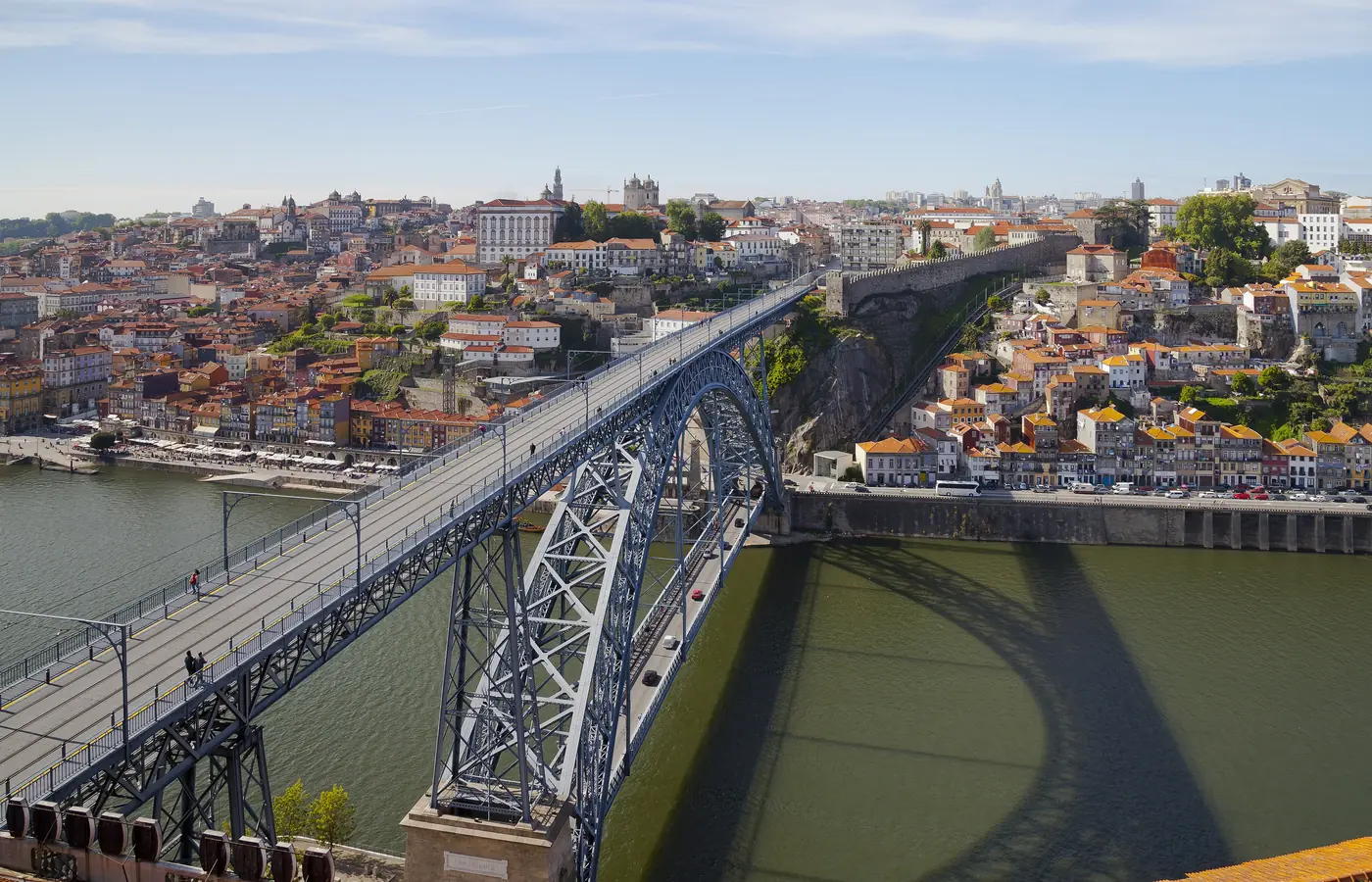
Porto rises steeply from the north bank of the Douro River, defined by granite architecture, terracotta roofs, and the double-deck iron arch of the Dom Luís I Bridge. It is a city of working waterfronts, dramatic valley slopes, and blue-and-white azulejo tiles that cover church facades and train station walls. Across the water, Vila Nova de Gaia holds the long-established lodges where port wine has matured for centuries.
Travellers come for the city's unpretentious coastal character, rich maritime heritage, and compact historic centre, designated a UNESCO World Heritage site. Life unfolds along river promenades, winding alleyways, and leafy plazas where Atlantic ocean breezes meet the warmer inland air of northern Portugal.
A short history
Settlement in the area dates to pre-Roman times, when Celtic or Gallaecian peoples lived in hill forts above the Douro estuary. Under Roman rule, the twin settlements of Portus and Cale developed on opposing riverbanks, a pairing whose combined name eventually gave the entire nation of Portugal its name. After periods of Suebi and Visigothic control, the settlement was contested during the Moorish expansion and subsequent Christian Reconquista.
In the late 11th and early 12th centuries, the region formed the core of the County of Portugal, which soon declared independence as a sovereign kingdom. Porto grew into a significant trading port and shipbuilding hub. In 1394, Prince Henry the Navigator was born here, and the city's shipyards supplied the maritime expeditions that expanded Portugal's global reach during the Age of Discovery.
The 18th century brought a commercial boom fuelled by the export of port wine to Britain and the rest of northern Europe. In the 19th century, Porto earned a reputation for political independence, playing a decisive role in the Liberal Wars during the Siege of Porto in the early 1830s. Industrial growth in the late 19th and 20th centuries added iron bridges, railway lines, and expansive civic avenues, creating the cityscape visible today.
Neighbourhoods
The Ribeira district forms the historic heart along the riverfront, where narrow stone lanes open onto lively quays and views across to the Gaia wine lodges. Uphill, the Baixa district centres on the broad Avenida dos Aliados and Praça da Liberdade, surrounded by early 20th-century civic buildings, theatres, and busy shopping avenues. Farther west, Miragaia and Massarelos retain a quieter residential feel with steep stairways leading up toward leafy gardens.
Where the Douro meets the Atlantic, the coastal neighbourhood of Foz do Douro offers wide seaside promenades, historic forts, and open ocean views. Across the river in Vila Nova de Gaia, the riverfront is lined with historic barrel cellars, tasting rooms, and viewpoints looking back at Porto's stepped skyline.
Food and drink
Porto's culinary traditions are hearty and tied to its seafaring and merchant past. The city's signature sandwich, the francesinha, layers cured meats and steak between thick bread, covered in melted cheese and a hot, spiced tomato-beer sauce. Tripas à moda do Porto, a slow-simmered stew of tripe, white beans, and smoked sausages, dates back centuries to when residents allegedly sent their prime meat with departing naval fleets and kept the offal. Salt cod, known as bacalhau, fresh sardines, and grilled octopus appear on tables across town, accompanied by Douro table wines and finished with a glass of ruby or tawny port.
Music, arts and culture
Porto holds a strong tradition of visual arts and contemporary design, anchored by the Serralves Museum of Contemporary Art and its surrounding park. Fado, Portugal's emblematic song tradition, can also be heard in the city, while classical music and modern performances fill the Casa da Música, designed by architect Rem Koolhaas. The city's biggest cultural celebration is the Festa de São João in late June, when the streets fill with revelry, paper lanterns, grilled sardines, and plastic hammers tapped on passersby's heads in good humour.
Top things to do
Visitors typically begin by walking the grand vestibule of São Bento railway station, where thousands of hand-painted tiles depict scenes from Portuguese history. Nearby, the baroque Clérigos Tower provides panoramic views across the city and river for those who climb its interior stairs, while the Church of São Francisco displays intricate gilded wood carvings in its Gothic and baroque interior. Porto Cathedral, originally Romanesque with later Gothic and Baroque additions, sits on a high terrace offering another sweeping look over the older quarters.
A walk across the upper deck of the Dom Luís I Bridge brings pedestrians straight to the hilltop monastery of Serra do Pilar in Gaia, a favourite spot for viewing the sunset over the Douro. Down along the river, travellers board traditional wooden rabelo boats for cruises under the city's six bridges, or take the heritage tram line out along the riverbank to the oceanfront gardens of Foz.
Day trips
The Douro Valley makes a rewarding excursion upriver, whether reached by train along the riverbank line or on an organized cruise, featuring steeply terraced vineyards and historic wine estates. To the north, the historic city of Guimarães, considered the birthplace of Portugal, offers a well-preserved medieval castle and palace, easily visited on a short train ride. Braga, known for its centuries-old cathedral and the hilltop sanctuary of Bom Jesus do Monte with its monumental granite stairway, also lies a short train ride away, while coastal Aveiro provides an easy day trip for rides on painted wooden boats along its lagoon canals.
Before you go
Confirm entry rules with official sources before you go, starting with the Government of Canada's Portugal travel advice. Hours and closures change, we don't list them here.
Another Portuguese starting point on this site is Lisbon.
Best time to go
Late spring through early fall is the usual riverside walking season. Winters are mild and wetter. Summers can be warm; the Atlantic coast nearby is windier than the Douro bank in town.
Getting there from Canada
Flights from Canada typically arrive at Francisco Sá Carneiro Airport, usually via a European hub, with some seasonal nonstops. Official metro runs from the airport toward the centre. The historic core is walkable, with steep streets and a metro or bus for the hills.
Official travel advice
Read the Government of Canada's Portugal travel advice before you go. Rules and conditions can change.
Search flights, cars, tours and airport rides under Plan your trip below. Checkout is on the partner's site.