
Start a first trip here: use official Anchorage as a gateway, then go to one official park such as Glacier Bay if you want the official ice and bay. Glacier Bay is not a walk from the Anchorage terminal; official Park Service pages cover access that often involves a flight to Juneau and a further connection by air or water. Details below were taken from official pages, except where a source is dated earlier. They can change, so confirm before you go.
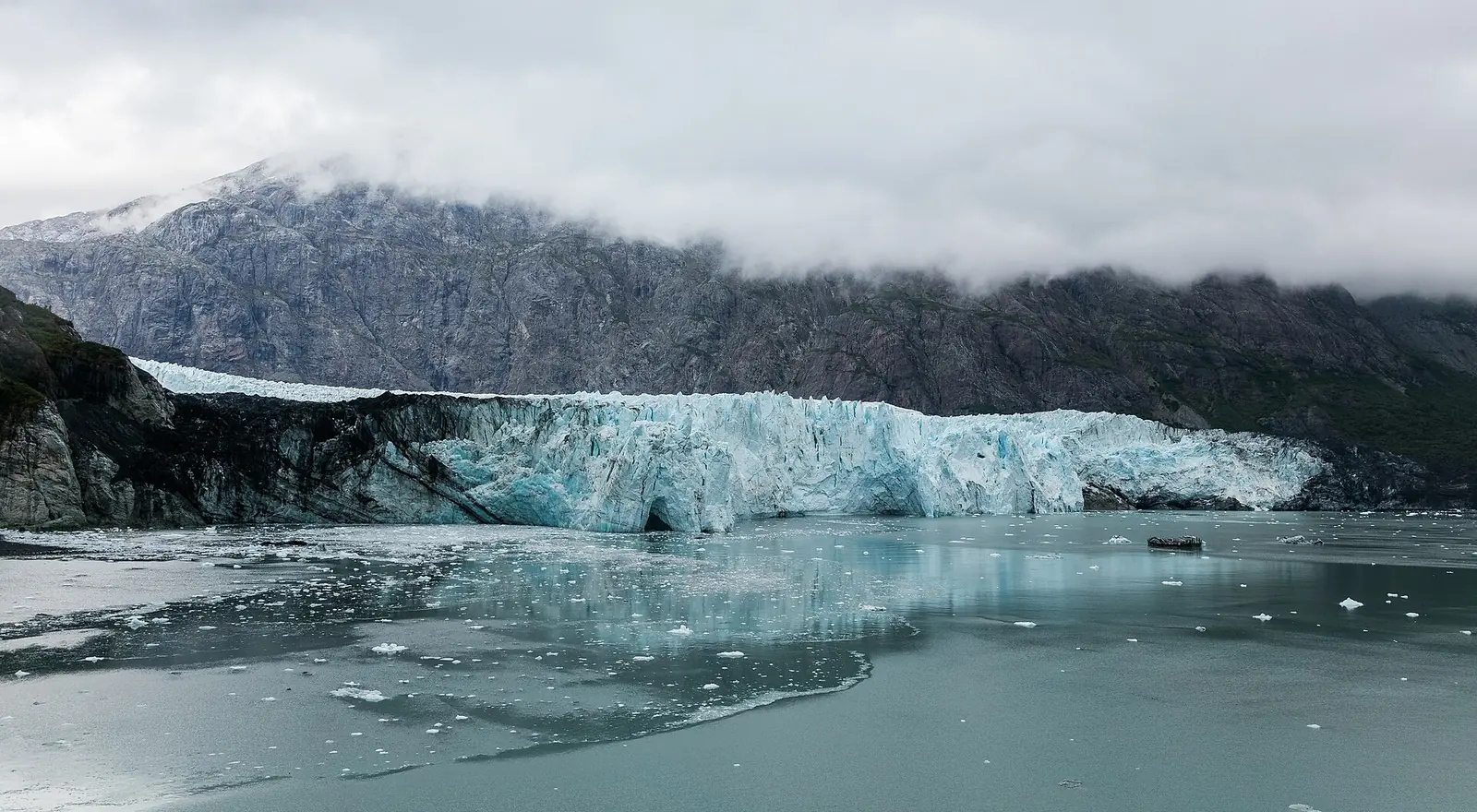
The National Park Service describes a glacier born high in the mountains, where snow piles year after year until it begins to flow. If that ice is fed by enough snow to reach the sea, the official pages call it a tidewater glacier: the kind that ends with its snout in the water, and the kind many people come to Glacier Bay to see. The park and preserve includes several glaciers that break off, or calve, into saltwater at sea level. Compared with glacial ice, the Park Service says, seawater is warm and highly erosive. That meeting of ice and tide is the official amenity of this coast.
From national monument to national park
A journey through Glacier Bay, the Park Service writes, is more than a journey through geography. It is also a journey through human history. The official history names the Huna Łingít as Indigenous people of Glacier Bay, and it records a cooperative presence at Bartlett Cove. Protection of the ice came later in colonial time. On 26 February 1925, Glacier Bay became a national monument. Fifty-five years later, on 2 December 1980, the Alaska National Interest Lands Conservation Act created Glacier Bay National Park and Preserve. Pioneer ecologist William S. Cooper, who began plant-succession studies here in 1916, is officially credited as instrumental to that protection.
UNESCO inscribes Glacier Bay as part of a much larger transboundary property: Kluane / Wrangell-St. Elias / Glacier Bay / Tatshenshini-Alsek, first listed in 1979, with later boundary changes in 1992 and 1994. The official description places this impressive set of glaciers and high peaks on both sides of the border between Canada and the United States, and says the site contains the largest non-polar icefield in the world. Alaska is not only a distant American state from Toronto. On this official map, the ice is already a shared landscape with the Yukon and British Columbia.
The Park Service notes that the glaciers seen here today are remnants of a general ice advance, the Little Ice Age, that began about 4,000 years ago and reached its maximum extent here about 1750, when general melting began. That is the official time scale of the bay: not a weekend, but centuries of ice, still calving into the tide.
A state of more than one arrival
Local life in a state this large is not a single street. Anchorage is the usual air arrival from Canada. Juneau and the Glacier Bay coast, including Bartlett Cove, are a different geography, often reached on a separate hop or by water. You come for the tidewater glaciers and for a park that official history still traces from the Huna Łingít through a 1925 monument to a World Heritage icefield. You stay because Alaska, on this official telling, is a meeting of ice, sea and a border that does not stop the mountains.
How long to stay
Four or five full days is our pick if you want a gateway day and one official park visit at an unhurried pace after the further connection. That is our suggestion, not an official recommended length of stay. Confirm park hours, fees and access before you go.
Quick facts
- Entry
Canadian citizens travelling by air to the United States must present a passport valid for the duration of their stay, or a valid NEXUS card used at self-serve kiosks at designated airports. That air requirement applies to all Canadian citizens, including children, and also to air transit through the United States. The Government of Canada says Canadian visitors can usually stay in the United States for 6 months without a visa, and that in most circumstances Canadian citizens do not require a visitor visa, with some exceptions. You must declare your intended duration of stay upon entry. Read the full United States travel advice before you go (checked 20 November 2026). Rules can change.
- Park visits
Glacier Bay National Park and Preserve publishes official hours, fees, boat and access rules that can change. Confirm them on the National Park Service pages before you go (checked 20 November 2026).
- How long
Our pick: Four or five full days is our pick if you want a gateway day and one official park visit at an unhurried pace after the further connection. Confirm park hours, fees and access before you go.