
What The Big Island is known for
The island of Hawaiʻi, universally called the Big Island, is larger than all the other Hawaiian islands combined. Its scale encompasses a remarkable variety of landscapes, ranging from snow-dusted volcanic summits to black-sand beaches, arid lava fields, and wet tropical rainforests. The island's geography is defined by its massive shield volcanoes, including Mauna Kea, Mauna Loa, and Kīlauea.
Travellers visit to see landscapes actively shaped by volcanic activity, walk through valleys carved by waterfalls, and experience deep-rooted Hawaiian heritage. The contrast between the dry, sunny Kona coast on the west and the rain-fed greenery of Hilo on the east gives the island two distinct atmospheres, making cross-island exploration consistently engaging.
A short history
Polynesians first reached Hawaiʻi in double-hulled voyaging canoes, navigating across the Pacific using the stars, wind, and ocean currents. Early settlements took root along fertile windward valleys like Waipiʻo, where communities built extensive agricultural systems and fishponds governed by traditional spiritual and social laws.
In the late 18th century, King Kamehameha I was born in the northern district of Kohala. From his base on the island, he unified the Hawaiian archipelago into a single sovereign kingdom by 1810. Kailua-Kona served as an early seat of government, and massive stone temples like Puʻukoholā Heiau remain preserved from this foundational period.
The 19th century brought significant transformation through the arrival of American missionaries, foreign traders, and commercial agriculture. Vast sugarcane operations transformed the eastern slopes, while cattle ranching began in the upland pastures of Waimea. Labourers arrived from Japan, the Philippines, Portugal, and China, shaping the island's multicultural community.
As commercial sugar production ended in the late 20th century, the island turned toward diversified farming, scientific research, and cultural heritage. Today, the Big Island protects its historical sanctuaries and sacred landscapes while sharing its living culture with travellers from around the world.
Neighbourhoods
On the west coast, Kailua-Kona is the bustling coastal centre, focused around the historic shoreline of Aliʻi Drive, where heritage sites meet seaside promenades. Further north, the Kohala Coast features expansive lava fields opening onto golden beaches and ancient rock petroglyphs. Inland and higher up, the town of Waimea reflects a longstanding ranching heritage, set against green rolling hills and cattle pastures.
On the windward east coast, Hilo offers a historic feel with early-20th-century wooden buildings, coastal bayfront parks, and lush botanical gardens fed by regular tropical rainfall. Farther south, the highland community of Volcano sits near the summit caldera of Kīlauea, enveloped by cool mountain air and native tree fern forests.
Food and drink
Big Island cuisine blends native Hawaiian staples with flavours brought by immigrant plantation workers. Visitors can sample fresh poke made from locally caught tuna, along with traditional dishes such as kalua pork cooked in an imu (underground earth oven), poi made from pounded taro, and laulau steamed in leaves. Loco moco—a bowl of white rice topped with a beef patty, fried egg, and brown gravy—was invented in Hilo and remains a local favourite. The island is also famous for agricultural products grown in rich volcanic soils, including 100 percent Kona coffee, macadamia nuts, and tropical fruits like papaya and lilikoi.
Music, arts and culture
Music, dance, and craft remain central to daily life and cultural identity on the island. Hilo hosts the annual Merrie Monarch Festival, a prestigious week-long event honouring King David Kalākaua through traditional and modern hula competitions. The warm resonance of slack-key guitar and the ʻukulele accompanies gatherings across the island. Artisans continue longstanding practices such as carving native koa wood, weaving lauhala palm leaves, and making traditional quilts, with many local works displayed in small galleries in towns such as Holualoa.
Top things to do
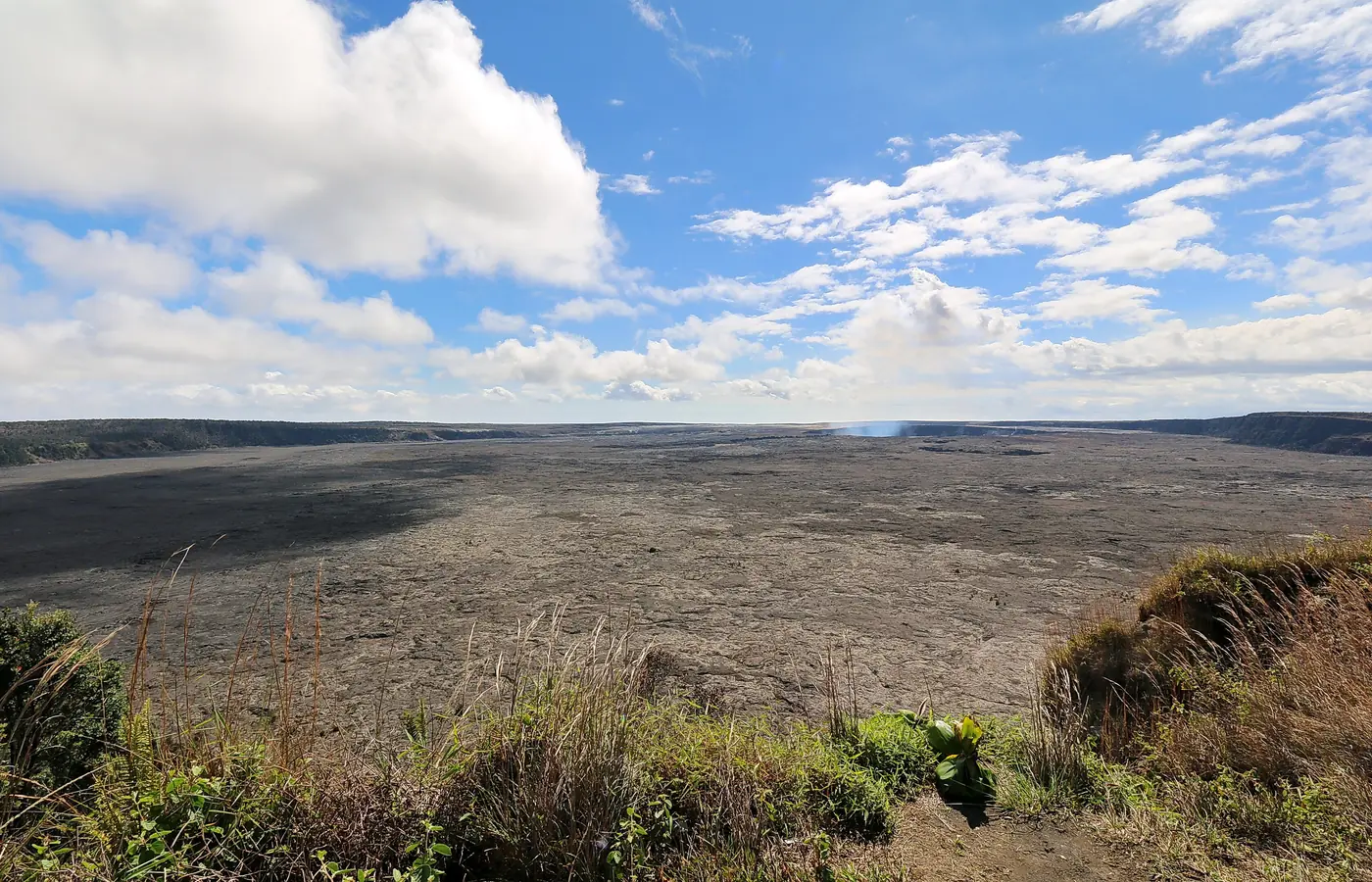
Hawaiʻi Volcanoes National Park is the island's primary natural attraction, where visitors can walk through the Nāhuku (Thurston) Lava Tube, drive along crater rims, and observe steam vents overlooking the Halemaʻumaʻu caldera. North of Hilo, ʻAkaka Falls State Park features a scenic paved path through thick rainforest and bamboo groves to view a 135-metre waterfall dropping into a gorge.
For history and coastal exploration, Puʻuhonua o Hōnaunau National Historical Park preserves an ancient place of refuge, complete with sacred wooden carvings, temple platforms, and oceanfront lava flats. Beachgoers head to Hapuna Beach State Recreation Area for broad white sands and swimming, or to Kahaluʻu Beach Park for gentle, reef-sheltered waters frequented by green sea turtles.
Day trips
Diverse landscapes make the Big Island ideal for day-long excursions. A scenic drive along the Hamakua Coast leads to the Waipiʻo Valley Lookout, offering dramatic views of sheer sea cliffs and a black-sand shoreline. Farther south, an easy day trip leads to Punaluʻu Black Sand Beach, where volcanic sands create a striking contrast against green coastal palms. Travellers crossing between coasts can take the high Saddle Road through the mountain pass between Mauna Kea and Mauna Loa, crossing distinct climate zones within a day's drive.
Before you go
Confirm entry rules and volcano-park or trail access with official U.S. and State of Hawaii sources, including the National Park Service, and read the Government of Canada's United States travel advice before you go.
Other Hawaii starting points on this site include Honolulu, Maui and Kauai.
Best time to go
The island of Hawaii has several climate zones, from tropical coasts to cool, high-altitude slopes. Kailua-Kona on the west is generally drier than Hilo on the east. Volcanic activity, vog and park closures change; they are not a season you can mark on a calendar.
Getting there from Canada
Flights from Canada usually arrive via Honolulu, then an inter-island flight to Kona International or Hilo. Some itineraries reach Kona via a West Coast hub.
Official travel advice
Read the Government of Canada's United States travel advice before you go. Rules and conditions can change.
Search flights, cars, tours and airport rides under Plan your trip below. Checkout is on the partner's site.