
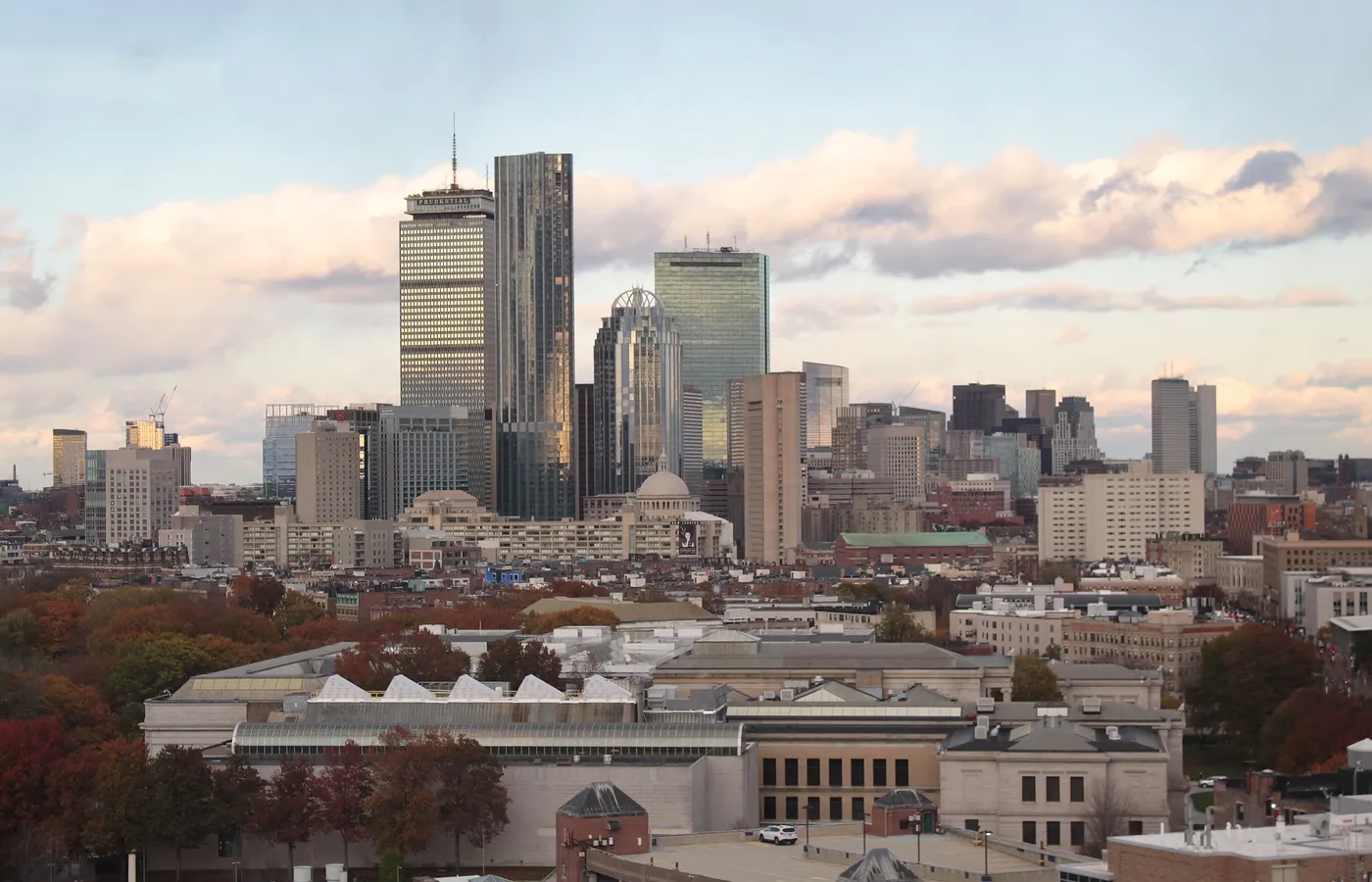
What Boston is known for
Boston combines the character of an old Atlantic seaport with the energy of a major university town. Its compact layout makes it distinct among large American cities, with brick row houses, narrow streets, and open green spaces sitting close together along the waterfront.
The city is recognized for its central role in the American Revolution, its academic institutions, and its passionate sports culture. Visitors come to walk through centuries of history, explore grand civic institutions, and enjoy a harbour setting that has defined daily life here since the seventeenth century.
A short history
Long before European arrival, the Massachusett people lived along the coast and riverbanks of the Shawmut Peninsula. In 1630, Puritan colonists led by John Winthrop established Boston, naming it after a town in England. The settlement quickly became the capital of the Massachusetts Bay Colony and a maritime trading centre.
During the eighteenth century, Boston became the centre of colonial opposition to British rule. Events such as the Boston Massacre in 1770 and the Boston Tea Party in 1773 helped spark the American Revolutionary War. Nearby conflicts at Lexington, Concord, and Bunker Hill solidified the region's place in early American history.
In the nineteenth century, Boston expanded physically by filling in tidal flats, creating new areas like the Back Bay. The city developed into a centre for literature, industry, and social reform. Substantial immigration, especially from Ireland and Italy, reshaped Boston's civic and cultural life.
The twentieth century brought a shift toward education, healthcare, and research. Major public works reconnected the urban core to the harbour, creating the walkable, layered city that visitors encounter today.
Neighbourhoods
Boston's neighbourhoods each have distinct architectural and cultural traditions. Beacon Hill features gas-lit brick sidewalks, historic townhouses, and the gold dome of the Massachusetts State House. Just to the west, Back Bay offers wide avenues lined with Victorian brownstones, leading to public plazas like Copley Square.
Across town, the North End is Boston's oldest surviving residential quarter, known for narrow lanes, historic churches, and an enduring Italian community. Across the Charles River, neighbouring Cambridge combines university yards around Harvard Square with quiet residential streets and riverside pathways.
Food and drink
New England seafood anchors much of Boston's food culture, with Atlantic cod, fried clams, and creamy New England clam chowder widely served. Maine lobster rolls, prepared warm with butter or chilled with mayonnaise, are staple dishes along the harbour. Boston baked beans, traditionally slow-cooked with molasses and salt pork, gave the city its historical nickname, while sweet treats like Boston cream pie and Italian cannoli reflect local baking traditions.
Music, arts and culture
The city sustains a strong cultural scene grounded in major civic institutions. The Boston Symphony Orchestra performs at Symphony Hall, renowned for its acoustics, while the Boston Pops brings orchestral music to broad audiences. Visual arts are represented at the Museum of Fine Arts, with its vast global holdings, and the nearby Isabella Stewart Gardner Museum, where paintings, tapestries, and sculptures surround an indoor courtyard designed like a Venetian palazzo.
Top things to do
A walk along the Freedom Trail is one of the most popular ways to see the city. The marked walking route links sixteen historic locations, including Boston Common, the Old North Church, and the Bunker Hill Monument. Boston Common, the oldest public park in the United States, connects directly to the Public Garden, where willow trees shade a lagoon famous for its pedal-powered Swan Boats.
Along the waterfront, the Boston Harborwalk leads visitors past wharves, public parks, and views of the Atlantic shipping channels. In Cambridge, walking through Harvard Yard and the open grounds of the Massachusetts Institute of Technology provides an engaging look at historic collegiate architecture and public art.
Day trips
Several historic coastal towns and rural areas make easy day trips from Boston. Salem, celebrated for its maritime history and seventeenth-century witch trials, is accessible by a short train ride or seasonal ferry. To the north, the rocky headlands of Cape Ann and the fishing port of Rockport offer coastal views, while the revolutionary battlefields and preserved historic homes of Lexington and Concord lie an easy drive inland.
Before you go
Confirm entry rules with official sources, starting with the Government of Canada's United States travel advice. Hours and closures change, check official sources before you go.
Other East Coast starting points on this site include New York and Washington, D.C..
Best time to go
Fall colour and spring are often mild and popular. Summers can be warm and humid; winters are cold, with snow possible. Shoulder months work well for walking the compact centre.
Getting there from Canada
Flights from Canada often arrive at Logan International, including from Toronto and Montreal, sometimes continuing by connection from further west.
Official travel advice
Read the Government of Canada's United States travel advice before you go. Rules and conditions can change.
Search flights, cars, tours and airport rides under Plan your trip below. Checkout is on the partner's site.