
What Edinburgh is known for
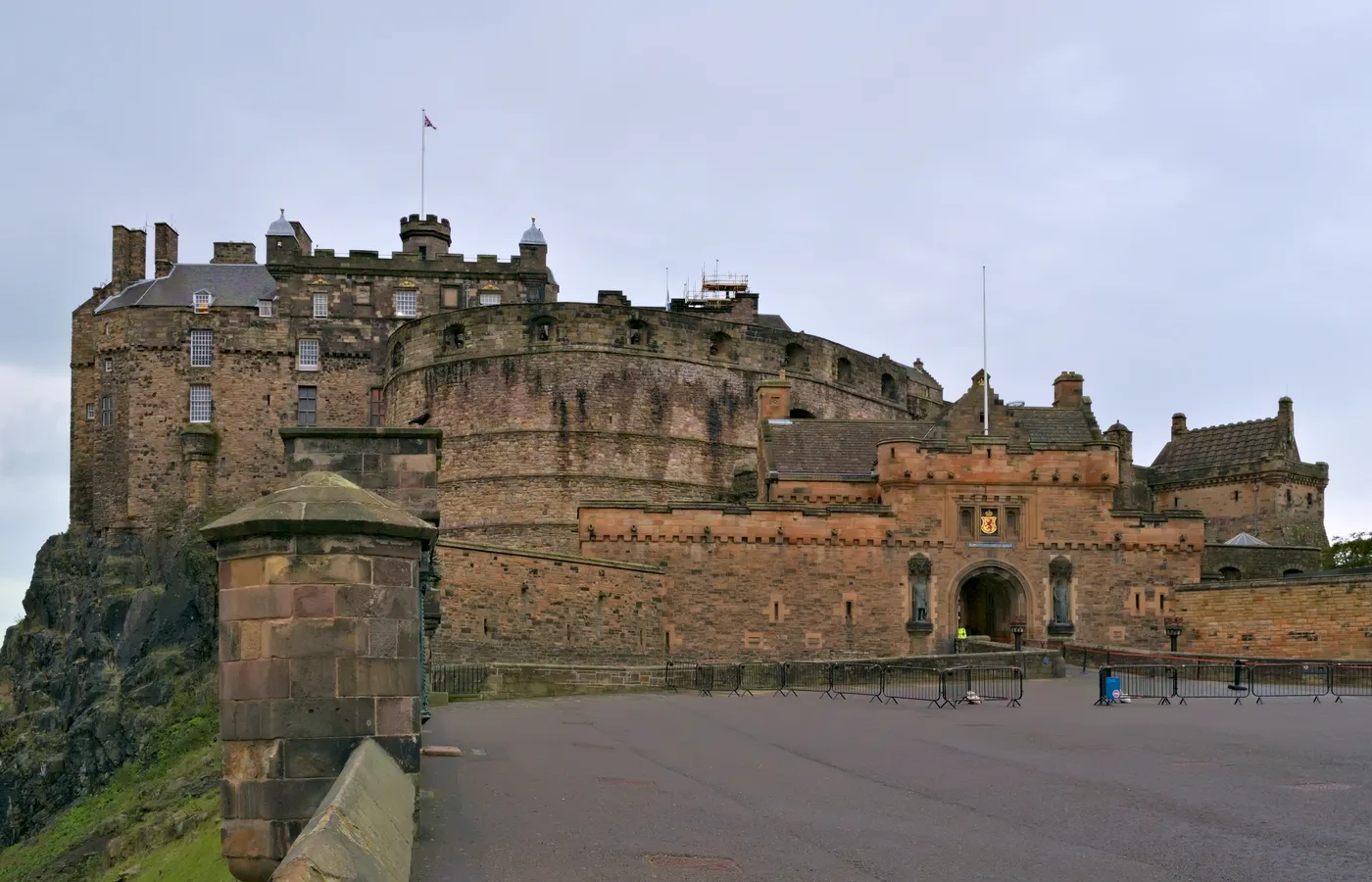
Built across ancient volcanic ridges and valleys, Edinburgh combines a dramatic natural setting with centuries of stone architecture. The skyline is dominated by an ancient fortress on Castle Rock and the high spine of the Old Town, which descends eastward toward the green expanses of Holyrood Park.
The contrast between the tight, medieval alleys of the Old Town and the sweeping, orderly avenues of the Georgian New Town gives the city its distinct character. Visitors come to explore its rich literary heritage, walk along stone wynds and staircases, and take in broad views across the Firth of Forth.
A short history
People have lived around Castle Rock since the Bronze Age. Celtic tribes maintained fortified settlements here before the Kingdom of Northumbria expanded into the region during the early Middle Ages, giving the settlement the Old English name that eventually evolved into Edinburgh.
King David I established Edinburgh as a royal burgh in the 12th century, also founding Holyrood Abbey at the eastern end of the ridge. The town grew steadily between the fortress and the abbey, developing into Scotland's capital by the 15th century. Due to the constraints of defensive town walls, residents built multi-storey stone tenements, creating some of Europe's earliest high-density urban living.
The Act of Union in 1707 merged the Scottish and English parliaments, moving political power to London, but Edinburgh remained the centre of Scots law, church governance, and intellectual life. During the Scottish Enlightenment in the 18th century, thinkers like David Hume and Adam Smith worked here, while the city expanded north across the valley of the Nor Loch into the planned New Town.
The 19th and 20th centuries brought railways, printing houses, and financial institutions, establishing the city as an administrative and educational hub. The re-establishment of the devolved Scottish Parliament in 1999 restored Edinburgh's role as a legislative capital, joining its ancient monuments with modern civic life.
Neighbourhoods
The Old Town centres on the Royal Mile, a single long incline lined with tall stone tenements, narrow closes, and historic churchyards. Just downhill to the south lies the Grassmarket, a historic marketplace set beneath the castle cliffs. Across Princes Street Gardens, the New Town presents a change of pace, laid out in an orderly grid of wide streets, classical squares, and sandstone townhouses from the late 18th and early 19th centuries.
Farther north, Stockbridge offers a relaxed village atmosphere along the Water of Leith, with quiet residential streets, green walkways, and public gardens. Down on the Firth of Forth, the historic port district of Leith provides a maritime contrast to the central hills, featuring waterside paths along the shore and an industrial past turned into a gathering place for arts and dining.
Food and drink
Edinburgh's food traditions draw directly from Scotland's land and sea. Traditional staples include haggis served with neeps and tatties (mashed turnips and potatoes), Cullen skink (a thick smoked haddock and potato soup), and hearty breakfast rolls with square Lorne sausage. Seafood from Scottish coasts features prominently, alongside game, local cheeses, and buttery shortbread. Whisky is central to the drinking culture, with tasting rooms and heritage centres showcasing regional styles from the Highlands, Lowlands, and islands, supported by a growing craft beer brewing scene.
Music, arts and culture
Edinburgh is widely recognized as a global capital of culture, having been designated the first UNESCO City of Literature in honour of writers like Sir Walter Scott, Robert Louis Stevenson, and Arthur Conan Doyle. In the late summer, the city transforms as several major international festivals take over theatres, church halls, and public squares. Beyond festival season, the city sustains a lively arts calendar with classical concerts at the Usher Hall, traditional folk sessions in central pubs, and theatre productions across historic venues.
Top things to do
Edinburgh Castle sits at the top of the Royal Mile, housing the Honours of Scotland (the nation's crown jewels) and the Stone of Destiny. Walking down the Mile leads past St Giles' Cathedral to the Palace of Holyroodhouse, the British monarch's official residence in Scotland, set right beside the modern Scottish Parliament building. Outdoor enthusiasts can climb the extinct volcano of Arthur's Seat in Holyrood Park or walk up Calton Hill for panoramic views of the city skyline and the Firth of Forth.
The city also features remarkable public collections. The National Museum of Scotland houses diverse exhibits covering Scottish history, nature, and world cultures under one roof. The Scottish National Gallery, set in the centre beside Princes Street Gardens, displays fine art spanning centuries, while the Scottish National Portrait Gallery presents the faces of Scottish history in an ornate Gothic revival hall.
Day trips
Travellers looking to venture beyond the city will find several rewarding destinations within a short train ride or an easy day trip. To the west, the historic city of Stirling offers its own grand castle set above famous battlefields. To the northeast across the Firth of Forth, the Kingdom of Fife features historic coastal fishing villages and the university town of St Andrews, known for its ancient golf links and ruined cathedral. Scenic lochs and the edge of the Scottish Highlands, including Loch Lomond and The Trossachs National Park, are also accessible within a day's drive.
Before you go
Hours and ticket rules for the castle and other sites change, check official sources before you go. For travel advice, start with the Government of Canada's United Kingdom travel advice.
Other starting points in these islands on this site include London and Dublin.
Best time to go
Late spring through early fall is the usual walking season; August is festival month (official Edinburgh Festival and Fringe dates change each year) and is the busiest. Winters are cold, dark and sometimes icy, with a chance of snow. The city is hilly and often windy.
Getting there from Canada
Flights from Canada typically arrive at Edinburgh Airport, usually via a Canadian or European hub, with some nonstops in season. Official trams and buses run into the centre. The Old and New Towns are then walked, with steep steps between them.
Official travel advice
Read the Government of Canada's United Kingdom travel advice before you go. Rules and conditions can change.
Search flights, cars, tours and airport rides under Plan your trip below. Checkout is on the partner's site.