
What Fort Lauderdale is known for
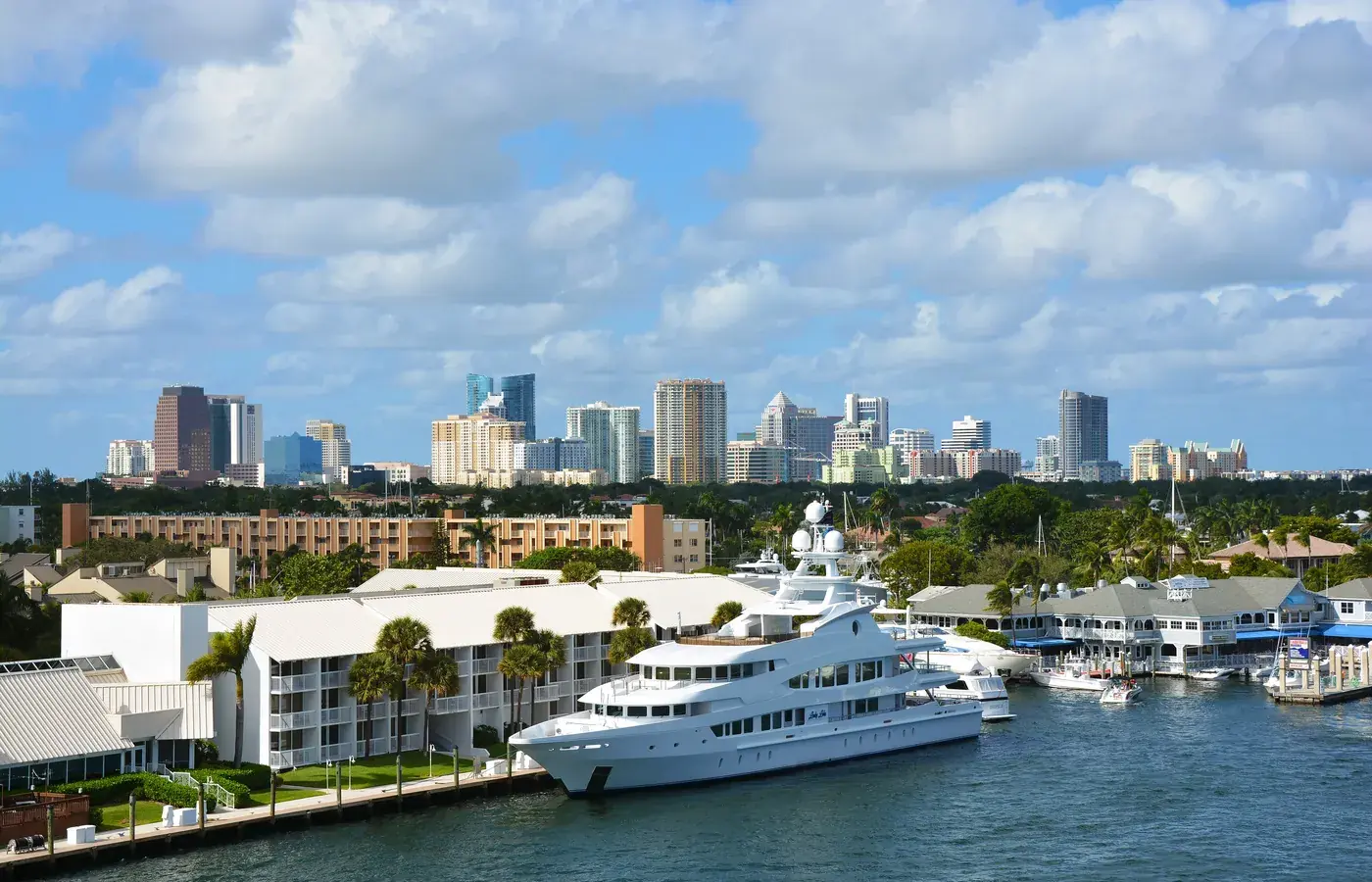
Fort Lauderdale is defined by its relationship with the water. Located along Florida's Atlantic coast, the city features miles of open sand framed by a paved beachfront promenade, alongside an intricate labyrinth of inland waterways. With hundreds of miles of canals flowing into the New River and the Intracoastal Waterway, it has long carried the nickname the Venice of America.
The city offers a relaxed, maritime-focused alternative to the faster pace of nearby Miami. Boating culture is central to daily life here, with yachts and passenger water taxis moving alongside residential islands. On land, pedestrian-friendly pathways, leafy downtown riverbanks, and shaded shopping corridors create an easy-going coastal atmosphere that appeals to winter visitors looking for warmth and outdoor living.
A short history
Before European arrival, the Tequesta people inhabited the fertile banks of the New River for thousands of years, living on fish, shellfish, and native plants. Spanish exploration and subsequent colonial conflicts in the sixteenth and eighteenth centuries devastated the indigenous population. In the early nineteenth century, Seminole settlements formed throughout the area as displaced groups moved south.
During the Second Seminole War in the late 1830s, United States forces constructed a series of military stockades named after Major William Lauderdale. Civilian development remained sparse until 1893, when Frank Stranahan established a successful trading post and ferry on the New River. The arrival of Henry Flagler's Florida East Coast Railway in 1896 spurred rapid growth, bringing rail passengers and trade to the frontier settlement.
Fort Lauderdale officially incorporated as a city in 1911. During the Florida land boom of the 1920s, developers dredged wetlands to create a network of finger islands and residential canals, establishing the city's modern layout. After serving as an important military training base during the Second World War, the city expanded rapidly with new residential neighbourhoods and commercial waterways.
By the mid-twentieth century, the beachfront became widely recognized across North America as a focal point for spring college holidays. In the late 1980s and 1990s, city leaders shifted development toward family-friendly tourism, arts districts, and luxury marine industries, transforming the waterfront into the polished resort destination seen today.
Neighbourhoods
Downtown Fort Lauderdale sits along the historic New River, anchoring the city's commercial and civic life. Here, the Riverwalk connects open green spaces, government centres, and cultural venues along a scenic brick path. Running east from downtown toward the water is Las Olas Boulevard, a shaded corridor lined with fashion boutiques, art galleries, sidewalk cafes, and palm trees.
Across the Intracoastal Waterway on the barrier island, Central Beach serves as the heart of the city's oceanfront scene, marked by a curving white wave wall and wide public sands. Just inland, residential areas like Colee Hammock, Victoria Park, and the Las Olas Isles feature quiet streets with banyan trees, mid-century Florida architecture, and private boat docks lining the canals.
Food and drink
Local cooking in Fort Lauderdale is shaped by fresh Atlantic catches and regional Caribbean traditions. Menus regularly feature Florida stone crab claws served chilled with mustard sauce, blackened mahi-mahi, and fried conch fritters. Citrus flavours appear throughout regional cooking, most famously in key lime pie made with a graham-cracker crust. Refreshing fruit juices, iced tea, and tropical rum drinks suit the warm coastal climate, while casual waterside dining remains a staple of everyday social life.
Music, arts and culture
The city's cultural activities centre along the riverfront and throughout the downtown core. The Broward Center for the Performing Arts hosts broadway tours, classical music, and dance performances on the water's edge. Nearby, the NSU Art Museum Fort Lauderdale houses significant collections of twentieth-century and contemporary work, including notable Latin American art. Outdoor concerts and community events frequently fill the open lawns of Esplanade Park and Huizenga Plaza throughout the cooler months.
Top things to do
Fort Lauderdale Beach offers miles of clean sand ideal for swimming, morning walks, and sunbathing. For a look at natural coastal ecosystems, Hugh Taylor Birch State Park preserves maritime hammock forests, offering shaded walking paths, bicycle trails, and a freshwater lagoon situated between the ocean and the Intracoastal Waterway.
Visitors can learn about early regional history at the Historic Stranahan House Museum, a restored early twentieth-century house built as a trading post and family home along the New River. Further north, the Bonnet House Museum & Gardens presents historic architecture and original artwork surrounded by native subtropical gardens. Exploring the canals by sightseeing water taxi provides a relaxing, scenic view of the city's residential architecture and busy yacht basins.
Day trips
The vast wetlands of the Florida Everglades are an easy day trip inland, offering boardwalk trails through sawgrass marshes and chances to observe wild alligators and wading birds. To the south, Miami is reachable via a short train ride or drive, providing access to historic art deco districts, botanical gardens, and Latin American neighbourhoods. Heading north along the coast, Palm Beach and West Palm Beach offer peaceful historic architecture, coastal walking paths, and lakefront bicycle routes.
Before you go
Confirm entry rules with official sources before you go, starting with the Government of Canada's United States travel advice.
Other Florida starting points on this site include Miami, Orlando, Tampa and Fort Myers.
Best time to go
Winters are a usual window from Canada: milder and often drier than the humid summer. The official Atlantic hurricane season is 1 June to 30 November.
Getting there from Canada
Flights arrive at Fort Lauderdale-Hollywood International, including some routes from Canadian cities. Miami and West Palm Beach airports are other South Florida options.
Official travel advice
Read the Government of Canada's United States travel advice before you go. Rules and conditions can change.
Search flights, cars, tours and airport rides under Plan your trip below. Checkout is on the partner's site.