
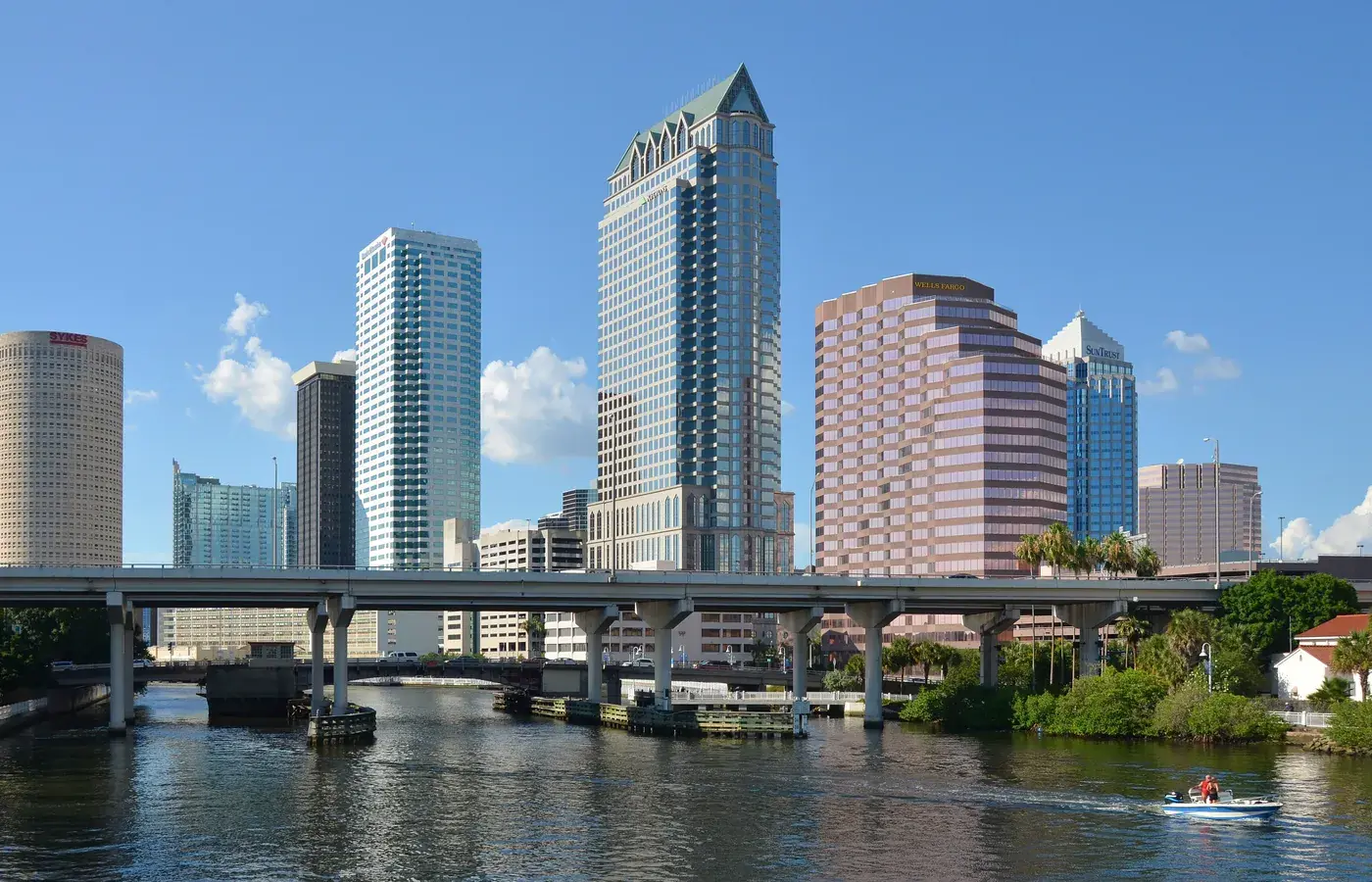
What Tampa is known for
Tampa sits along Florida's central Gulf coast, anchored by the waters of Hillsborough Bay and Old Tampa Bay. It combines a working waterfront and modern skyline with a distinct Latin heritage rooted in its past as a cigar-manufacturing centre.
Visitors come for the sunny subtropical climate, walkable waterfront paths, and easy access to both cultural attractions and Gulf beaches. It offers a relaxed coastal pace while serving as the cultural and commercial anchor of the greater Tampa Bay region.
A short history
Long before European arrivals, the shores of Tampa Bay were inhabited by Indigenous peoples, notably the Tocobaga and later the Calusa. Spanish explorers, including Pánfilo de Narváez and Hernando de Soto, arrived in the region during the 16th century, though permanent European settlement did not take hold for centuries.
In 1824, the United States established Fort Brooke at the mouth of the Hillsborough River, spurring the early growth of a village around it. Tampa remained a remote outpost until the 1880s, when Henry B. Plant extended his railroad to the bay and built the grand Tampa Bay Hotel, connecting the isolated settlement to northern markets and visitors.
Around the same time, Vicente Martinez Ybor moved his cigar manufacturing operations to the area, creating the planned industrial community of Ybor City. Thousands of Cuban, Spanish, Italian, and Jewish immigrants arrived to work in the rolling factories, infusing the city with multicultural traditions, architecture, and mutual aid societies that still define its identity.
During the 20th century, the city expanded through phosphate shipping, military aviation at MacDill Field, and the post-war population boom across Florida. Today, Tampa has transformed its riverbanks and old industrial brick quarters into public cultural spaces while preserving its maritime and immigrant legacy.
Neighbourhoods
Downtown Tampa centres on the Hillsborough River, where the Tampa Riverwalk links museums, public parks, and waterside gathering areas. Across the river lies Hyde Park, known for its shaded residential streets, historic bungalows, and the leafy promenades of Bayshore Boulevard, which hugs the bay shoreline.
Northeast of downtown, historic Ybor City stands apart with its red-brick buildings, wrought-iron balconies, and heritage streetcars. Wild chickens roam the brick streets where historic social clubs and cigar factories tell the story of the immigrant communities that built the neighbourhood.
Food and drink
Tampa's food traditions reflect its deep Cuban, Spanish, and Italian immigrant roots. The city is famous for the Cuban sandwich, traditionally made with roast pork, glazed ham, Swiss cheese, pickles, mustard, and Genoa salami on crisp local Cuban bread. Other regional staples include devilled crab croquettes, which originated among local cigar workers, Spanish bean soup, and fresh seafood harvested from Gulf waters.
Music, arts and culture
Cultural life in Tampa spans visual arts, theatre, and historic traditions. The Tampa Museum of Art and the Henry B. Plant Museum showcase regional history and fine arts, while the Straz Center for the Performing Arts hosts stage productions and orchestral concerts. Each winter, the city marks the century-old tradition of the Gasparilla Pirate Festival, celebrating a mock pirate invasion with a large boat flotilla and parades along Bayshore Boulevard.
Top things to do
Strolling or cycling along the Tampa Riverwalk is one of the most popular ways to see the urban core. The pedestrian path connects several major public attractions, including the Florida Aquarium, the Tampa Bay History Center, and Curtis Hixon Waterfront Park. Nearby, the Glazer Children's Museum and the historic Tampa Theatre provide cultural stops along the city grid.
In Ybor City, travellers can ride the TECO Line Streetcar, tour the Ybor City Museum State Park, and admire the preserved architecture of 19th-century mutual aid societies. For open-air recreation, Bayshore Boulevard offers a long, continuous sidewalk with sweeping views of the bay and the downtown skyline.
Day trips
An easy day trip across the bay leads to St. Petersburg, where visitors can explore the Dalí Museum, the Sunken Gardens, and a walkable downtown waterfront. The white-sand beaches of Pinellas County, including Clearwater Beach and Fort De Soto Park, are within an easy drive for swimming and coastal walks. Further inland, the freshwater springs and rapids of Hillsborough River State Park offer quiet walking trails and canoe routes through native Florida pine flatwoods and cypress swamps.
Before you go
Confirm entry rules with official sources before you go, starting with the Government of Canada's United States travel advice. Hours and closures change, we don't list them here.
Other Florida starting points on this site include Orlando, Miami, Fort Lauderdale and Fort Myers.
Best time to go
Winters are milder and a common season from Canada. Summers are hot, humid and wetter. The official Atlantic hurricane season is 1 June to 30 November.
Getting there from Canada
Flights from Canada arrive at Tampa International, sometimes nonstop in season. St. Pete-Clearwater is a smaller nearby airport. The city sits on Tampa Bay, on Florida's Gulf coast.
Official travel advice
Read the Government of Canada's United States travel advice before you go. Rules and conditions can change.
Search flights, cars, tours and airport rides under Plan your trip below. Checkout is on the partner's site.