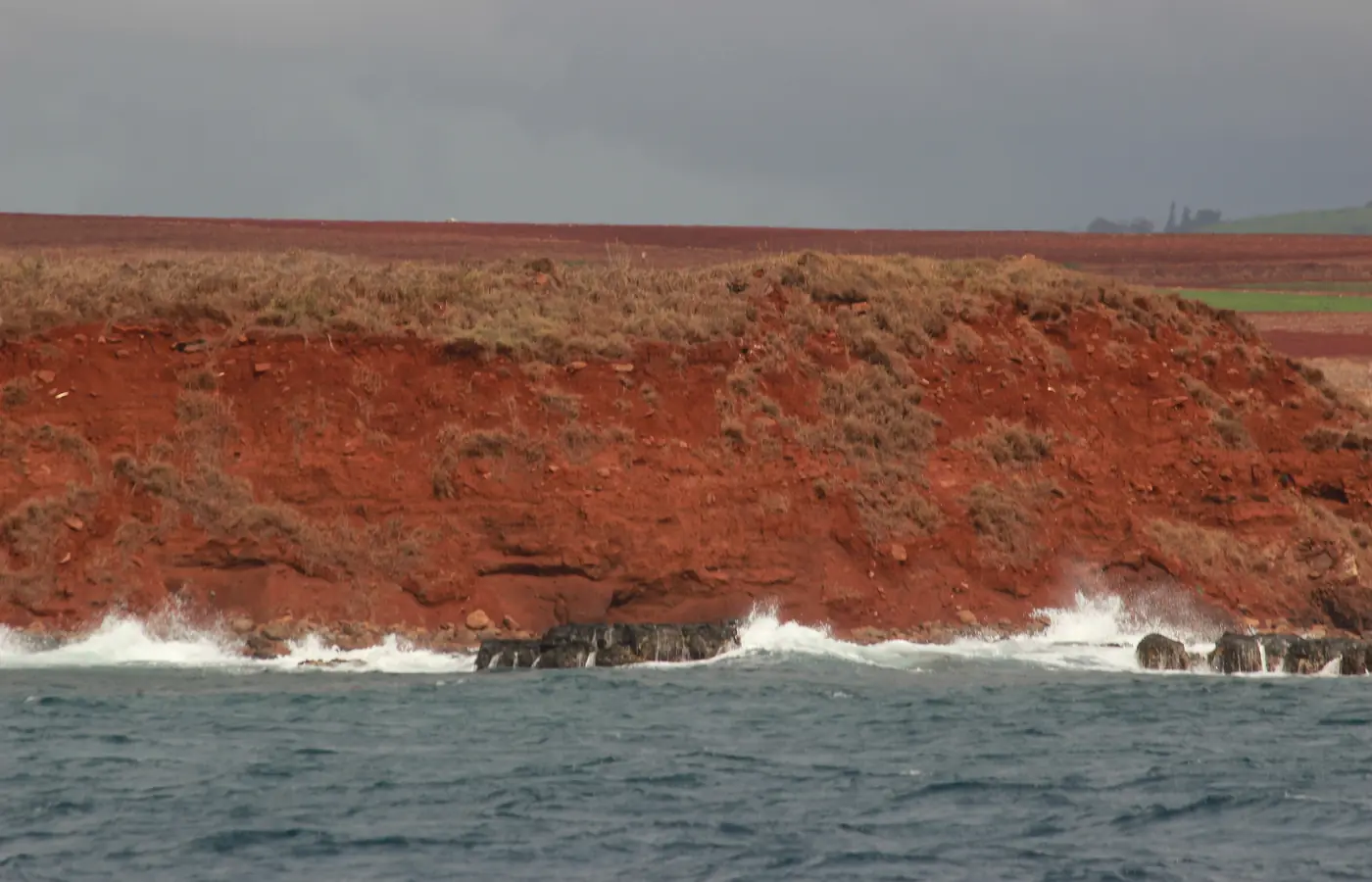
An official island of wilderness cliffs and a deep canyon: Nāpali Coast State Wilderness Park, Waimea Canyon, and four distinct visitor sides.
A good first visit, in our view, looks like this: spend time on one official side of the island, then go to Waimea Canyon or look toward the Nāpali Coast if you want the official parks. A car is the usual way to move between official sides; the Nāpali Coast is not reached by a through-road. Details below were taken from official pages, except where a source is dated earlier. They can change, so confirm before you go.
The parks, the coasts and getting around
The official Hawaii Division of State Parks describes Nāpali Coast State Wilderness Park as one of the most recognizable and beautiful coastlines in the world. Official Waimea Canyon State Park, or a look toward that official coast, is where we would start. Access to Nāpali Coast State Wilderness Park and the Kalalau Trail is through Hā‘ena State Park, which requires official reservations for most visitors. Anyone going beyond Hanakāpī‘ai needs a valid camping permit. Confirm current official access on the Division of State Parks pages before you go. We have not listed a reservation price here because a current official walk-up fare was not confirmed as a single public ticket on this check.
Flights from Toronto typically reach Līhu‘e (LIH) via Honolulu or a West Coast hub; nonstops are less common than to Honolulu or Maui. The airport is on the east side; resort areas need a drive. Check the airline or the partner search above for current flights. A car is the usual way to move between the official sides of the island.
How long to stay
Two or three full days is our suggestion if you want one official side of the island and one official park at an unhurried pace. That is our suggestion, not an official recommended length of stay. Confirm reservations, hours and access before you go.
Quick facts
Getting around
A car is the usual way to move between the official sides of the island. The Nāpali Coast is not reached by a through-road.
Nāpali access
Access to Nāpali Coast State Wilderness Park and the Kalalau Trail is through Hāʻena State Park, which requires official reservations for most visitors. Anyone going beyond Hanakāpīʻai needs a valid camping permit. Confirm current official access on the Division of State Parks pages before you go (checked 19 November 2026).
Entry to the United States
Canadian citizens travelling by air to the United States must present a passport valid for the duration of their stay, or a valid NEXUS card used at self-serve kiosks at designated airports. That air requirement applies to all Canadian citizens, including children, and also to air transit through the United States. The Government of Canada says Canadian visitors can usually stay in the United States for 6 months without a visa, and that in most circumstances Canadian citizens do not require a visitor visa, with some exceptions. You must declare your intended duration of stay upon entry. Read the full United States travel advice before you go (checked 19 November 2026). Rules can change.
How long
Two or three full days is what we would plan for one official side of the island and one official park. Confirm reservations, hours and access before you go.
Areas to stay on Kauai
The East Side, around Līhuʻe or Kapaʻa. Closest to the official airport, on a gentler coastal side of the island.
The South Shore, around Poʻipū. A usual resort shore, a drive from Līhuʻe and from the official west-side canyon.
The North Shore, around Princeville or Hanalei, or the West Side toward Waimea. The usual approach to the official Nāpali coast, or the official door to Waimea Canyon.
Some links and search tools on this page lead to partner sites, and we may earn a small commission if you book, at no extra cost to you.
Flights from Toronto typically reach Līhu‘e (LIH) via Honolulu or a West Coast hub; nonstops are less common than to Honolulu or Maui. The airport is on the east side; resort areas need a drive. Check the airline or the partner search above for current flights.
A car is the usual way to move between the official sides of the island. The Nāpali Coast is not reached by a through-road. Confirm official reservations before you plan a Nāpali or Kalalau visit.
Canadian citizens travelling by air to the United States must present a passport valid for the duration of their stay, or a valid NEXUS card used at self-serve kiosks at designated airports. That air requirement applies to all Canadian citizens, including children, and also to air transit through the United States. The Government of Canada says Canadian visitors can usually stay in the United States for 6 months without a visa, and that in most circumstances Canadian citizens do not require a visitor visa, with some exceptions. You must declare your intended duration of stay upon entry. Read the full United States travel advice before you go (checked 19 November 2026). Rules can change. The FAQ below also covers visitors already in the United States and other international visitors.
Search tours and tickets for the Nāpali Coast, Waimea Canyon and official outings on Kauai.
Tours
Some links and search tools on this page lead to partner sites, and we may earn a small commission if you book, at no extra cost to you.
Compare tours, tickets and attraction passes on a partner site. Checkout happens on the partner site. Vulpeca Travel does not sell tours.
Tours
The Klook, Tiqets and Go City buttons open a general partner search, not a list limited to this destination.
If you are a Canadian citizen flying to the United States, yes — a passport valid for the duration of your stay, or a valid NEXUS card at designated airport kiosks (checked 19 November 2026). The same air rule applies to children and to transiting by air. Canadian visitors can usually stay up to 6 months without a visa, with exceptions. Confirm on travel.gc.ca before you go.
If you already live in the United States and this is a domestic trip: For a domestic flight, follow the official TSA identification requirements. A passport is one accepted form of ID, not the only one. Confirm on the official TSA page before you fly (checked 25 November 2026).
If you are visiting the United States from another country: Citizens or nationals of Visa Waiver Program countries generally need an approved ESTA before travel. Other travellers generally need a visitor visa. Apply for ESTA only on the official US Customs and Border Protection site. Also check your own government's travel advice. Confirm before you go (checked 25 November 2026).
Can I drive the Nāpali Coast?
No through-road follows the official Nāpali wilderness coast. The official state park is reached by trail, boat or air, and most visitors need official reservations at Hāʻena State Park. Confirm current access on official pages.
Is a car required?
A car is the usual way to move between the East, South, West and North Sides, which are not a short hop from one another.
Can I book this trip on Vulpeca Travel?
No. Vulpeca Travel does not sell tickets, hotel rooms or tours. Flight, stay, car and tour tools on this page send you to partner sites, where booking and payment happen.
Weather and typical months
In the 1991–2020 record for Lihue, Kauai (a common airport-area point; weather varies around the island), the warmest month is September (mean 25.1 °C) and the coolest is February (mean 21.4 °C). The driest month is April (53.1 mm) and the wettest is March (87.4 mm). We do not name a single best month to visit, because that depends on what you want from the trip.
Monthly climate averages for Lihue, Kauai (a common airport-area point; weather varies around the island), 1991–2020
Month
Mean temperature
Precipitation
January
21.7 °C
65.3 mm
February
21.4 °C
57.2 mm
March
21.6 °C
87.4 mm
April
22.3 °C
53.1 mm
May
23.2 °C
60.9 mm
June
24.1 °C
56.5 mm
July
24.6 °C
56.9 mm
August
25.0 °C
57.8 mm
September
25.1 °C
55.0 mm
October
24.6 °C
70.5 mm
November
23.5 °C
71.3 mm
December
22.5 °C
85.8 mm
Figures are 1991–2020 monthly means of daily mean temperature (°C) and monthly precipitation (mm), from the ERA5 reanalysis retrieved through the Open-Meteo Historical Weather API on 27 November 2026. ERA5 is produced by the Copernicus Climate Change Service. These are climate averages, not a forecast. Confirm current conditions before you go.