
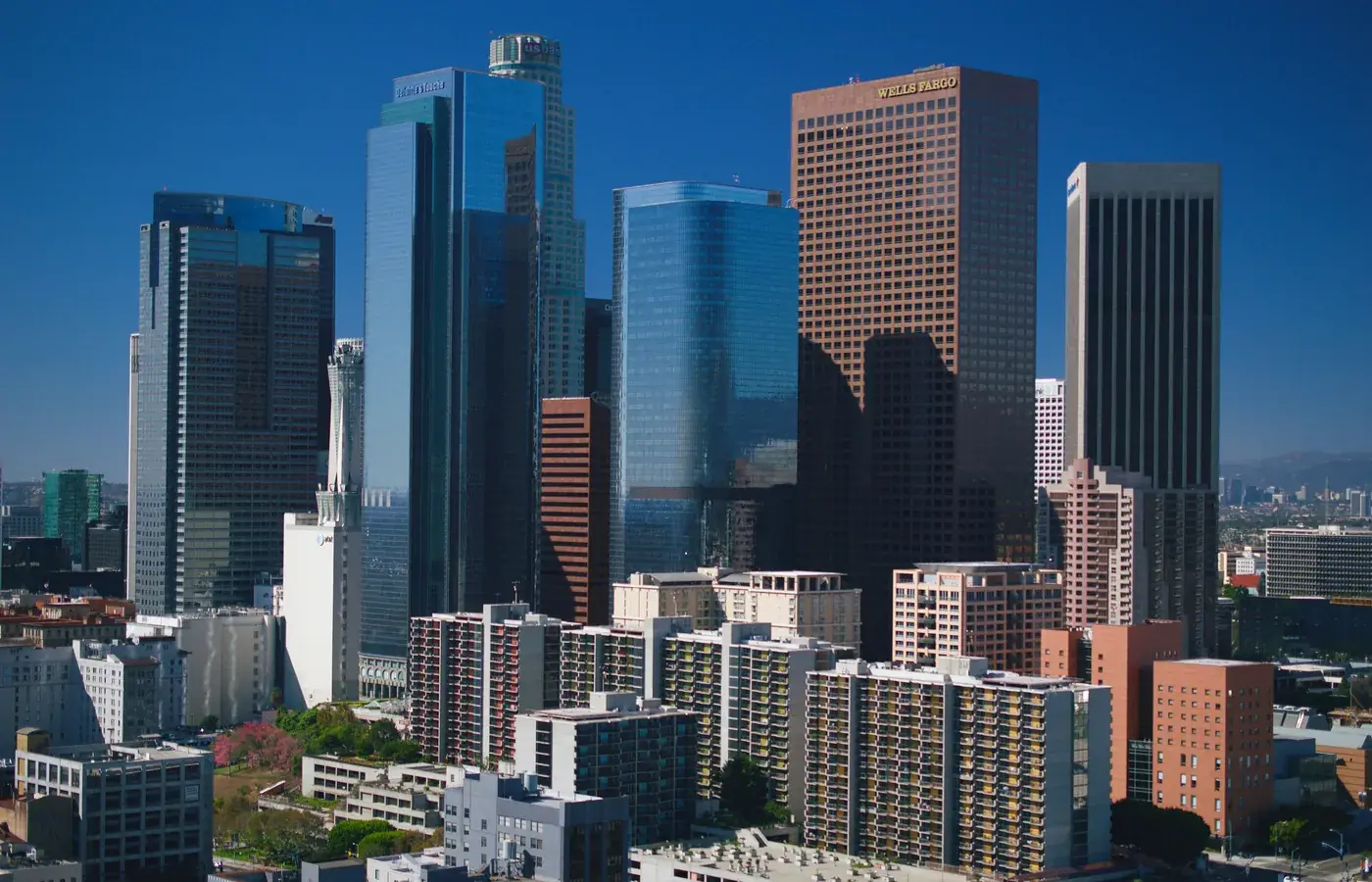
What Los Angeles is known for
Los Angeles is defined by its vast scale, spanning from the foothills of the San Gabriel Mountains out to the shores of the Pacific Ocean. It has long been associated with film and television, but its daily character comes from a patchwork of distinct communities, mild weather, and an outdoor lifestyle that runs throughout the year.
Travellers arrive to tour famous studios, explore modern art galleries, and stroll oceanfront piers. It is a city where mountain trails overlook geometric street grids, giving visitors a contrast between natural landscapes and urban variety.
A short history
Long before European contact, the region was home to the Tongva people, who established settlements near the Los Angeles River and across the coastal plain. In 1781, a group of settlers founded El Pueblo de Nuestra Señora la Reina de los Ángeles under Spanish rule, establishing a modest agricultural community that later passed to Mexican governance.
California became part of the United States in the mid-19th century following the Mexican-American War. The arrival of transcontinental rail connections in the 1870s and 1880s spurred sudden growth, as real estate development, citrus farming, and trade drew newcomers from across the continent.
The early 20th century transformed the basin into a major industrial centre. The opening of the Los Angeles Aqueduct in 1913, alongside the discovery of significant oil reserves and the rise of motion picture production, set off decades of rapid expansion.
Postwar growth brought sweeping freeway systems and steady immigration from across Latin America and the Pacific Rim. These international ties shaped modern Los Angeles into a multifaceted metropolis with deep multicultural traditions.
Neighbourhoods
Because the city covers so much ground, each district carries its own distinct rhythm. Downtown Los Angeles features historic movie palaces, government plazas, and contemporary museums, standing in contrast to the relaxed beachfront avenues of Santa Monica and Venice. Inland, Hollywood draws visitors to historic entertainment sites, while residential areas like Los Feliz show off hillside bungalows and shaded avenues.
Other districts highlight the metropolitan area's cultural breadth. Little Tokyo and Koreatown offer walkable corridors filled with markets and community centres, while the neighbouring city of Pasadena features quiet residential streets and craftsman architecture set against the mountain backdrop.
Food and drink
Food culture across Los Angeles relies on year-round access to fresh California produce and deep international traditions. Street food is a fixture of daily life, particularly regional Mexican tacos, bacon-wrapped hot dogs, and fresh fruit seasoned with lime and chili powder. Visitors will also find prominent traditions of Korean barbecue, noodle soups, and fresh seafood, alongside an enduring culture of casual diners and juice bars.
Music, arts and culture
Cultural institutions in the region are extensive and varied. Major performance venues such as the Hollywood Bowl, Walt Disney Concert Hall, and the Greek Theatre host symphonic, jazz, and popular music in indoor and open-air settings. Visual art is equally prominent, anchored by the Los Angeles County Museum of Art, The Broad, and the hilltop Getty Center, which pairs European and American art collections with wide views across the basin.
Top things to do
A trip often centres on panoramic views from Griffith Observatory in Griffith Park, where hiking trails wind through the chaparral toward viewpoints overlooking the Hollywood Sign. Near the ocean, walking or cycling along the paved coastal path between Santa Monica Pier and Venice Beach provides open views of the Pacific surf and active public recreation areas.
Travellers also explore historic landmarks such as Olvera Street at El Pueblo de Los Angeles Historical Monument, walk past the star plaques on the Hollywood Walk of Fame, or visit the La Brea Tar Pits to see ongoing fossil excavations. In Pacific Palisades, the Getty Villa offers Roman-style architecture, courtyards, and antiquities near the coast.
Day trips
Travellers seeking day excursions can reach diverse landscapes without travelling far. Santa Catalina Island is an easy day trip by passenger ferry across the channel, offering clear waters and coastal hiking. Along the coast to the north, the historic architecture of Santa Barbara and the beaches of Malibu make an easy drive, while the dramatic desert terrain of Joshua Tree National Park is reachable within a day's journey.
Before you go
Confirm entry rules with official sources, starting with the Government of Canada's United States travel advice. We don't list traffic, parking or attraction fees here.
Other California and nearby starting points on this site include San Diego, Las Vegas and Honolulu.
Best time to go
The basin has a Mediterranean-style climate: generally drier summers and wetter winters. Late spring through fall is often used for outdoor days; winter rain is possible. Wildfire smoke and hillside road closures can affect some months; check official notices.
Getting there from Canada
Flights from Canada typically arrive at Los Angeles International (LAX). Some itineraries use Burbank, Long Beach, Ontario (California) or Santa Ana/Orange County.
Official travel advice
Read the Government of Canada's United States travel advice before you go. Rules and conditions can change.
Search flights, cars, tours and airport rides under Plan your trip below. Checkout is on the partner's site.