
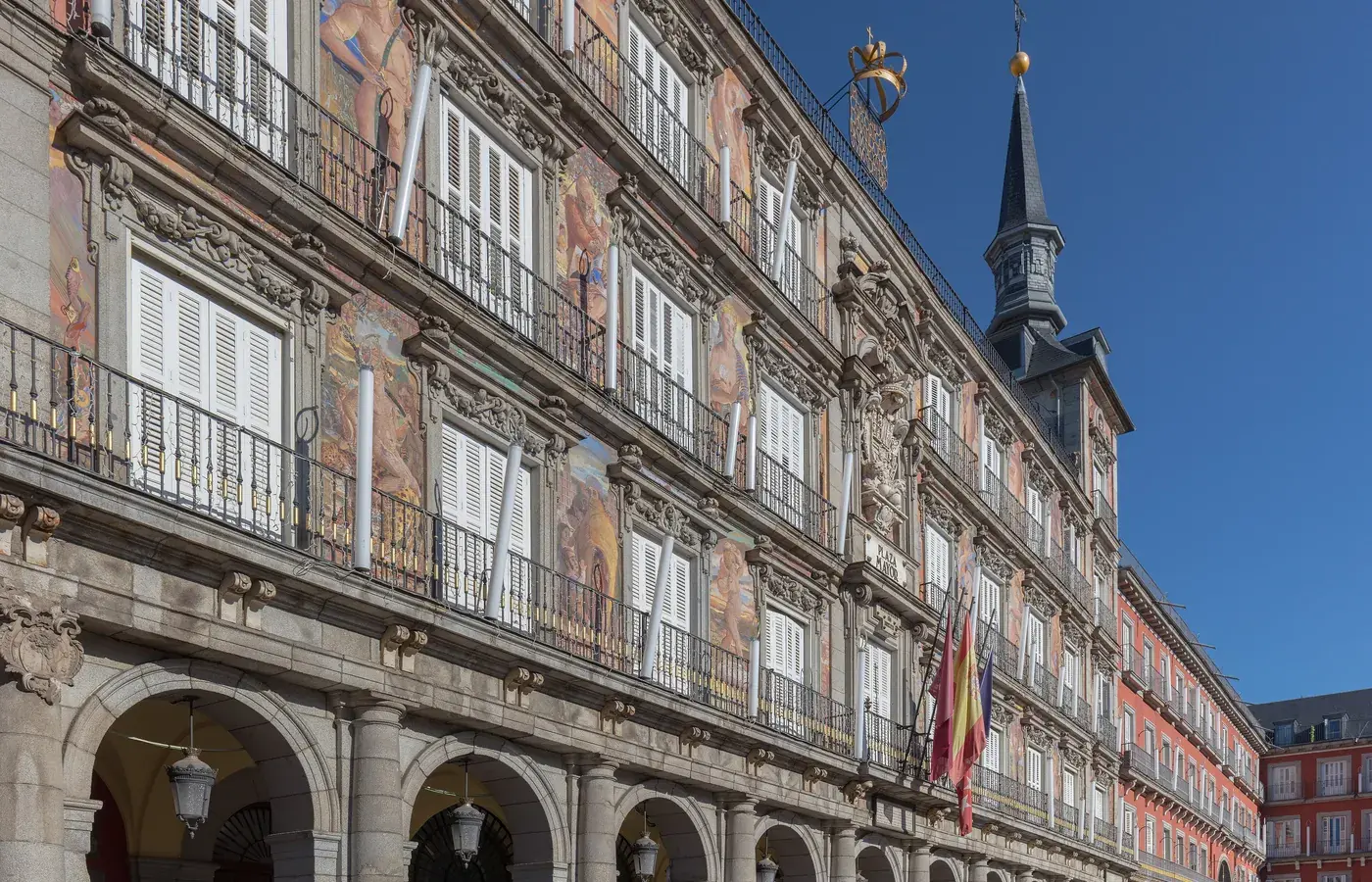
What Madrid is known for
Madrid sits high on the central plateau of the Iberian Peninsula, serving as the political, cultural, and geographic heart of Spain. Visitors find wide boulevards, grand public squares, and sprawling public gardens, alongside an easygoing rhythm where evenings stretch late into the night.
The capital is celebrated for its world-class art collections, historic Habsburg and Bourbon architecture, and welcoming street life. Sidewalk terraces fill with residents sharing small plates and conversation throughout the year, giving this major European capital a relaxed, neighbourhood feel.
A short history
Madrid began as a fortified outpost established in the late 9th century by Muhammad I, the Umayyad Emir of Córdoba, along the Manzanares River. The settlement, then called Mayrit, guarded the northern approaches to Toledo until King Alfonso VI of León and Castile incorporated it into Christian territory in 1085.
The town remained modest until 1561, when King Philip II moved the royal court to Madrid, making it the capital of the Spanish Empire (a status interrupted only briefly by a move to Valladolid in 1601–1606). This decision spurred rapid growth and established the historic core, known today as the Madrid of the Austrias, centred around Plaza Mayor.
During the 18th century, Bourbon rulers transformed Madrid with grand neoclassical monuments, the Royal Palace, and tree-lined avenues. In the 20th century, the city endured the Spanish Civil War and emerged as a modern cultural centre, expanding well beyond its old boundaries while preserving its historic core.
Neighbourhoods
Central Madrid is divided into distinct neighbourhoods that are easy to explore on foot. The old core around Puerta del Sol and Plaza Mayor features narrow stone alleys and historic plazas. Just to the north, Malasaña and Chueca offer pedestrian-friendly streets filled with independent shops and lively public squares like Plaza del Dos de Mayo.
To the east, the Barrio de las Letras (Literary Quarter) honours Spain’s Golden Age writers with literary verses inlaid in the pavement. Nearby Salamanca showcases an orderly 19th-century grid of elegant avenues, while Lavapiés, to the south, is known for its hilly streets and multicultural community life.
Food and drink
Madrid's food scene centres on hearty Castilian dishes and the long-standing tradition of sharing tapas. A defining meal is cocido madrileño, a slow-simmered stew of chickpeas, meats, and vegetables served in distinct courses. Other popular staples include tortilla española, garlic shrimp (gambas al ajillo), and the classic bocadillo de calamares, a crusty roll filled with crisp fried squid. For breakfast or an afternoon snack, locals gather for hot churros dipped in rich, melted chocolate.
Music, arts and culture
The city is internationally recognized for its Golden Triangle of Art along the Paseo del Prado. The Museo del Prado houses masterworks by Francisco Goya and Diego Velázquez, the Museo Reina Sofía displays modern masterpieces such as Pablo Picasso’s Guernica, and the Thyssen-Bornemisza National Museum traces centuries of European painting. Madrid also supports a lively performing arts scene, from major theatrical productions along Gran Vía to classical opera at Teatro Real and traditional flamenco in historic central venues.
Top things to do
A stroll through central Madrid connects some of Spain's most famous public landmarks. Visitors can walk from Puerta del Sol through Plaza Mayor to the expansive courtyard of the Royal Palace and the adjacent Almudena Cathedral. East of the centre lies El Retiro Park, a large green space featuring tree-lined paths, a boating lake, and the glass-and-iron Crystal Palace.
Further north, the bustling Gran Vía avenue showcases ornate early 20th-century architecture and leads toward Plaza de España. On Sunday mornings, the open-air market of El Rastro draws visitors to browse antiques and wares along the streets of La Latina, while the ancient Egyptian Temple of Debod in Parque del Oeste offers panoramic views across the city.
Day trips
Several historic destinations make easy day trips from Madrid by public transit. Toledo, the former imperial capital perched above the Tagus River, is a short train ride south and contains centuries of Christian, Muslim, and Jewish architecture. Segovia, also a short train ride away, is celebrated for its well-preserved ancient Roman aqueduct and medieval castle. Other accessible excursions include the vast royal monastery of San Lorenzo de El Escorial in the foothills of the Sierra de Guadarrama, and Alcalá de Henares, the university city where Miguel de Cervantes was born.
Before you go
Hours and closures change, check official sources before you go. For travel advice, start with the Government of Canada's Spain travel advice.
Other starting points on this site include Barcelona and Lisbon.
Best time to go
Spring and fall are often the most comfortable. Summers can be very hot and dry. Winters are cool, with some cold snaps, but generally milder than a Canadian winter. The city is inland, on a plateau, not on the coast.
Getting there from Canada
Flights from Canada typically arrive at Madrid-Barajas (Adolfo Suarez), often via a European hub, with some nonstops. Official metro and buses run into the centre. The compact core is then walkable, with Metro for longer hops.
Official travel advice
Read the Government of Canada's Spain travel advice before you go. Rules and conditions can change.
Search flights, cars, tours and airport rides under Plan your trip below. Checkout is on the partner's site.