
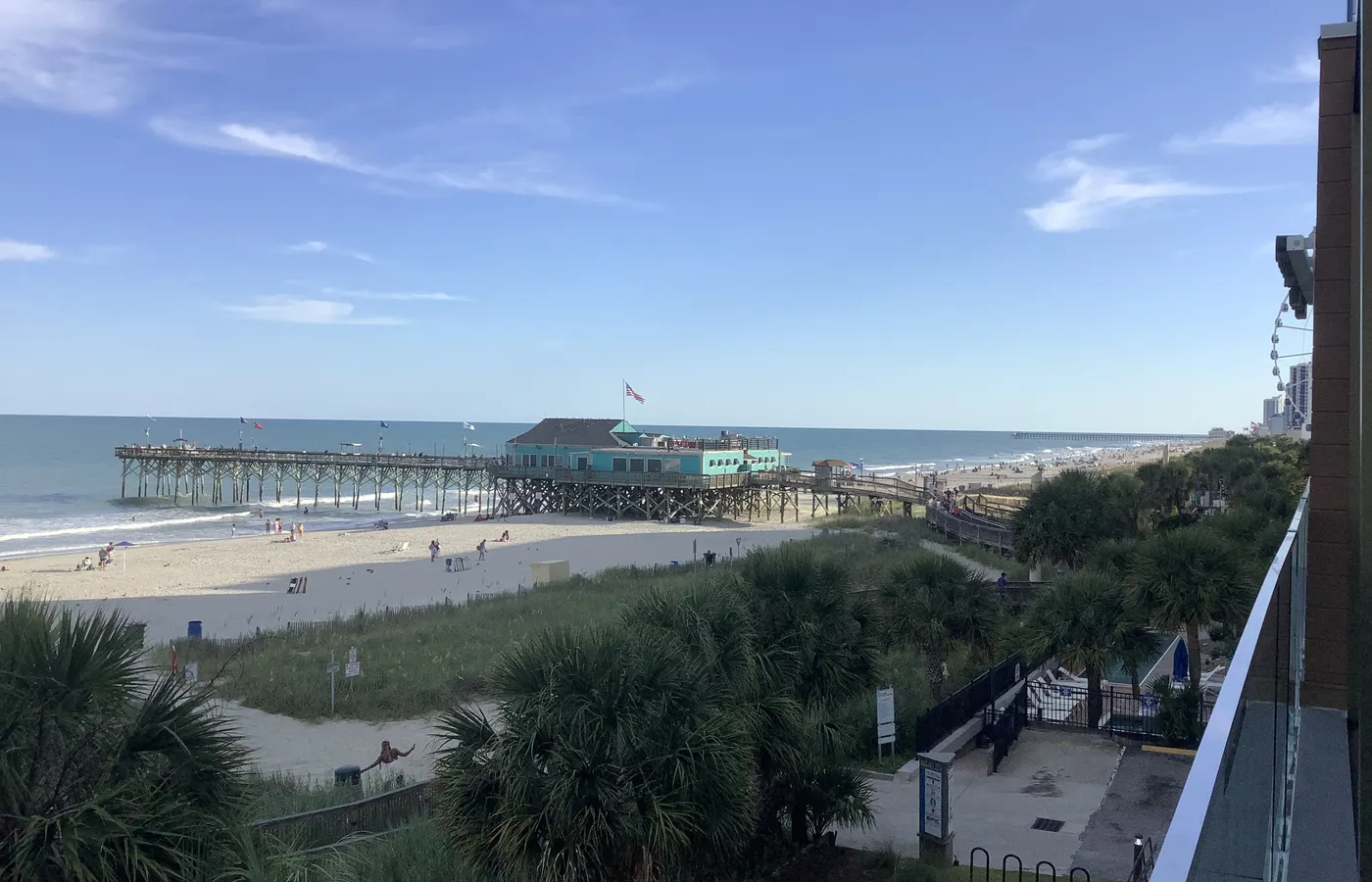
What Myrtle Beach is known for
Myrtle Beach sits at the centre of South Carolina's Grand Strand, a continuous coastal plain with long stretches of soft sand and warm Atlantic waters. The city is widely recognized for its accessible oceanfront, sunny shoreline, and lively boardwalk area that draws beach lovers from across North America.
Beyond the shore, Myrtle Beach is known for recreation and family entertainment. The area features dozens of golf courses, colourful miniature golf parks, and traditional seaside amusement piers. It offers a relaxed coastal atmosphere where visitors spend their days outdoors between the beach, ocean piers, and open-air entertainment complexes.
A short history
Before European arrival, the area was home to Indigenous peoples, including the Waccamaw and Winyah, who fished coastal waters and hunted in maritime forests along the rivers and salt marshes.
During the 18th and 19th centuries, European settlers established successful rice and indigo plantations along nearby rivers. The immediate sandy shoreline, however, remained mostly unpopulated pine forest and sand ridges, serving primarily as a summer retreat for inland planters seeking sea breezes.
At the turn of the 20th century, the Burroughs and Collins company built a railroad from Conway to the coast to transport timber. In 1901, the company opened the Seaside Inn, the area's first hotel, and the growing settlement was named Myrtle Beach after the abundant local wax myrtle bushes.
Myrtle Beach was incorporated as a town in 1938 and as a city in 1957. In the decades following the Second World War, new highways, airfield infrastructure, and economic growth fueled steady tourist development, turning the quiet stretch of coast into a major Atlantic resort destination.
Neighbourhoods
Downtown Myrtle Beach centres on the lively oceanfront Boardwalk and Promenade. This area features traditional seaside arcades, public parks, and historic piers overlooking the ocean. Just north of downtown lies the Golden Mile, a quiet, leafy residential strip along Ocean Boulevard known for vintage beach homes and uncrowded stretches of sand.
The wider Grand Strand extends into neighbouring communities that each carry a distinct feel. To the north, North Myrtle Beach offers relaxed coastal streets and historic roots in beach music culture. To the south, communities such as Surfside Beach and Garden City provide quiet residential areas favoured by families and seasonal visitors.
Food and drink
Local dining highlights coastal South Carolina flavours and traditional Lowcountry cuisine. Seafood features prominently, from pan-fried flounder and soft-shell crab to classic shrimp and grits served with rich pan gravy and smoked sausage. Creamy she-crab soup, flavoured with blue crab meat, roe, and a splash of dry sherry, is a coastal tradition. Visitors can also sample Carolina pulled pork barbecue, served in the local vinegar-and-pepper style, while the state's famous tangy mustard-based sauce known as Carolina Gold comes from South Carolina's Midlands region.
Music, arts and culture
Myrtle Beach has a deep connection to regional music and dance, most notably as the home of the Carolina Shag. This smooth swing dance originated in oceanfront dance clubs during the 1940s and remains South Carolina's official state dance. The city also features large theatrical venues presenting country music revues and tribute performances. For visual arts, the Franklin G. Burroughs-Simeon B. Chapin Art Museum displays Southern regional fine art, contemporary textiles, and pottery inside a restored coastal villa.
Top things to do
Walking the Myrtle Beach Boardwalk and Promenade is a primary highlight for visitors. Stretching along the oceanfront, the walkway links green spaces, amusement areas, and public piers, including the 2nd Avenue Pier. At the centre of the boardwalk, the Myrtle Beach SkyWheel carries passengers in enclosed gondolas high above the Atlantic, offering expansive views of the coastline.
Natural beauty is on display at Myrtle Beach State Park, where maritime oak forests and quiet dunes provide nature trails and a public fishing pier away from downtown crowds. The city is also famous for its elaborate themed miniature golf courses, which provide easy family entertainment throughout town.
Day trips
Travellers can explore several natural and historic sites on an easy day trip from the city. Just south lies Brookgreen Gardens, an expansive preserve featuring outdoor sculpture gardens, wildlife habitats, and historic rice plantation grounds. Directly opposite, Huntington Beach State Park protects saltwater marshes and a scenic Spanish-style coastal castle. Farther south along the coast, the historic port of Georgetown offers shaded 18th-century residential streets and maritime history along Winyah Bay, while historic Charleston makes a rewarding excursion within a day's drive.
Before you go
Confirm entry rules with official sources before you go, starting with the Government of Canada's United States travel advice.
Other warm-weather starting points on this site include Orlando, Miami and Tampa.
Best time to go
Late spring through early fall is the usual beach season. Midsummer is hot and busy; shoulder months can be milder. The official Atlantic hurricane season is 1 June to 30 November.
Getting there from Canada
Flights from Canada may arrive at Myrtle Beach International, often via a connection, with some seasonal nonstops. Driving from other Carolina or mid-Atlantic airports is also used.
Official travel advice
Read the Government of Canada's United States travel advice before you go. Rules and conditions can change.
Search flights, cars, tours and airport rides under Plan your trip below. Checkout is on the partner's site.