
What Prague is known for
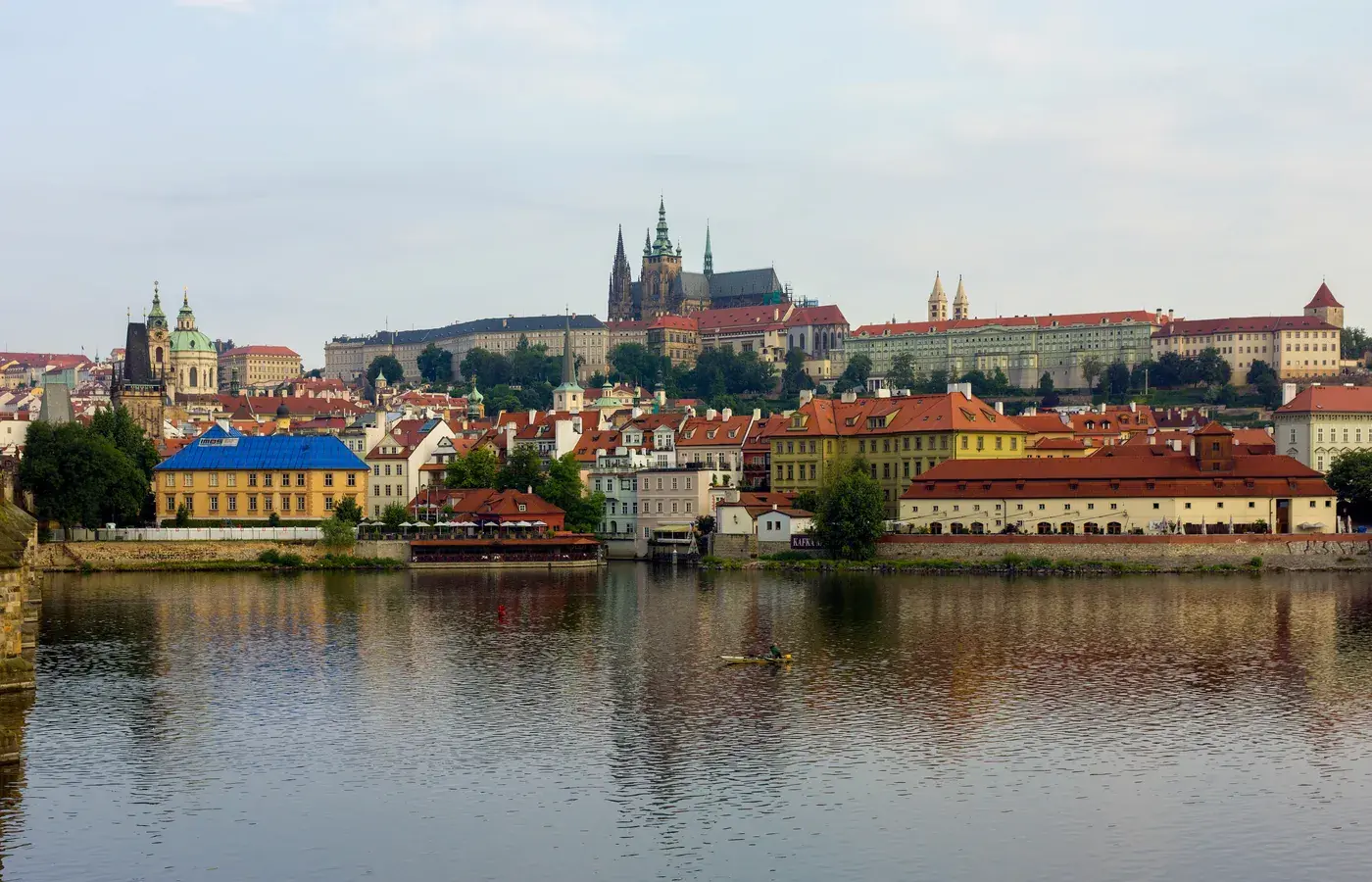
Prague sits along the Vltava River in the heart of Bohemia, recognized across Europe for its intact historical architecture. Known widely as the City of a Hundred Spires, the skyline features stone towers, Baroque domes, and Renaissance palaces that survived the major conflicts of the twentieth century largely undamaged.
Travellers come to wander between the castle district on the western heights and the winding streets of the Old Town. Connected by centuries-old stone bridges and a reliable network of red trams, the city offers an approachable scale that rewards exploring on foot.
A short history
Slavic groups settled along the bends of the Vltava River in the latter half of the sixth century. By the late ninth century, Prince Bořivoj of the Přemyslid dynasty founded Prague Castle atop a high ridge, establishing a seat of power that soon attracted traders, artisans, and religious communities to the valley below.
In the fourteenth century, King Charles IV elevated Prague into the imperial capital of the Holy Roman Empire. He oversaw the founding of Charles University in 1348, commissioned the stone bridge later renamed in his honour, and laid out the expansive New Town, establishing the city as a prominent cultural and political centre in medieval Europe.
The city later became central to religious and political conflicts, including the fifteenth-century Hussite movement and the outbreak of the Thirty Years' War following the Defenestration of Prague in 1618. Centuries of Habsburg rule brought extensive Baroque reconstruction, leaving behind many of the grand palaces and churches that line the streets today.
In 1918, following the collapse of the Austro-Hungarian Empire, Prague became the capital of independent Czechoslovakia. After periods under Nazi occupation and subsequent Communist rule, the peaceful Velvet Revolution of 1989 restored democracy, opening the historic city to travellers from around the world.
Neighbourhoods
The historic core divides naturally along the river. Staré Město, or the Old Town, clusters around a medieval market square, bordered by the narrow lanes of Josefov, the historic Jewish quarter. Across the river, Malá Strana, known as the Lesser Town, slopes upward toward Hradčany and the castle gates, lined with quiet courtyards, foreign embassies, and terraced gardens.
Beyond the historic core, residential districts showcase everyday local life. Vinohrady features tree-lined avenues, nineteenth-century residential facades, and public parks, while neighbouring Žižkov carries a working-class heritage with steep residential hills and traditional neighbourhood pubs.
Food and drink
Traditional Czech cooking focuses on hearty plates designed for cooler weather. Popular staples include svíčková, a marinated beef dish served with a vegetable cream sauce, cranberries, and sliced bread dumplings, as well as roast pork with sauerkraut and potato dumplings. Brewing is a pillar of national heritage; bottom-fermented pale lagers, first developed in nearby Plzeň, are served fresh from taps across the city alongside regional plum brandies such as slivovice.
Music, arts and culture
Prague maintains a deep musical and literary tradition. Composers such as Antonín Dvořák and Bedřich Smetana drew inspiration from Bohemian folklore, and Wolfgang Amadeus Mozart conducted the 1787 premiere of his opera Don Giovanni at the Estates Theatre. The city also shaped twentieth-century literature through writers like Franz Kafka, while traditional string puppetry and year-round classical concerts in historic churches remain central to cultural life.
Top things to do
A visit to Prague Castle allows travellers to explore the Gothic St. Vitus Cathedral, the Old Royal Palace, and the preserved stone houses of Golden Lane. Lower down, a walk across Charles Bridge links the Lesser Town with the Old Town, where crowds gather to watch the hourly mechanical figures of the fifteenth-century Astronomical Clock on the Old Town Hall.
Exploring Josefov reveals preserved historic synagogues and the Old Jewish Cemetery. For sweeping views and green space, visitors can take the funicular railway up Petřín Hill, walk along the riverbanks, or stroll through Letná Park, which overlooks the river crossings connecting both halves of the city.
Day trips
Several notable Bohemian towns make easy excursions outside the capital. Karlštejn Castle, founded by Charles IV to protect the imperial crown jewels, rises over wooded hills a short train ride away. Further east, the historic silver-mining town of Kutná Hora features the Gothic St. Barbara's Church and the Sedlec Ossuary, while the western spa town of Karlovy Vary and the brewing centre of Plzeň are accessible for an easy day trip by regional rail.
Before you go
Hours and ticket rules for the castle, the bridge towers and other sites change, check official sources before you go. For travel advice, start with the Government of Canada's Czechia travel advice.
Other starting points on this site include Vienna and Amsterdam.
Best time to go
Late spring and early fall are often used for walking the compact centre. Summers can be warm and busy. Winters are cold, with Christmas markets typically in late November and December (confirm dates officially). Cobblestones and hills are easier in dry weather.
Getting there from Canada
Flights from Canada typically arrive at Vaclav Havel Airport, usually via a European hub. Official buses and the airport express run toward the metro. The historic centre is then compact and walkable, with trams for the hills and longer hops.
Official travel advice
Read the Government of Canada's Czechia travel advice before you go. Rules and conditions can change.
Search flights, cars, tours and airport rides under Plan your trip below. Checkout is on the partner's site.