
What Vienna is known for
Vienna carries an unmistakable sense of imperial poise. Set along the Danube, the Austrian capital draws visitors with its grand architecture, sweeping public parks, and historic coffeehouse traditions. It offers an easy rhythm where stately palaces sit alongside green riverfront paths and neighbourhood markets.
For centuries, the city served as the political and artistic heart of Central Europe. Today, it remains celebrated for its classical music pedigree, rich museum collections, and high quality of life, making it a comfortable city to explore on foot or by tram.
A short history
Early settlements along the Danube date to the Neolithic period, followed by Celtic communities in the region. Around the first century, the Romans established a military fort named Vindobona on the site of modern Vienna, turning it into a fortified frontier outpost.
In the Middle Ages, the town grew into an important trading centre under the Babenberg rulers. In the late 13th century, the Habsburg dynasty took control, beginning a reign of more than six centuries that transformed Vienna into the capital of a major European empire.
Vienna withstood two major Ottoman sieges, in 1529 and 1683. The periods that followed brought monumental baroque construction across the city. In the mid-19th century, the old medieval fortifications were cleared to create the Ringstrasse boulevard, lined with grand civic buildings, museums, and theatres.
After the fall of the Austro-Hungarian Empire in 1918 and the destruction of the Second World War, Vienna rebuilt its historic centre and established itself as a neutral international capital. Today, its preserved imperial fabric exists alongside modern European culture.
Neighbourhoods
The Innere Stadt forms the historic core, ringed by the grand Ringstrasse boulevard. Cobblestone lanes link quiet courtyards with landmarks such as St. Stephen's Cathedral and the Hofburg. Just outside the boulevard, Neubau features independent design shops, casual cafes, and the open courtyard of the MuseumsQuartier.
Across the Danube Canal, Leopoldstadt offers a leafy setting with a historic Jewish heritage and the expansive Prater park. Farther west, near the edge of the Vienna Woods, Grinzing retains the relaxed atmosphere of a historic wine village, where traditional taverns sit amid hillside vineyards.
Food and drink
Viennese food balances comforting meat dishes with refined pastry work. Classic choices include crisp veal Wiener Schnitzel, tender boiled beef Tafelspitz, and slow-cooked goulash. The city's famous coffeehouse culture encourages guests to sit quietly with a melange and a slice of Sachertorte or warm Apfelstrudel. Vienna also cultivates vineyards within its city limits, producing crisp white wines such as Grüner Veltliner and Gemischter Satz, traditionally served in rustic wine taverns.
Music, arts and culture
Vienna's musical heritage is central to its identity. Composers such as Mozart, Beethoven, and Schubert lived and worked here, and that artistic standard continues at the Vienna State Opera and the Musikverein. The visual arts are equally prominent. The Kunsthistorisches Museum houses fine collections of European painting, while the Belvedere displays key works of Austrian modernism, including paintings by Gustav Klimt and Egon Schiele.
Top things to do
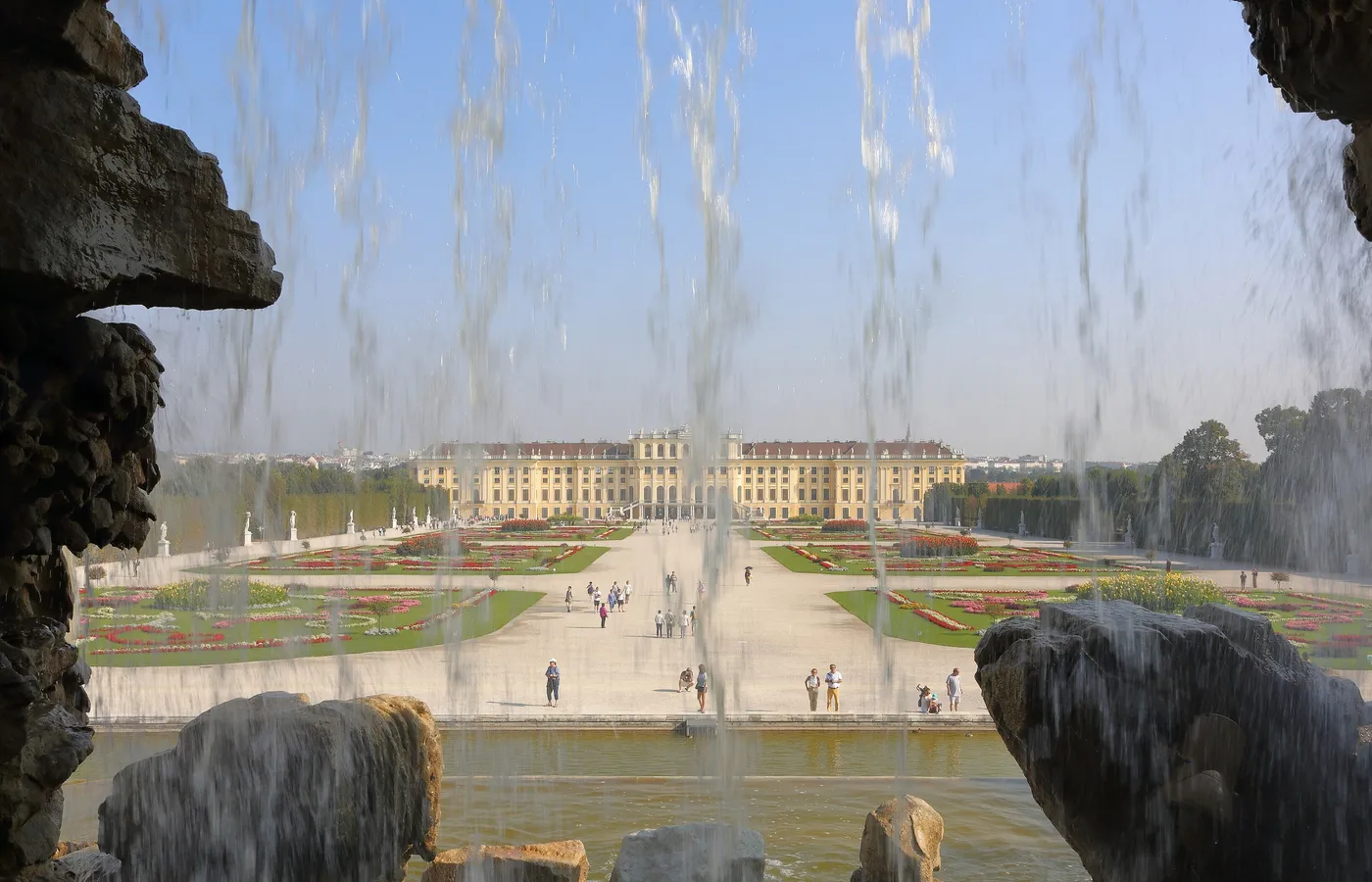
A visit naturally centres on the historic core. Travellers can climb the south tower of St. Stephen's Cathedral, tour the state apartments of the Hofburg, or ride a tram along the Ringstrasse past the Austrian Parliament and City Hall. To the west, Schönbrunn Palace presents a massive summer residence complete with expansive imperial gardens and public walking paths.
Art lovers can spend hours in the MuseumsQuartier, while food shoppers can browse the open-air produce stalls and food counters at the Naschmarkt. For green space, the Prater and the trails of the Vienna Woods offer easy escapes without leaving the city.
Day trips
The surrounding region offers straightforward day excursions. The Wachau Valley, known for terraced vineyards and ruined castles along the Danube, is an easy day trip by rail or riverboat. Bratislava, the capital of Slovakia, sits just downriver and is accessible by a short train ride. To the south, the thermal spa town of Baden bei Wien provides quiet parks and classical architecture within a short train ride from the city centre.
Before you go
Hours and ticket rules for palaces and museums change, check official sources before you go. For travel advice, start with the Government of Canada's Austria travel advice.
Other starting points on this site include Prague, Rome and Amsterdam.
Best time to go
Late spring through early fall is comfortable for the Ring and palace parks. Winters are cold, with Christmas markets typically in late November and December (dates and hours change; use official city pages). Summers can be warm.
Getting there from Canada
Flights from Canada typically arrive at Vienna International, usually via a European hub, with some nonstops. Official City Airport Train, rail (the S7) or buses run into the centre. The core inside the Ring is walkable, with trams and the U-Bahn for palaces further out.
Official travel advice
Read the Government of Canada's Austria travel advice before you go. Rules and conditions can change.
Search flights, cars, tours and airport rides under Plan your trip below. Checkout is on the partner's site.