
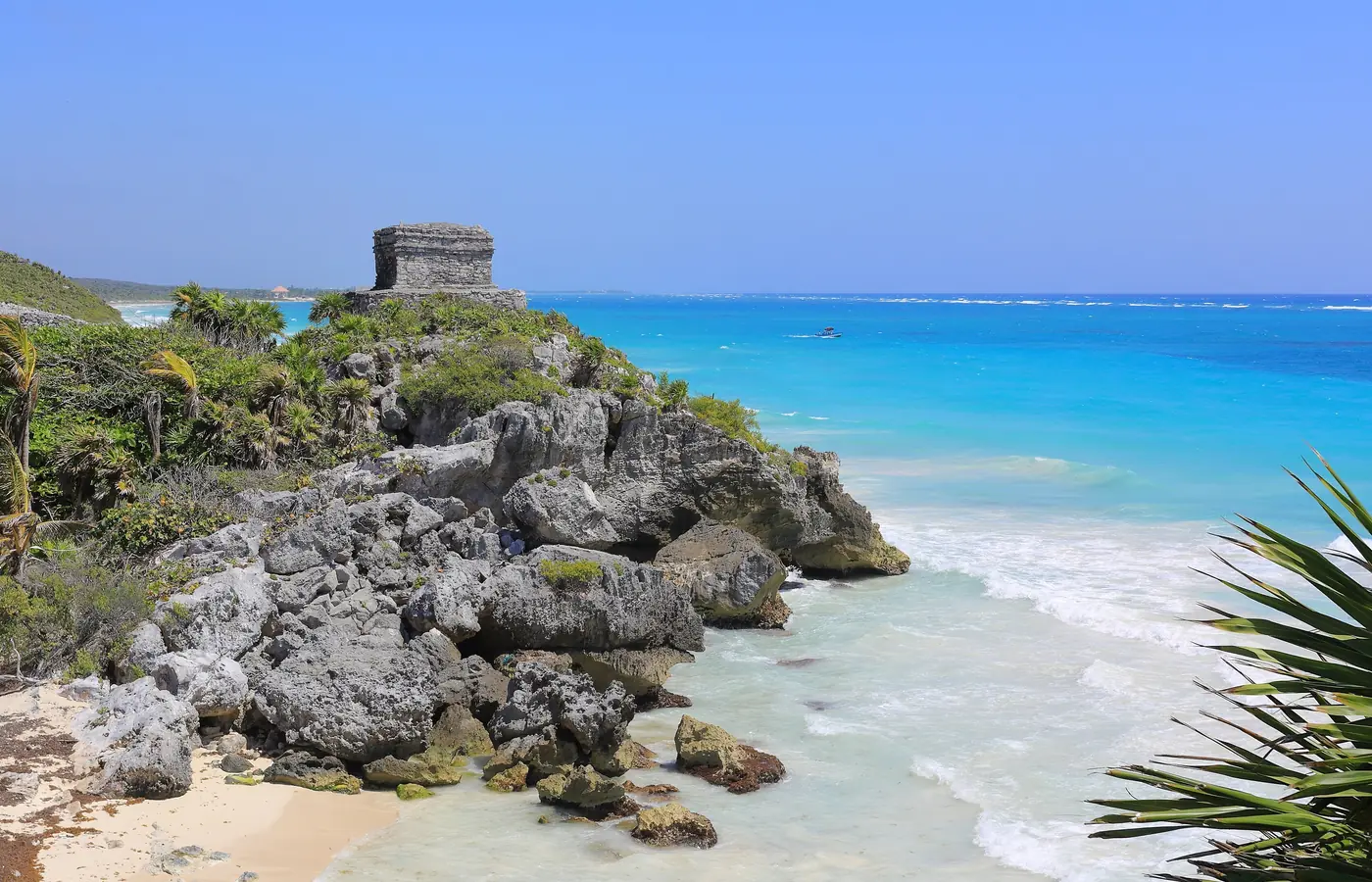
What Tulum is known for
Tulum sits along the turquoise Caribbean waters of the Riviera Maya in Quintana Roo. The town is recognized around the world for its oceanfront pre-Columbian Maya ruins, limestone freshwater sinkholes known as cenotes, and long stretches of white sand. Its dramatic coastal setting combines dense tropical vegetation with clear saltwater beaches.
Today, the area attracts visitors looking for a mix of archaeological heritage and outdoor living. Travellers come to swim in groundwater caves, cycle along coastal roads, and experience a relaxed community that contrasts with the larger, high-density resort cities farther north on the peninsula.
A short history
Often said to have been called Zama, a name conventionally translated as dawn or sunrise in Yucatec Maya, the settlement served as a seaport connected by trade to the inland city of Coba. The site developed into a fortified trading hub between the 13th and 15th centuries. High stone ramparts defended it on three sides, while steep coastal limestone cliffs protected it from the sea.
From this vantage, Maya merchants traded obsidian, jade, salt, cacao, and cotton textiles along sea routes connecting Central America with the Gulf of Mexico. A Spanish expedition sighted the walled town from the sea in the early 16th century. European diseases and upheaval contributed to its decline, and the site was gradually abandoned in the decades after Spanish contact, leaving the stone structures to be reclaimed by the jungle.
For centuries, the settlement remained quiet, though Maya communities and rebels moved through the region during the 19th-century Caste War of Yucatan, when Indigenous Maya fought against Yucatecan and Mexican authorities. The modern town of Tulum began taking shape in the 20th century as a modest fishing community along what is now Highway 307. Road improvements and international interest in regional archaeology eventually transformed the quiet outpost into a recognized coastal destination.
Neighbourhoods
Tulum is divided into distinct zones, each offering a different atmosphere. Tulum Pueblo, the inland town centre along the main highway, provides an authentic look at everyday life. Here, paved side streets are lined with casual taquerias, grocery markets, and small parks where families gather in the evenings.
Closer to the water lies the Zona Hotelera, a long strip running along the coastal sand road. This area is defined by low-rise thatched architecture, low-rise beachfront venues, and quiet pathways shaded by palm trees. Just inland from the beach, modern residential areas feature paved bicycle lanes, rental villas, and contemporary apartment blocks integrated into the native forest.
Food and drink
The local cuisine blends regional Yucatecan traditions with fresh Caribbean seafood. Classic regional dishes include cochinita pibil, which is pork marinated in citrus and achiote paste, wrapped in banana leaves, and slow-roasted. Menus frequently highlight fresh ceviche, whole fried snapper, and tacos filled with tikin xic, a traditional Maya preparation of fish seasoned with bitter orange and spices. Local drinks range from fresh coconut water and agua de chaya, made from a leafy green native to the peninsula, to mezcal and other Mexican drinks.
Music, arts and culture
Culture in Tulum bridges ancestral Maya heritage with contemporary international arts. Traditional religious festivals and community dances, such as the jarana yucateca, still take place during annual patron saint festivities in the town centre. Meanwhile, the coastal strip attracts global sculptors, architects, and electronic musicians, with an artistic culture focused on nature and wellness.
Top things to do
The primary sight is the Tulum Archaeological Zone, where the stone Castillo and the small nearby Temple of the God of the Winds stand above the Caribbean Sea. The surrounding coastline offers public shores such as Playa Paraiso, where clear waters and soft sands invite unhurried afternoons of sunbathing and swimming.
Inland, exploring the region's vast network of flooded limestone sinkholes is a major draw. Cenotes in the wider area include Gran Cenote and Cenote Calavera near Tulum, while Cenote Dos Ojos is farther north. These offer opportunities to snorkel and swim in clear, cool freshwater surrounded by stalactites, stalagmites, and hanging tree roots.
Day trips
Just south of town lies the Sian Ka'an Biosphere Reserve, a vast protected area of coastal wetlands, mangrove lagoons, and coral reefs that can be visited on an easy day trip. Inland, the ancient Maya city of Coba features towering pyramids surrounded by thick jungle, easily explored by bicycle. A longer day trip runs north to Playa del Carmen, where a passenger ferry continues to Cozumel for offshore reef drift diving, while a sheltered marine lagoon near Akumal offers calm, protected snorkelling among schools of parrotfish.
Before you go
Confirm entry rules and site hours with official sources before you go, starting with the Government of Canada's Mexico travel advice. Hours and access change, we don't list them here.
Other starting points on this coast include Cancun and Playa del Carmen.
Best time to go
The drier winter is the usual window from Canada. Summer is hotter and wetter. The official Atlantic hurricane season is 1 June to 30 November. Some unpaved or coastal roads flood after heavy rain.
Getting there from Canada
Almost all visitors fly into Cancun International and continue south by road (often two hours or more, depending on the exact stay). There is no large commercial airport in Tulum itself, though transport options change; check current official information.
Official travel advice
Read the Government of Canada's Mexico travel advice before you go. Rules and conditions can change.
Search flights, cars, tours and airport rides under Plan your trip below. Checkout is on the partner's site.