
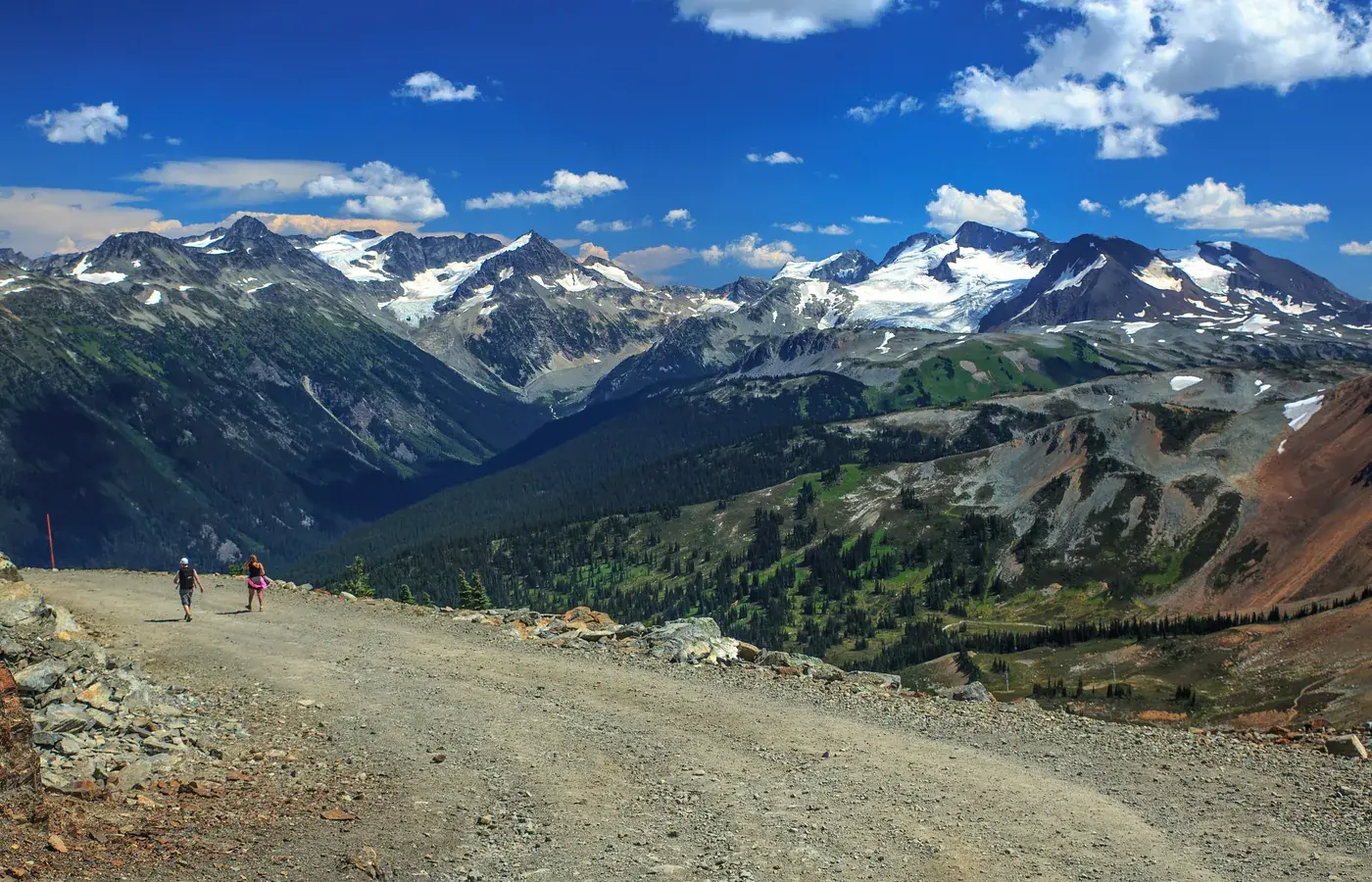
What Whistler is known for
Whistler is recognized internationally for its twin peaks, Whistler and Blackcomb mountains, which offer extensive alpine terrain. Located along the Sea-to-Sky corridor in British Columbia's Coast Mountains, the resort draws travellers year-round for downhill skiing, snowboarding, and summer mountain biking.
Beyond lift-serviced mountain recreation, the town is appreciated for its pedestrian-only village and expansive trail network. It pairs Pacific Northwest wilderness with accessible outdoor amenities, serving as a mountain gathering place for outdoor athletes, nature lovers, and families.
A short history
The valley sits on the shared traditional territories of the Skwxwú7mesh (Squamish) and Líl̓wat (Lil'wat) Nations. For generations, Indigenous peoples hunted, gathered plants, and travelled trading routes connecting coastal waters to the interior plateau.
European trappers and prospectors arrived in the late 19th and early 20th centuries. The area was initially known as London Mountain, but settlers renamed it Whistler after the high-pitched warning whistle of the local hoary marmots. The completion of the Pacific Great Eastern Railway in the 1910s made the valley accessible for fishing lodges and early summer tourism around Alta Lake.
In the 1960s, a group of Vancouver investors developed Whistler Mountain with hopes of hosting the Winter Olympic Games. Blackcomb Mountain opened across the valley in 1980, and the two separate operations merged in 1997 to create an integrated mountain resort.
Whistler's Olympic ambition was realized in 2010 when it co-hosted the Olympic and Paralympic Winter Games with Vancouver. The legacy of the games helped establish the modern infrastructure and international reputation that define the resort today.
Neighbourhoods
Whistler Village serves as the central hub, built around a pedestrian walkway that connects shops, public squares, and ski lifts. Adjacent to the main stroll, the Upper Village provides access to Blackcomb Mountain with a slightly quieter atmosphere, while Village North extends the car-free corridor toward community parks and residential lodges.
Further south along Highway 99, Whistler Creekside marks the original lift base from the 1960s. Creekside retains a relaxed, traditional ski-town feel with its own gondola and lake access. Outlying residential areas, such as Alta Vista, Alpine Meadows, and Emerald Estates, spread across the valley floor near neighbourhood parks and calm waters.
Food and drink
Dining in Whistler reflects the agricultural and coastal diversity of British Columbia. Regional menus feature Pacific salmon, spot prawns, wild mushrooms, and locally produced meats. The social culture of après-ski centers on shared casual plates, poutine, and craft beer brewed with mountain meltwater, often accompanied by cool-climate wines from the Okanagan Valley.
Music, arts and culture
Whistler's cultural landscape highlights regional heritage and contemporary arts. The Squamish Lil'wat Cultural Centre provides immersive exhibits on Indigenous art, craftsmanship, and traditions through guided song and storytelling. The Audain Art Museum houses a permanent collection of British Columbia art, ranging from historical Northwest Coast wood carvings to modernist paintings by Emily Carr. Open-air events, outdoor concerts at Whistler Olympic Plaza, and public sculptures along the Village Stroll enrich the community year-round.
Top things to do
The Peak 2 Peak Gondola spans the divide between Whistler and Blackcomb mountains, providing panoramic views of glaciers, forests, and volcanic peaks. Winter visitors explore alpine ski runs and Nordic ski tracks, while summer brings high-elevation hiking trails and one of North America's largest lift-accessed downhill mountain bike parks.
The Valley Trail system offers kilometres of paved paths connecting residential zones, public beaches, and municipal parks. Travellers use the route to reach Lost Lake for seasonal swimming and snowshoeing, or to visit Alta Lake and Alpha Lake for canoeing and paddleboarding. Heritage markers from the 2010 Winter Games, including the Olympic rings in the village and the track at the Whistler Sliding Centre, offer glimpses into the valley's athletic heritage.
Day trips
The surrounding Sea-to-Sky corridor offers diverse excursions within a short drive. Northward lies the Pemberton Valley, where farmlands sit beneath the steep face of Mount Currie, and nearby trails lead to Nairn Falls Provincial Park. South toward Vancouver, Squamish is popular for hiking around the granite cliffs of the Stawamus Chief and coastal views of Howe Sound. Closer to Whistler, Brandywine Falls Provincial Park features a viewpoint overlooking a waterfall plunging into a volcanic canyon, making it an easy day trip.
Before you go
Trail, lift and road conditions change with the season, check official sources before you go.
Nearby starting points on this site include Vancouver, Victoria and Tofino.
Best time to go
Winter is the ski season (two mountains, official opening and closing dates change). Summer is for hiking, biking and the lakes; early fall can be quieter. Shoulder seasons may have limited lifts or trails. Highway 99 (the Sea to Sky) can close for incidents or weather; check DriveBC.
Getting there from Canada
Most visitors fly into Vancouver and continue by road or scheduled bus up the Sea-to-Sky Highway (about two hours in good conditions, longer in snow or traffic). There is no large commercial jet airport in Whistler itself.
Official travel advice
Travelling inside Canada does not use a country travel-advice page. Use official park, ferry and highway notices where they are mentioned above.
Search flights, cars, tours and airport rides under Plan your trip below. Checkout is on the partner's site.