
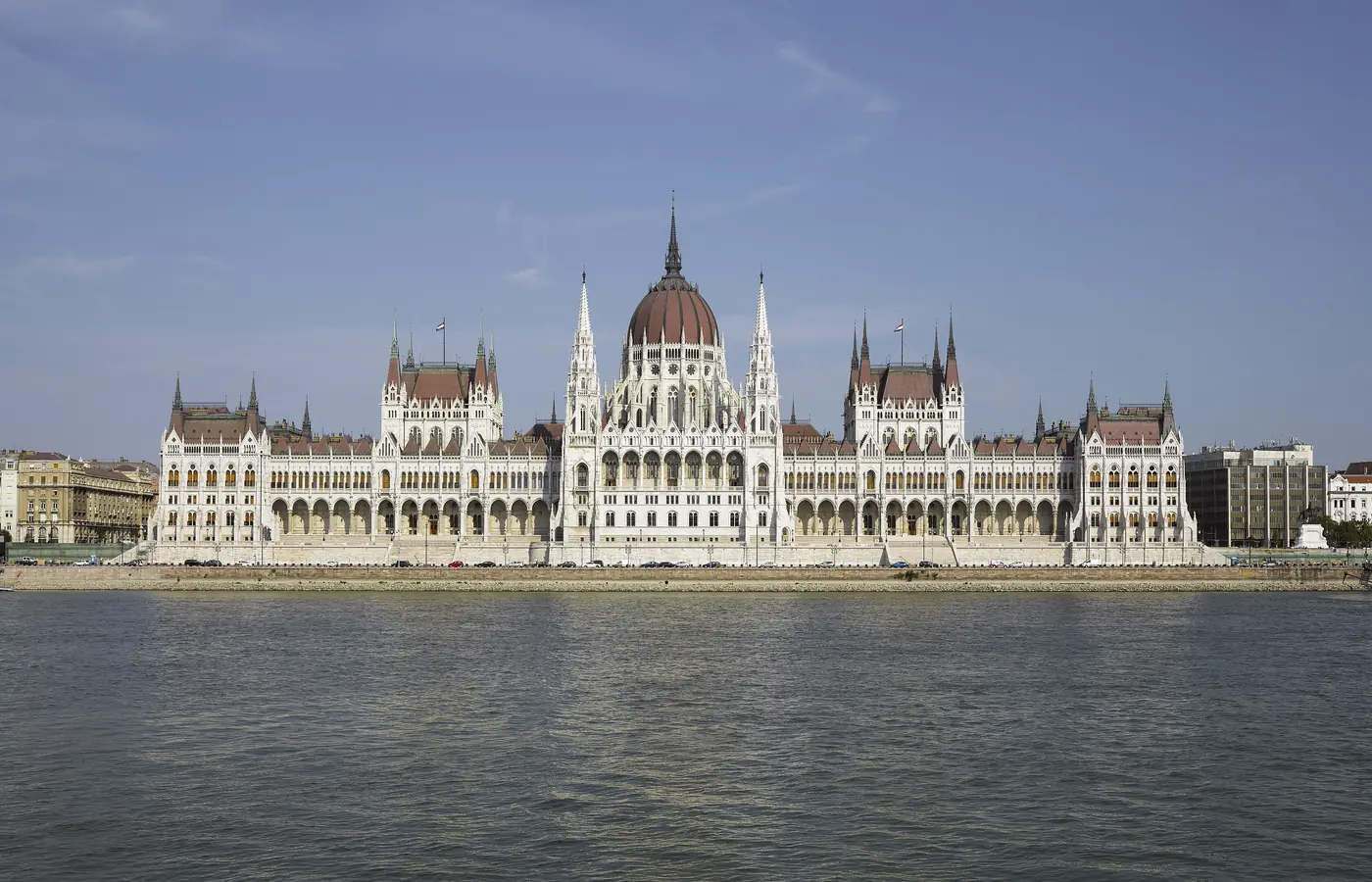
What Budapest is known for
Split by the Danube River, Budapest unites the hilly historic streets of Buda with the wide boulevards and flat grid of Pest. The Hungarian Parliament Building presides over the eastern bank, while Buda Castle looks down from the west, connected by historic spans such as the Széchenyi Chain Bridge.
The city is renowned for its natural thermal springs, with public baths that have operated for centuries. Travellers also come for the grand turn-of-the-century architecture, quiet riverfront promenades, and an urban atmosphere that balances imperial history with relaxed everyday life.
A short history
Long before the modern capital was formed, Celtic tribes inhabited the area, followed by the Romans, who established the military camp and settlement of Aquincum near the Danube in the first century. Hungarian tribes arrived in the Carpathian Basin in the late ninth century, gradually establishing permanent settlements along both sides of the river.
Buda gained political prominence in the 13th century after King Béla IV ordered a fortress built on Castle Hill following the Mongol invasion. The region came under Ottoman rule for roughly a century and a half beginning in the mid-16th century, which left a lasting architectural legacy in the city's domed thermal bathhouses.
The modern metropolis took shape during the Austro-Hungarian Empire. In 1873, Buda, Pest, and Óbuda officially merged to create Budapest. A building boom followed, culminating in the 1896 millennial celebrations, which gave the city its continental underground railway, Heroes' Square, and grand avenues.
The 20th century brought heavy destruction during the Siege of Budapest in the Second World War and intense political upheaval, including the Hungarian Revolution of 1956. Following the collapse of state socialism in 1989, Budapest restored its historic core and emerged as a major cultural and administrative centre of Central Europe.
Neighbourhoods
Castle Hill in District I offers cobblestone lanes, baroque houses, and expansive views across the river from its elevated ramparts. Across the Danube in Pest, District V serves as the political and commercial centre, filled with government buildings, pedestrian shopping streets, and the Parliament.
District VII, historically the Jewish Quarter, features narrow alleys, synagogues, courtyards, and informal gathering places inside older residential blocks. Further east, along the tree-lined Andrássy Avenue in District VI, travellers encounter 19th-century mansions leading toward City Park.
Food and drink
Hungarian cooking centres on hearty dishes seasoned with sweet or hot paprika, sour cream, and slow-simmered meats. Gulyás (goulash), a rich beef and vegetable soup, remains the national staple, alongside chicken paprikash served with small egg dumplings known as nokedli, and lángos, a deep-fried flatbread topped with garlic, sour cream, and grated cheese. For sweet options, bakeries serve chimney cake (kürtőskalács) dusted with cinnamon and sugar, or layered Dobos torte. Diners often pair meals with crisp dry whites from nearby vineyards, full-bodied reds from Villány or Eger, or sweet Tokaji Aszú dessert wine, often finished with a traditional herbal spirit or fruit pálinka.
Music, arts and culture
Budapest has a deep musical heritage tied to composers Franz Liszt, Béla Bartók, and Zoltán Kodály. Classical performances regularly fill the Hungarian State Opera House and the Liszt Academy of Music, while folk traditions survive through traditional communal dance houses known as táncház. The country's visual arts and political history are preserved in major public institutions, including the Hungarian National Gallery inside Buda Castle and the Hungarian National Museum.
Top things to do
A common starting point is the Castle District, where visitors explore the courtyards of Buda Castle, the multi-coloured tiled roof of Matthias Church, and the lookout towers of Fisherman's Bastion. Walking across the Széchenyi Chain Bridge leads to the Pest embankment, where you can view the halls of the Hungarian Parliament Building and pause at the Shoes on the Danube Bank memorial.
Thermal bathing remains an essential local custom, with visitors heading to Széchenyi Thermal Bath in City Park or Gellért Baths on the Buda side to soak in mineral-rich waters. A walk along Andrássy Avenue leads past the Hungarian State Opera House to the statues of Heroes' Square, while Margaret Island provides quiet green space in the middle of the river for walking and cycling.
Day trips
The Danube Bend north of the capital makes an easy day trip by train or seasonal boat, with stops including the historic riverside town of Szentendre, known for its art galleries and cobblestone alleys, and Visegrád with its medieval hilltop citadel. Further along the river, Esztergom draws visitors to Hungary's largest cathedral, which overlooks the river border with Slovakia. To the southwest, Lake Balaton is reachable for a day of exploring lakeside promenades, vineyards along volcanic hillsides, and the historic abbey on the Tihany peninsula.
Before you go
Confirm entry rules with official sources before you go, starting with the Government of Canada's Hungary travel advice. Hours and closures change, we don't list them here.
Other European starting points on this site include Vienna, Prague and Berlin.
Best time to go
Late spring through early fall is the usual Danube-and-terrace season. Winters are cold, with short days and a chance of snow; thermal baths run year-round, with official hours and rules. Summers can be hot.
Getting there from Canada
Flights from Canada typically arrive at Budapest Ferenc Liszt International Airport, usually via a European hub. Official express buses and a regional rail link run toward the centre. The core is then walked, with metro and trams across the river.
Official travel advice
Read the Government of Canada's Hungary travel advice before you go. Rules and conditions can change.
Search flights, cars, tours and airport rides under Plan your trip below. Checkout is on the partner's site.