
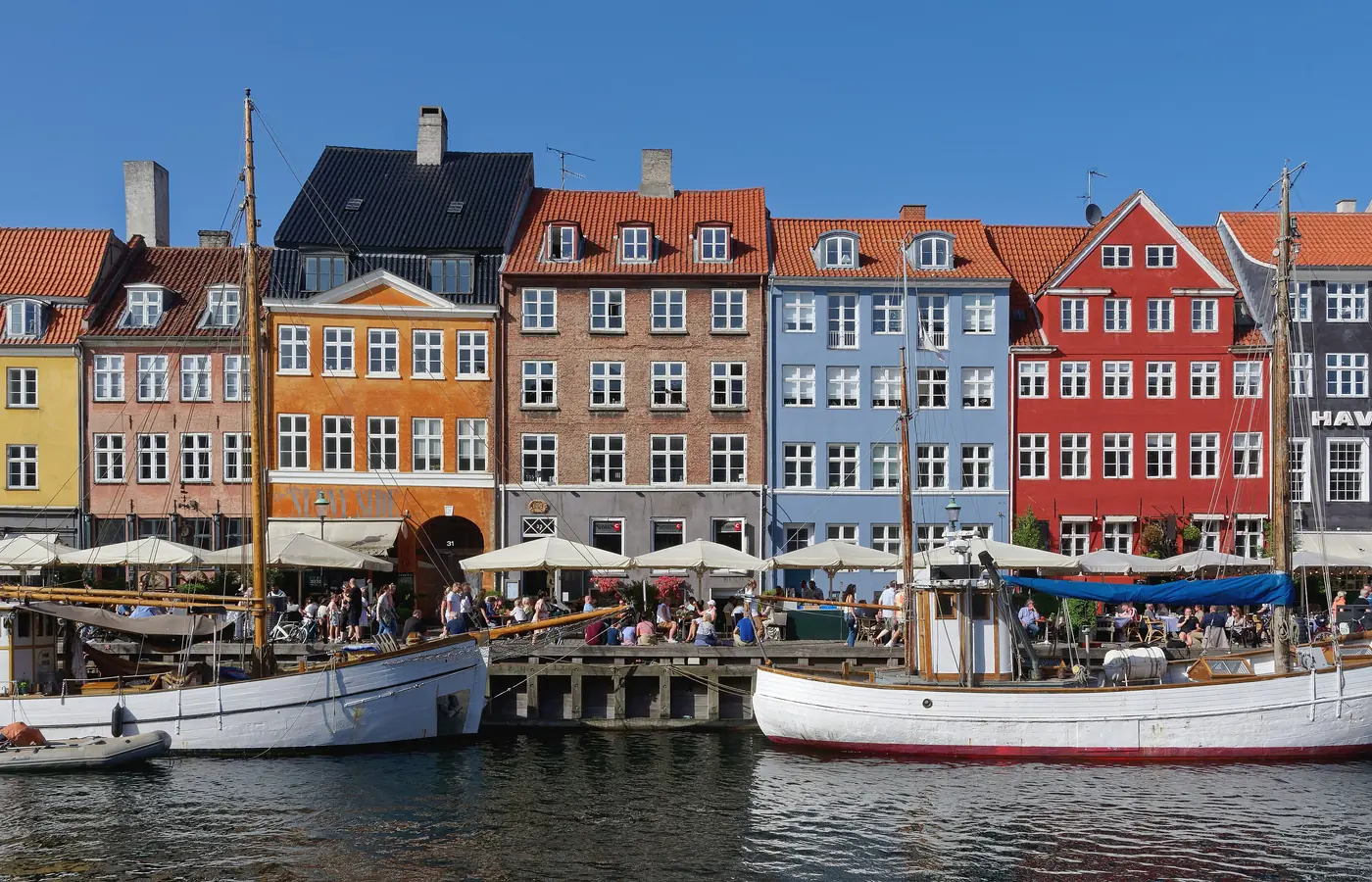
What Copenhagen is known for
Copenhagen is known for its human-scale urban design, cycling culture, and clean harbour waters. Broad bike lanes outnumber car traffic in many central areas, creating an orderly, relaxed pace that stands out among European capitals.
Waterfront living defines daily routines, from the colourful seventeenth-century merchant houses along Nyhavn to harbour baths where locals swim during the summer months. The city combines a centuries-old maritime heritage with modern Danish architecture and accessible public spaces.
A short history
Settled since prehistoric times, Copenhagen emerged as a prominent trading hub in the late 12th century when Bishop Absalon fortified the port. Its Danish name, København, translates to "merchants' harbour," reflecting its strategic position on the Øresund sound between Denmark and Sweden.
By the early 15th century, Copenhagen became the Danish capital. King Christian IV, reigning from the late 16th to mid-17th century, shaped much of the historic architecture that survives today, commissioning Rosenborg Castle, the Round Tower, and the canals of Christianshavn.
The city endured devastating fires in the 18th century and naval battles during the Napoleonic Wars in the early 19th century. Subsequent rebuilding introduced neoclassical townhouses, public squares, and broader avenues.
In the 20th century, thoughtful planning, including the 1947 "Finger Plan," directed suburban growth along railway corridors while keeping green spaces intact. Today, Copenhagen is recognized internationally for its urban liveability and restored waterways.
Neighbourhoods
Indre By forms the historic centre, characterized by narrow cobblestone streets, hidden courtyards, and quiet canals. Across the water, Christianshavn reflects a distinct 17th-century Dutch influence, with houseboats, maritime warehouses, and peaceful residential quays.
Just beyond the core, diverse residential districts each offer their own character. Nørrebro features tree-lined streets, independent shops, and the historic Assistens Cemetery, while Vesterbro blends traditional working-class brick tenements with open public plazas.
Food and drink
Traditional Danish food focuses on seasonal ingredients, cured fish, and hearty breads. Smørrebrød—dense rye bread topped with pickled herring, roast beef, or fresh cold-water shrimp—is the classic midday meal. Evening dishes often highlight roasted pork, red cabbage, and boiled potatoes, accompanied by local pilsners or snaps, a traditional caraway- or dill-infused aquavit poured during social meals.
Music, arts and culture
Copenhagen has long nurtured literature, design, and the performing arts. It was home to author Hans Christian Andersen and philosopher Søren Kierkegaard, both honoured throughout the city. Cultural life centres on major public institutions like the Royal Danish Theatre, the Royal Danish Opera, and the National Museum of Denmark, while the country's celebrated craft and industrial design heritage is showcased at Designmuseum Danmark.
Top things to do
A classic walking route begins at the colourful canal of Nyhavn and leads along the waterfront past Amalienborg, the winter residence of the Danish royal family, to the Little Mermaid statue at Langelinie. Nearby, the star-shaped 17th-century fortress of Kastellet provides walking paths along preserved earthen ramparts and moat waters.
In the heart of the city, the Round Tower features a continuous spiral ramp that climbs to an open-air observation platform with broad views over red-tiled roofs. Just north of the core, Rosenborg Castle displays the Danish crown jewels within King's Garden, while historic Tivoli Gardens offers landscaped grounds and amusements right beside the central railway station.
Day trips
Several historic destinations make easy day trips from the capital. North along the coast of Zealand, Kronborg Castle in Helsingør guards the narrowest point of the Øresund and is known as the setting of Shakespeare's Hamlet. In Roskilde, a short train ride west, travellers can visit the Gothic cathedral where Danish monarchs are interred, as well as the Viking Ship Museum on the fjord. Visitors can also take a short train ride across the Øresund Bridge to explore the Swedish coastal city of Malmö.
Before you go
Confirm entry rules with official sources before you go, starting with the Government of Canada's Denmark travel advice. Hours and closures change, we don't list them here.
Other European starting points on this site include Berlin, Amsterdam and Reykjavik.
Best time to go
Late spring through early fall has the longest days and the usual outdoor-cafe season. Winters are cold, dark and often wet, with Christmas markets typically in late November and December (confirm official dates). Wind off the water is common all year.
Getting there from Canada
Flights from Canada typically arrive at Copenhagen Airport (Kastrup), often via a European hub, with some nonstops. Official metro and trains run from the airport into the centre in minutes. The core is then walked or cycled, with official bikes and transit; this is a city that expects you to watch for cycle lanes.
Official travel advice
Read the Government of Canada's Denmark travel advice before you go. Rules and conditions can change.
Search flights, cars, tours and airport rides under Plan your trip below. Checkout is on the partner's site.