
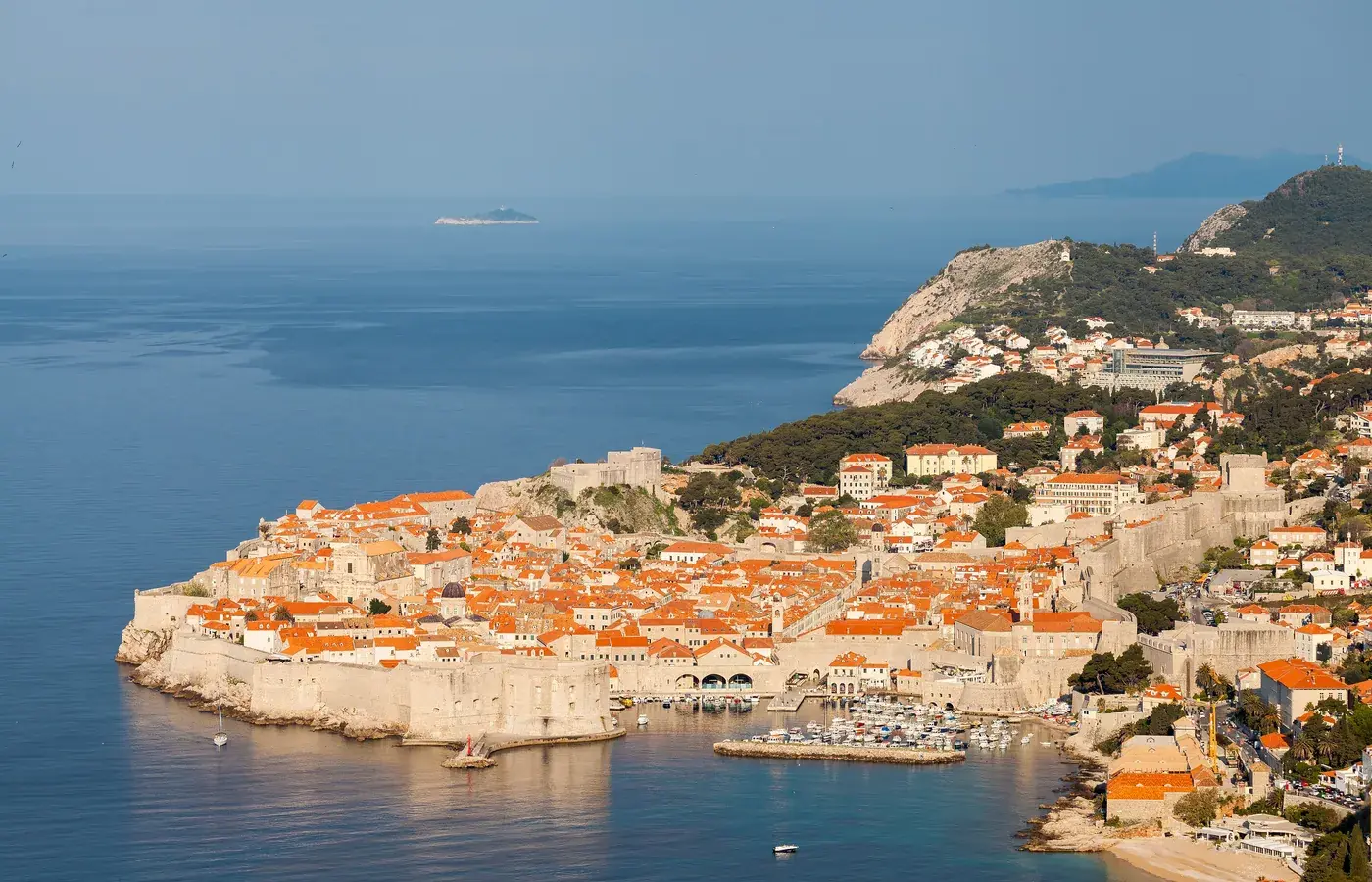
What Dubrovnik is known for
Dubrovnik is known for its fortified stone walls, terracotta roofs, and Adriatic setting along southern Dalmatia. The pedestrian Old Town stands on a rocky headland, bordered by clear water on three sides and backed by Mount Srđ, giving the city its striking presence.
Travellers come to walk atop the ramparts, explore narrow stone alleys, and spend time along the water. Its centuries as a maritime trading republic left behind palaces, monasteries, and fountains crafted from pale limestone that gleams under the Mediterranean sun.
A short history
According to tradition, Dubrovnik was founded in the 7th century by refugees from Roman Epidaurum, who settled a rocky islet separated by a narrow channel from the mainland Slav settlement of Dubrava. In the 12th century, the channel was filled to create the central street known today as the Stradun, uniting the communities into the town of Ragusa.
From the 14th century until the early 19th century, Dubrovnik flourished as the Republic of Ragusa. It built a large merchant fleet and maintained independence through skilled diplomacy and trade treaties with larger powers, including the Ottoman Empire and Venice.
A powerful earthquake struck in 1667, destroying much of the Renaissance core, though the medieval walls survived. The republic rebuilt in an orderly Baroque style along the existing medieval street plan, giving the city much of the appearance seen today.
Napoleonic forces dissolved the republic in 1808, and the city later passed to the Austro-Hungarian Empire and Yugoslavia. After sustaining damage in the early 1990s during the Croatian War of Independence, the historic centre underwent careful restoration to preserve its stone heritage.
Neighbourhoods
The Old Town is the historic centre, encircled by medieval walls and entered through the Pile Gate to the west or Ploče Gate to the east. Within the walls, the limestone Stradun acts as the main street, while steep alleys lead up the hillsides to quiet residential areas where laundry dries between green wooden shutters.
Outside the fortifications, the Lapad peninsula offers a relaxed pace with seaside footpaths, small pebble beaches, and pine woods. Further northwest, Babin Kuk provides coastal promenades, while the district of Gruž serves as the harbour neighbourhood where passenger ferries dock and vendors sell local produce.
Food and drink
Dalmatian cooking relies on fresh seafood, olive oil, garlic, and wild herbs. Common dishes include crni rižot, a squid-ink risotto coloured deep black, alongside grilled fish, octopus salad, and peka, a dish of meat or seafood slow-roasted with potatoes under a domed iron lid. The nearby Pelješac peninsula produces well-known red wines from the Plavac Mali grape, such as Dingač, while traditional desserts include rožata, a baked custard flavoured with local rose liqueur.
Music, arts and culture
Dubrovnik has a long cultural tradition rooted in its independent past. The Dubrovnik Summer Festival transforms open-air courtyards, forts, and public squares into stages for classical music, opera, and theatre, including the works of Renaissance dramatist Marin Držić. Dalmatian klapa singing, a cappella vocal music featuring tight harmonies, is an enduring regional tradition often performed in historic squares on warm evenings.
Top things to do
Walking the City Walls offers elevated views across the Adriatic Sea and the terracotta rooftops of the Old Town. Below the walls, public landmarks include the Rector's Palace, the Franciscan Monastery with its medieval cloister and historic pharmacy, and the Dominican Monastery.
At the western end of the Stradun stands the Large Onofrio's Fountain, built to supply the city with fresh spring water. Across a small inlet sits Fort Lovrijenac, perched on a sea cliff with views looking back toward the harbour, while a cable car runs up Mount Srđ for a panorama of the coast.
Day trips
Lokrum Island is an easy day trip by passenger ferry from the Old Town harbour, known for its botanical garden, walking trails, and swimming spots off rocky ledges. The Elaphiti Islands, including Koločep, Lopud, and Šipan, are accessible by regular boat for quiet coastal exploration. Further up the coast, the fortified town of Ston and the vineyards of the Pelješac peninsula make a rewarding excursion within a day's drive.
Before you go
Wall-walk and site hours change, check official sources before you go. For travel advice, start with the Government of Canada's Croatia travel advice.
A nearby starting point across the Adriatic is Venice. See also Athens and Rome.
Best time to go
Late spring and early fall are often more comfortable than midsummer heat and cruise-ship peaks. Winters are milder than in much of Canada, with more rain and some closures. Official city walls and site hours change with the season. The official Atlantic hurricane season does not apply here; summer heat and, occasionally, Adriatic storms do.
Getting there from Canada
Flights from Canada typically arrive at Dubrovnik Airport, usually via a European hub, with some seasonal nonstops. Official airport buses or pre-arranged transfers run to the Old Town and the Lapad or Babin Kuk hotel areas (the airport is south, across a long coastal road).
Official travel advice
Read the Government of Canada's Croatia travel advice before you go. Rules and conditions can change.
Search flights, cars, tours and airport rides under Plan your trip below. Checkout is on the partner's site.