
What Guatemala is known for
Guatemala is known for its deep Indigenous heritage, dramatic volcanic landscapes, and well-preserved colonial architecture. Travellers encounter a country where ancient Maya traditions remain woven into daily life, visible in the handwoven clothing worn in highland villages and the Mayan languages spoken in rural town squares.
The country also draws visitors with its geography. Central highlands rise to cone-shaped peaks, steep volcanic calderas cradle deep freshwater lakes, and thick northern rainforests shelter ancient limestone ruins. This contrast between living culture and natural scenery shapes the travel experience throughout the country.
A short history
Maya civilization flourished across Guatemala for centuries before European contact. Great city-states developed in the northern lowlands and highland valleys, constructing monumental stone temples, complex calendar systems, and ceremonial plazas. Tikal was one of the largest and most influential of these centres during the Classic Maya period.
Spanish forces arrived in the 1520s, conquering local Indigenous kingdoms and establishing colonial rule. The Spanish founded Santiago de los Caballeros, today known as Antigua Guatemala, which became the capital of the Captaincy General of Guatemala, the colonial administrative centre for much of Central America. After the devastating Santa Marta earthquake of 1773 destroyed much of the city, the Spanish crown ordered the administrative capital moved to the Ermita Valley, establishing modern Guatemala City in 1776.
Guatemala declared independence from Spain in 1821, briefly joining the Mexican Empire and the Federal Republic of Central America before becoming a sovereign republic in 1847. Coffee and banana exports came to dominate the economy in the late 19th and early 20th centuries, heavily influencing national land policy.
The latter half of the 20th century was defined by a 36-year internal armed conflict that concluded with the signing of the Peace Accords in 1996. Today, modern Guatemala works to preserve its historic sites, protect its Indigenous cultural traditions, and share its long history with travellers from around the world.
Neighbourhoods
In Guatemala City, the country's main urban centre, Zona 1 serves as the historic core. It surrounds the broad Plaza de la Constitución, where government buildings, the Metropolitan Cathedral, and the pedestrian corridor of the Sexta Avenida bring together local shoppers and office workers. A short distance away, Zona 4 has developed into an arts district featuring colourful outdoor murals, converted warehouse spaces, and pedestrian avenues designed for walking.
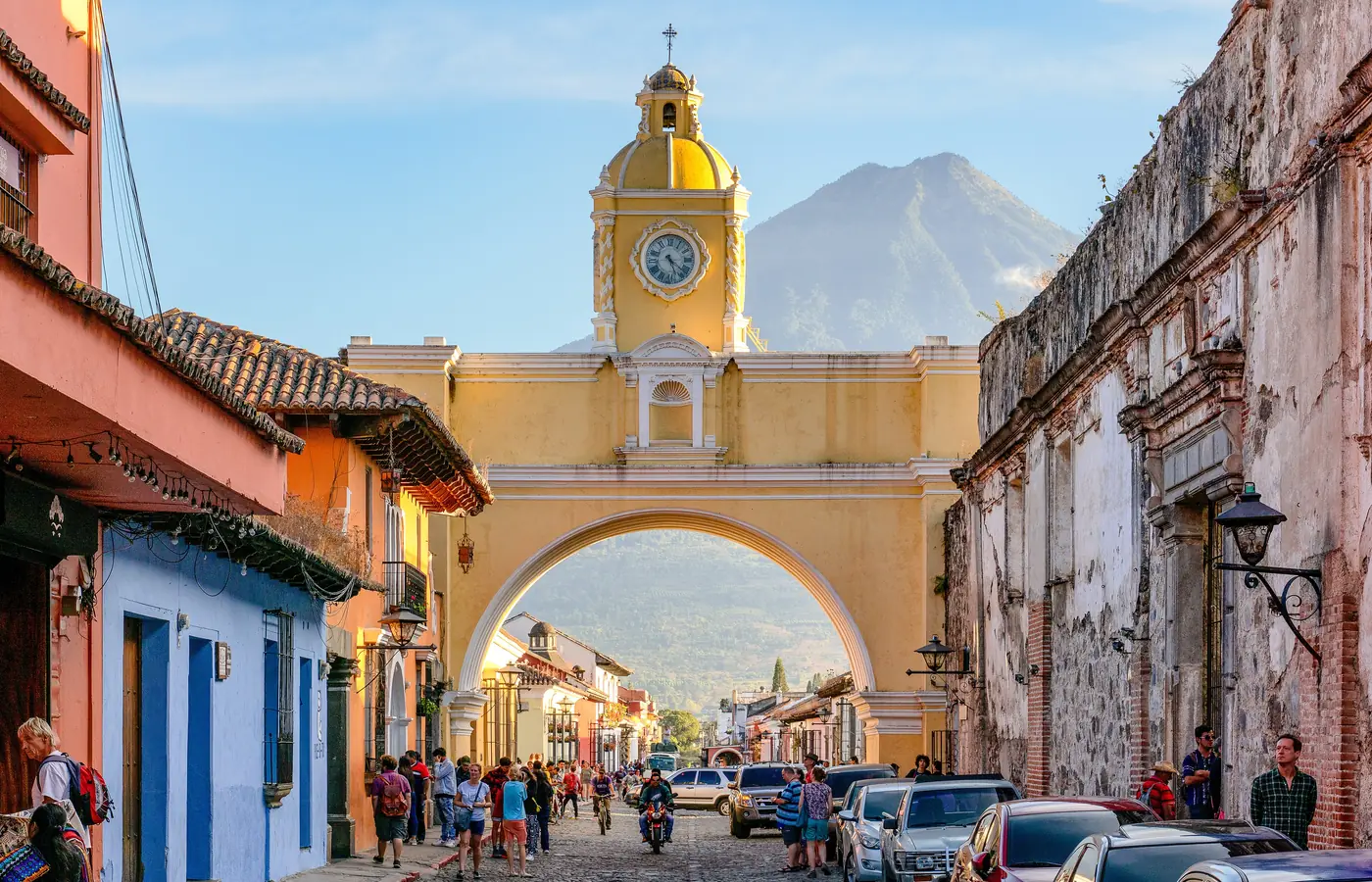
In the highland city of Antigua Guatemala, the urban layout follows a grid plan established during the Spanish colonial period. Cobblestone streets branch out from the central plaza, lined by low-rise pastel houses, ruined baroque convents, and courtyards. The Calle del Arco provides views of Volcán de Agua framed under the yellow arch of Santa Catalina.
Food and drink
Guatemalan food combines Indigenous Maya ingredients with Spanish culinary techniques, relying heavily on corn, beans, and squash. A national dish is pepián, a slow-cooked meat stew enriched by roasted pumpkin seeds, sesame, and charred chillies. Kak'ik, a traditional Maya turkey broth seasoned with coriander and achiote, comes from the northern highlands. Fresh, warm corn tortillas accompany nearly every course. Coffee grown on high volcanic slopes is the country's most celebrated beverage, often served alongside traditional hot chocolate ground with cinnamon.
Music, arts and culture
The national instrument is the marimba, a wooden xylophone made from native rosewood that is played at street celebrations, community gatherings, and formal performances. Visual art has deep roots in backstrap weaving, with each Maya town using distinct symbols and colour palettes in its traditional clothing. During Holy Week leading up to Easter, communities in Antigua and the highlands design alfombras, which are detailed, temporary street carpets made from dyed sawdust, pine needles, and flower petals.
Top things to do
In the northern department of Petén, Tikal National Park allows travellers to walk beneath the rainforest canopy and stand before towering stone pyramids built centuries ago. Further south, visitors explore Antigua's preserved colonial ruins, including the crumbling cloisters of the Santa Clara Convent and the open-air courtyard of the Church of La Merced.
Lake Atitlán, situated in a volcanic caldera, is surrounded by steep ridges and traditional lakeside towns such as Santiago Atitlán and San Juan La Laguna. In Guatemala City, the National Museum of Archaeology and Ethnology displays an extensive collection of carved Maya stelae, ceremonial masks, and jade jewellery.
Day trips
The highland market town of Chichicastenango, known for its open-air textile market and ceremonies on the steps of the Church of Santo Tomás, makes an easy day trip from Lake Atitlán. Travellers can also explore the pre-Columbian archaeological site of Iximche on an easy day trip from Antigua to walk among the ceremonial plazas of the former Kaqchikel Maya capital. Closer to Guatemala City, the ruins of Mixco Viejo sit on a defended plateau, providing an accessible excursion into regional history.
Before you go
Confirm entry rules and site or volcano-access information with official sources before you go, starting with the Government of Canada's Guatemala travel advice. Hours and closures change, we don't list them here.
Other Central American starting points on this site include Belize, Costa Rica and Panama.
Best time to go
The highlands (Antigua, Lake Atitlan, Guatemala City) have a milder, drier season often from November to April, and a wetter May-to-October period. The Peten lowlands around Tikal are hotter. Official Government of Canada advice for Guatemala, including any regional notes, should be read before you go.
Getting there from Canada
Flights from Canada typically arrive at La Aurora in Guatemala City, usually via a U.S. or regional hub. Antigua is about an hour's road transfer (traffic varies). Tikal and Lake Atitlan need a domestic flight or a longer drive.
Official travel advice
Read the Government of Canada's Guatemala travel advice before you go. Rules and conditions can change.
Search flights, cars, tours and airport rides under Plan your trip below. Checkout is on the partner's site.