
What Panama is known for
Panama is defined by its position as the narrow land bridge connecting North and South America, bounded by the Pacific Ocean on one side and the Caribbean Sea on the other. It is world-renowned for the Panama Canal, an engineering achievement that allows ocean-going vessels to cross between the seas through a system of massive locks and inland lakes.
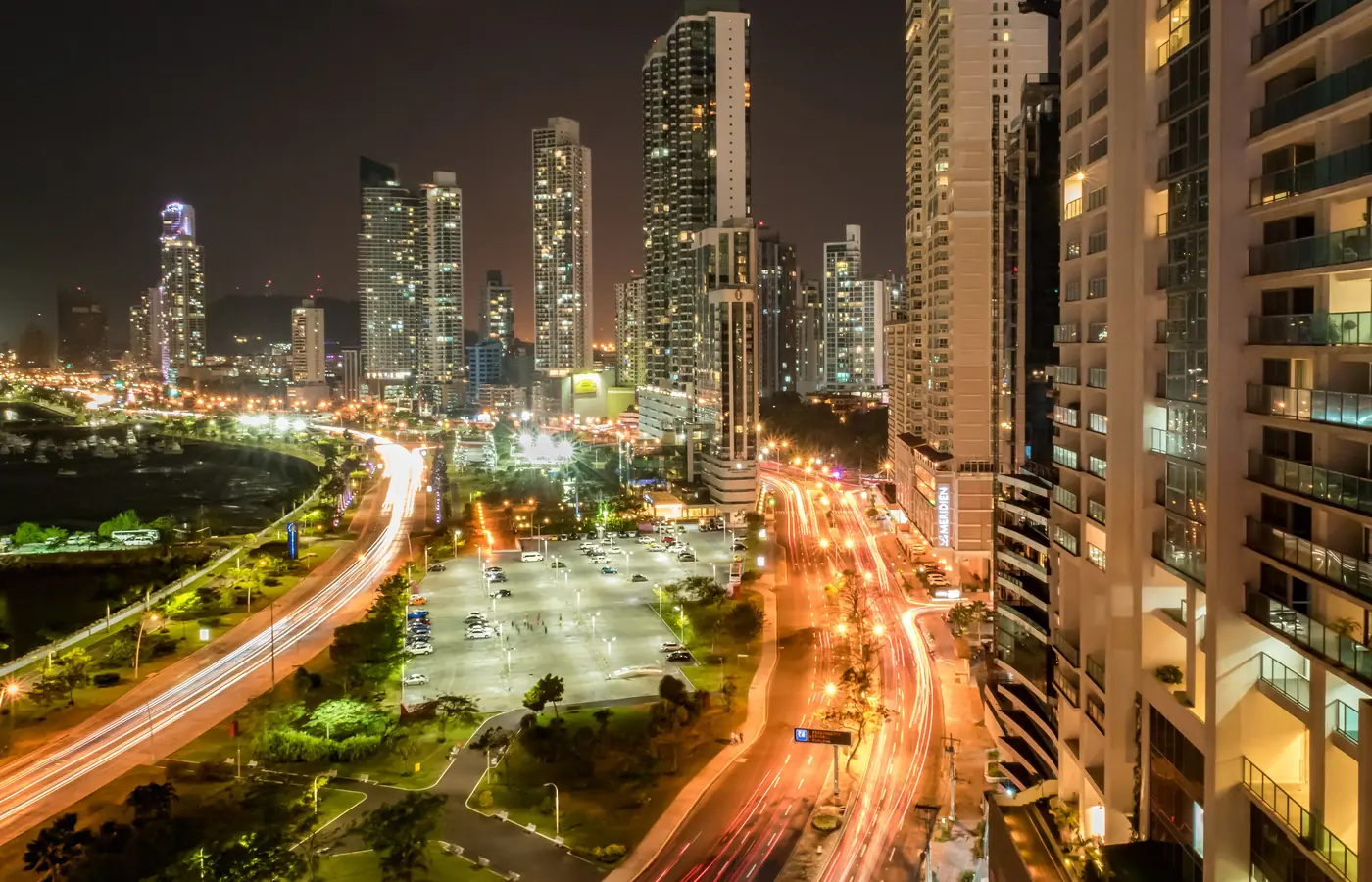
Beyond maritime commerce, the country draws visitors with its remarkable natural setting and dynamic capital. Panama City stands out for the dramatic contrast between its modern coastal high-rises and dense tropical rainforests, offering access to coral reefs, mountain highlands, and preserved colonial architecture all within a compact geography.
A short history
Indigenous groups, including the Cueva, Guna, and Ngäbe peoples, established settlements and trading routes across the isthmus long before European contact. In 1519, the Spanish governor Pedro Arias Dávila founded the original settlement of Panama City on the Pacific coast, making it the primary Pacific base for transporting silver and gold overland from South America to Atlantic treasure fleets.
In 1671, the Welsh privateer Henry Morgan sacked and burned the settlement, leaving behind stone ruins now preserved as Panama Viejo. Following the attack, Spanish authorities relocated the city a few kilometres southwest to a fortified rocky peninsula, establishing the walled district known today as Casco Viejo.
Panama gained independence from Spain in 1821 and joined the federation of Gran Colombia. After separating from Colombia to become an independent republic in 1903, the nation signed a treaty with the United States to finish building the interoceanic canal, which opened to international shipping in 1914.
The canal and surrounding lands returned to full Panamanian administration at the end of 1999. In the decades since, the capital has evolved into an international trade and banking centre, blending historic civic quarters with expansive public waterfronts and protected urban nature reserves.
Neighbourhoods
The historic heart of the capital is Casco Viejo, also called San Felipe, where quiet brick streets wind past restored colonial mansions, civic plazas, and stone churches. Across the bay, modern districts such as Punta Paitilla, Bella Vista, and San Francisco feature dense clusters of residential towers, paved pedestrian promenades, and the coastal highway of Avenida Balboa.
Further inland, El Cangrejo serves as a leafy, walkable neighbourhood planned in the mid-twentieth century, filled with public sculptures, community parks, and local bakeries. To the east, Costa del Este represents modern planned development, arranged with wide boulevards, corporate offices, and landscaped shoreline paths.
Food and drink
Panamanian cuisine combines Indigenous ingredients with Spanish, Afro-Caribbean, and Chinese influences, placing fresh seafood, root vegetables, and plantains at the centre of the table. Sancocho, a comforting chicken stew seasoned with the aromatic herb culantro and thickened with ñame root, is considered the national dish. Chilled sea bass ceviche, dressed simply with lime juice, diced onion, and hot pepper, is widely eaten along the coast. Fried plantains appear either as savoury, twice-fried patacones or sweet plátanos maduros, often alongside carimañolas, which are yucca fritters filled with seasoned minced beef. For drinks, the country produces celebrated highland Geisha coffee, as well as chicheme, a sweet local beverage made with boiled corn, milk, vanilla, and cinnamon.
Music, arts and culture
Traditional Panamanian culture is deeply tied to folk music and regional craftsmanship. Tamborito, a musical style built around hand-played drums and lyrical call-and-response singing, provides the rhythm for dancers dressed in pollera dresses adorned with handmade lace and men in tailored montuno shirts. The Atlantic coast features Congo traditions, which use satire, drumming, and dance to recount the history of escaped enslaved Africans. Indigenous artisans produce intricate Guna molas, which are multi-layered fabric panels sewn into geometric patterns, as well as fine baskets woven from palm fibres. Annual Carnival festivities bring the country together with energetic parades, brass bands, and public celebrations.
Top things to do
Watching ocean vessels transit the Miraflores Locks remains one of the primary experiences in the capital, supported by an observation centre and museum detailing canal history. Nearby, the Amador Causeway links four small islands using rock excavated during the canal's original construction; the causeway features pedestrian paths, panoramic views of passing ships, and the Biomuseo, designed by architect Frank Gehry to showcase how the rise of the isthmus changed global biodiversity.
Visitors can also walk among the masonry towers and foundations of Panama Viejo, the earliest European city on the Pacific coast of the Americas. In Casco Viejo, highlights include the Metropolitan Cathedral, Plaza de Francia, and the stone seawall known as Paseo de Las Bóvedas. For nature walks, the Metropolitan Natural Park offers forested hiking trails within the city limits where travellers regularly spot sloths, toucans, and howler monkeys.
Day trips
A short train ride on the historic Panama Canal Railway carries travellers through dense jungle to the Caribbean port of Colón and the stone ramparts of San Lorenzo Fort. An easy day trip north leads into Soberanía National Park, where the famous Pipeline Road draws nature enthusiasts to observe hundreds of tropical bird species in their native habitat. Those seeking sea breezes can take a boat trip out to the Pearl Islands in the Gulf of Panama to explore calm beaches, while the volcanic caldera of El Valle de Antón offers mountain trails, thermal springs, and rural artisan markets within a day's drive of the capital.
Before you go
Confirm entry rules and canal or park visiting information with official sources before you go, starting with the Government of Canada's Panama travel advice.
Other Central American starting points on this site include Costa Rica, Belize and Guatemala.
Best time to go
Panama has a tropical climate, generally with a drier period (often mid-December to April) and a wetter period (often May to November). The Caribbean and Pacific sides do not always share the same day's weather. The official Atlantic hurricane season applies to the Caribbean basin, though Panama often lies south of the main track; official notices still matter.
Getting there from Canada
Flights from Canada typically arrive at Tocumen International in Panama City, usually via a U.S. or regional hub. The canal, Casco Viejo and the modern downtown are a drive from the airport; Bocas del Toro or Boquete are separate domestic flights or long trips.
Official travel advice
Read the Government of Canada's Panama travel advice before you go. Rules and conditions can change.
Search flights, cars, tours and airport rides under Plan your trip below. Checkout is on the partner's site.