
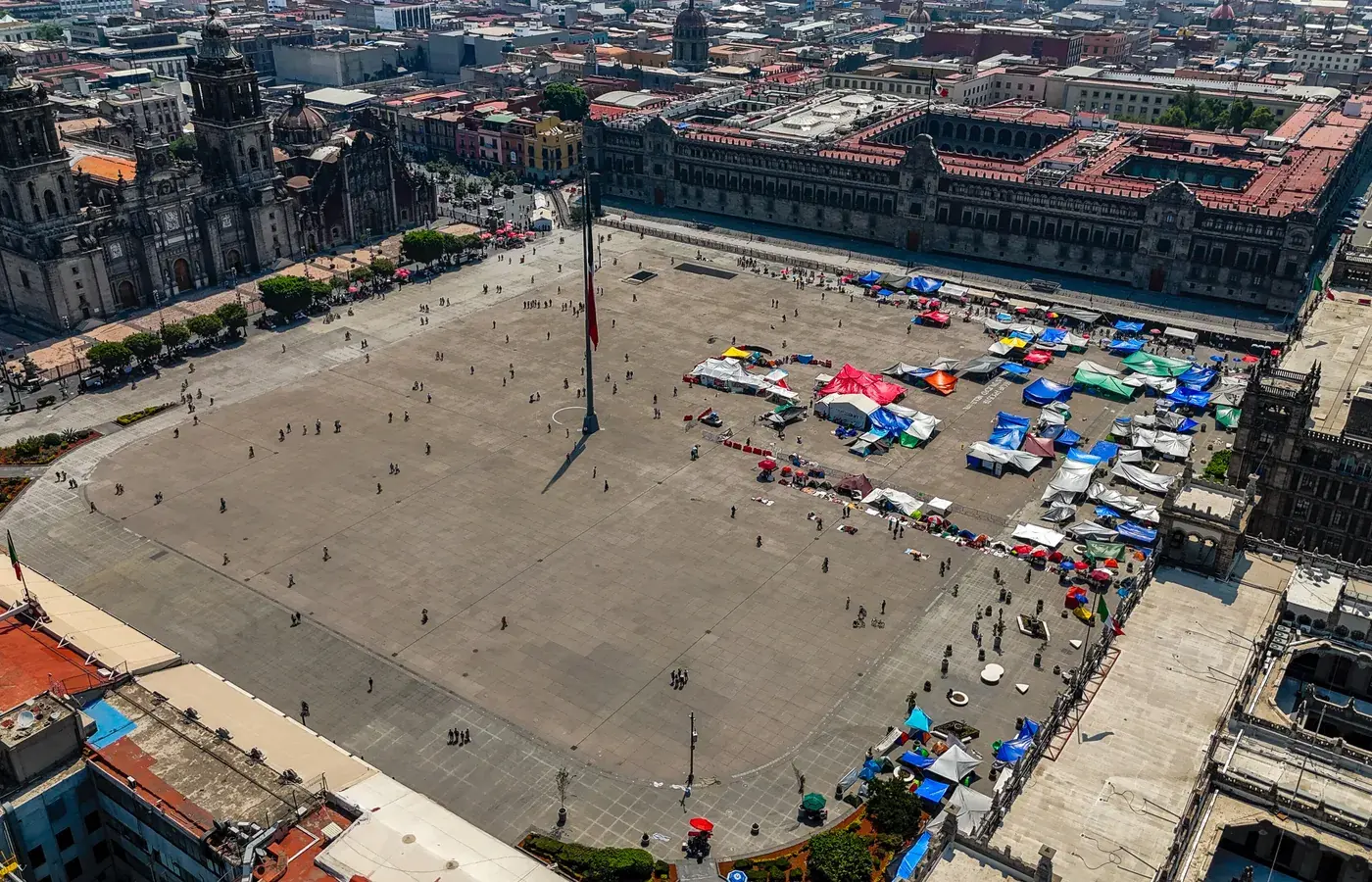
What Mexico City is known for
Mexico City is a high-altitude metropolis built across an ancient highland lake basin. It is widely known for its layered heritage, where pre-Hispanic ruins, Spanish colonial architecture, and modern urban design stand side by side. Broad avenues and vast urban parks anchor everyday life in a capital that feels both energetic and steeped in tradition.
Travellers come to explore its world-renowned museums, historic quarters, and distinct culinary traditions. The city rewards walking and observation, offering quiet residential courtyards just blocks away from busy public plazas, open-air markets, and grand government palaces.
A short history
The Mexica (Aztec) people founded their capital, Tenochtitlan, on an island in Lake Texcoco in 1325. Built with an intricate network of canals, raised causeways, and stone temples, it grew into one of the largest and most sophisticated urban centres in the Americas before European arrival.
Spanish forces led by Hernán Cortés conquered the city in 1521 following a prolonged siege. The colonial authorities drained much of the lake and constructed the capital of New Spain directly over the ruins of Tenochtitlan, using dismantled temple stones to build Catholic churches, administrative offices, and grand private residences around a central plaza.
After Mexico gained independence in 1821, the capital weathered decades of political upheaval, foreign interventions, and rapid 19th-century modernization. The Porfirio Díaz era introduced French-inspired boulevards and monuments that reshaped the urban landscape. Throughout the 20th century, rapid population growth and industrial expansion transformed Mexico City into a sprawling political, cultural, and economic hub.
Neighbourhoods
The Centro Histórico surrounds the vast Zócalo, bordered by the Metropolitan Cathedral, the National Palace, and the excavated ruins of the Templo Mayor. Just west, past the Alameda Central, lie Roma and Condesa, two adjacent districts known for their leafy medians, early 20th-century Art Deco architecture, and sidewalk dining. Nearby, Polanco features calm residential streets, upscale shops, and several prominent cultural institutions.
Further south, Coyoacán preserves the feeling of a quiet colonial town, complete with cobblestone lanes, shady plazas, and walled family properties. In the far south of the federal district, the canals of Xochimilco feature traditional flat-bottomed wooden boats called trajineras, offering a glimpse into the agricultural waterways that once covered the valley floor.
Food and drink
Dining in Mexico City reflects the culinary traditions of the entire republic, from simple street stalls to formal dining rooms. Staples include tacos al pastor made with marinated spit-roasted pork, chilaquiles simmered in green or red salsa, tlacoyos stuffed with beans, and fresh tamales steamed in corn husks. Local markets serve fresh fruit aguas frescas alongside hot atole and traditional Mexican hot chocolate spiced with cinnamon. Regional spirits such as mezcal and tequila are widely enjoyed alongside traditional fermented beverages like pulque, which dates to pre-Hispanic times.
Music, arts and culture
Art and music are woven deeply into the civic fabric of Mexico City. Massive public murals by 20th-century masters like Diego Rivera, David Alfaro Siqueiros, and José Clemente Orozco cover walls in public buildings and universities across town. Mariachi groups in traditional charro attire gather nightly in Plaza Garibaldi to perform classic ranchera songs for visitors and locals alike, while the white-marble Palacio de Bellas Artes hosts the Ballet Folklórico de México and national orchestral performances.
Top things to do
A visit to Chapultepec Forest allows travellers to explore one of the largest city parks in the Americas, home to Chapultepec Castle and the National Museum of Anthropology, which houses important pre-Columbian artefacts including the Aztec Sun Stone. Strolling down Paseo de la Reforma leads to the Angel of Independence monument, a central gathering point for national celebrations.
In the historic core, walking through the open-air excavation pits of the Templo Mayor provides a direct view into the Aztec structures lying beneath the colonial streets. South of the centre, travellers often tour the Casa Azul in Coyoacán, the former home and studio of artist Frida Kahlo, before taking a peaceful boat ride through the ancient canal network of Xochimilco.
Day trips
An easy day trip northeast of the capital leads to the archaeological zone of Teotihuacan, famous for the colossal Pyramid of the Sun, the Pyramid of the Moon, and the Avenue of the Dead. Travellers can also take a day trip south across the mountains to Cuernavaca, known for its warm climate and historic palaces, or continue on to the hillside silver-mining town of Taxco with its steep cobblestone streets. Southeast of the capital, the colonial city of Puebla makes for another rewarding excursion, celebrated for its ornate tiled architecture and rich culinary heritage.
Before you go
The city stands at high elevation. Confirm entry, health and document rules with official sources before you go, starting with the Government of Canada's Mexico travel advice. Hours and closures change, we don't list them here.
Beach starting points in Mexico on this site include Cancun, Puerto Vallarta and Cabo San Lucas.
Best time to go
The capital sits on a high plateau (about 2,200 metres). The drier, milder months are often November to April; May through September is the conventional rainy season, usually with afternoon showers. Summers are not a coastal heat; pace yourself in the altitude.
Getting there from Canada
Flights from Canada typically arrive at Mexico City's main international airport (Benito Juarez), including some nonstops from larger Canadian cities. Felipe Angeles (AIFA) is a second airport further out and is used less often by visitors heading downtown.
Official travel advice
Read the Government of Canada's Mexico travel advice before you go. Rules and conditions can change.
Search flights, cars, tours and airport rides under Plan your trip below. Checkout is on the partner's site.