
What Mont-Tremblant is known for
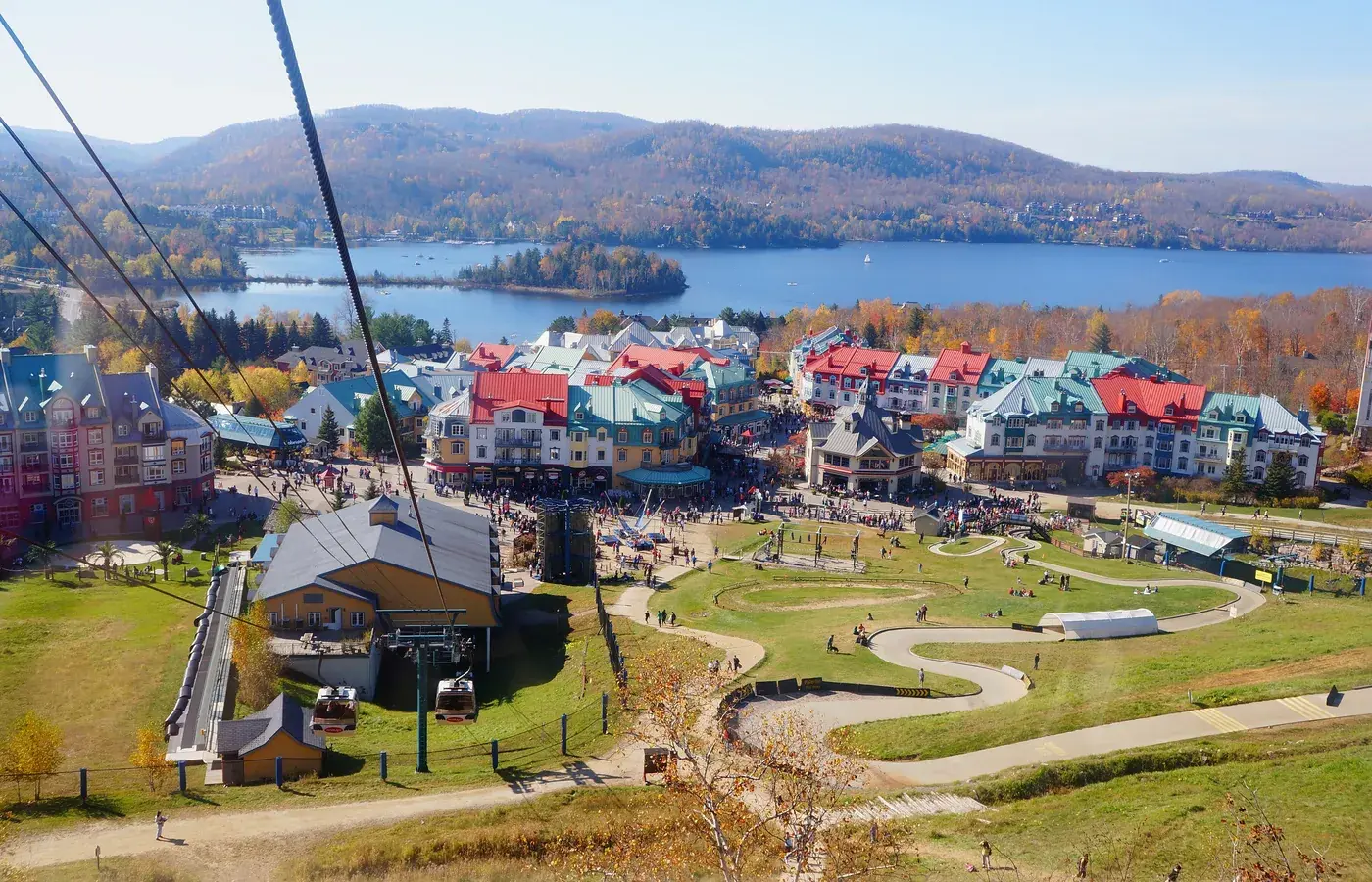
Mont-Tremblant is widely recognized across Eastern Canada as a mountain resort community set in the Laurentian Mountains. Outdoor recreation defines its character, anchored by a prominent peak, expansive forest cover, and a pedestrian resort village designed directly at the mountain base.
Downhill skiing and snowboarding bring winter visitors to its four mountain faces, while hiking, lake paddling, and road cycling draw crowds during the warm summer and fall foliage months. The contrast between the brightly painted pedestrian village and the quiet wilderness of the nearby provincial park shapes the area's appeal.
A short history
Long before European settlement, the area was part of the traditional territory of the Algonquin (Anishinaabe) people. They referred to the mountain as Manitonga Soutana, meaning the mountain of the spirits, in reference to rumblings heard from the mountain when nature was disturbed.
European settlers arrived in the late 19th century, supported by agricultural colonization efforts led by regional leaders like Curé Antoine Labelle. Forestry and small-scale farming formed the early backbone of the local economy, with the village of Saint-Jovite developing as a service hub along the railway.
Recreational skiing began to reshape the mountain in the 1930s. American entrepreneur Joe Ryan visited the peak to ski and subsequently purchased surrounding land, opening Mont Tremblant Lodge in 1939. The arrival of chairlifts and ski trains from Montreal established the mountain as a major winter destination.
In the early 1990s, extensive redevelopment created the colourful pedestrian village, drawing inspiration from traditional Quebec architecture. In 2000, the municipalities of Saint-Jovite, Mont-Tremblant, and neighbouring rural sectors amalgamated into the single City of Mont-Tremblant.
Neighbourhoods
The municipality is divided into distinct zones that each have a different character. The pedestrian resort village sits at the base of the ski hill, featuring car-free cobblestone paths, multi-coloured buildings, open plazas, and trailheads. A short distance away along the lake, the Old Village offers a quieter, residential atmosphere with heritage wooden cottages, local inns, and access to the lakefront.
Further south along Route 117, Saint-Jovite serves as the traditional downtown for the permanent community. Its main street features red-brick municipal buildings, local supply shops, and century-old homes, preserving a classic small-town Quebec feel separate from the mountain resort.
Food and drink
Dining in the region centres on traditional Québécois cooking and hearty mountain fare. Menus routinely feature tourtière, pea soup, and poutine made with fresh local cheese curds, alongside regional game meats like venison and duck. Spring brings traditional maple syrup production, while local microbreweries produce regional ales crafted with spruce tips or wild berries harvested across the Laurentians.
Music, arts and culture
Live music is a central element of the summer season, led by the Mont-Tremblant International Blues Festival, which stages outdoor concerts across the village plazas. Visual arts are also prevalent throughout the town, with public galleries and workshops displaying the work of Laurentian landscape painters, sculptors, and traditional woodcarvers inspired by the surrounding boreal forest.
Top things to do
Outdoor activities run throughout the seasons across the mountain and surrounding lakes. In winter, skiers and snowboarders ride lifts across multiple faces of the peak, while summer visitors can ride the panoramic gondola or hike steep trails leading to the summit lookout. At the foot of the hill, Lac Tremblant provides calm waters for swimming, kayaking, and paddleboarding.
Parc national du Mont-Tremblant, a protected provincial park, sits adjacent to the municipality and offers an extensive trail system. Hikers can head up to the Roche lookout for views over the valley, canoe the winding Diable River, or climb the via ferrata route along the Vache Noire cliff face. Cycling is also popular along the P'tit Train du Nord, a linear park converted from a former railway line that passes through the city.
Day trips
Several interesting Laurentian towns are within an easy day trip of Mont-Tremblant. Val-David attracts visitors with its active visual arts community, artisan markets, and public climbing crags. Saint-Sauveur offers a classic ski-town centre with an extensive water park and factory outlet shopping, while the nearby Rouge River valley provides scenic secondary roads popular for river paddling and countryside touring.
Before you go
Trail, lift and road conditions change with the season, check official sources before you go. For general travel advice, see the Government of Canada's Travel advice and advisories.
Nearby starting points on this site include Montreal, Ottawa and Quebec City.
Best time to go
Winter is the ski season in the Laurentian Mountains (dates depend on snow and official hill notices). Summer and early fall are used for hiking, the lake and the pedestrian village; fall colour is a regional draw, with timing that changes each year. Spring can be a quieter shoulder.
Getting there from Canada
Most visitors drive from Montreal (about an hour and a half to two hours, depending on the road and weather) or from Ottawa. Montreal-Trudeau is the usual airport. Winter driving in the Laurentians needs a real plan for snow and light.
Official travel advice
Travelling inside Canada does not use a country travel-advice page. Use official park, ferry and highway notices where they are mentioned above.
Search flights, cars, tours and airport rides under Plan your trip below. Checkout is on the partner's site.