
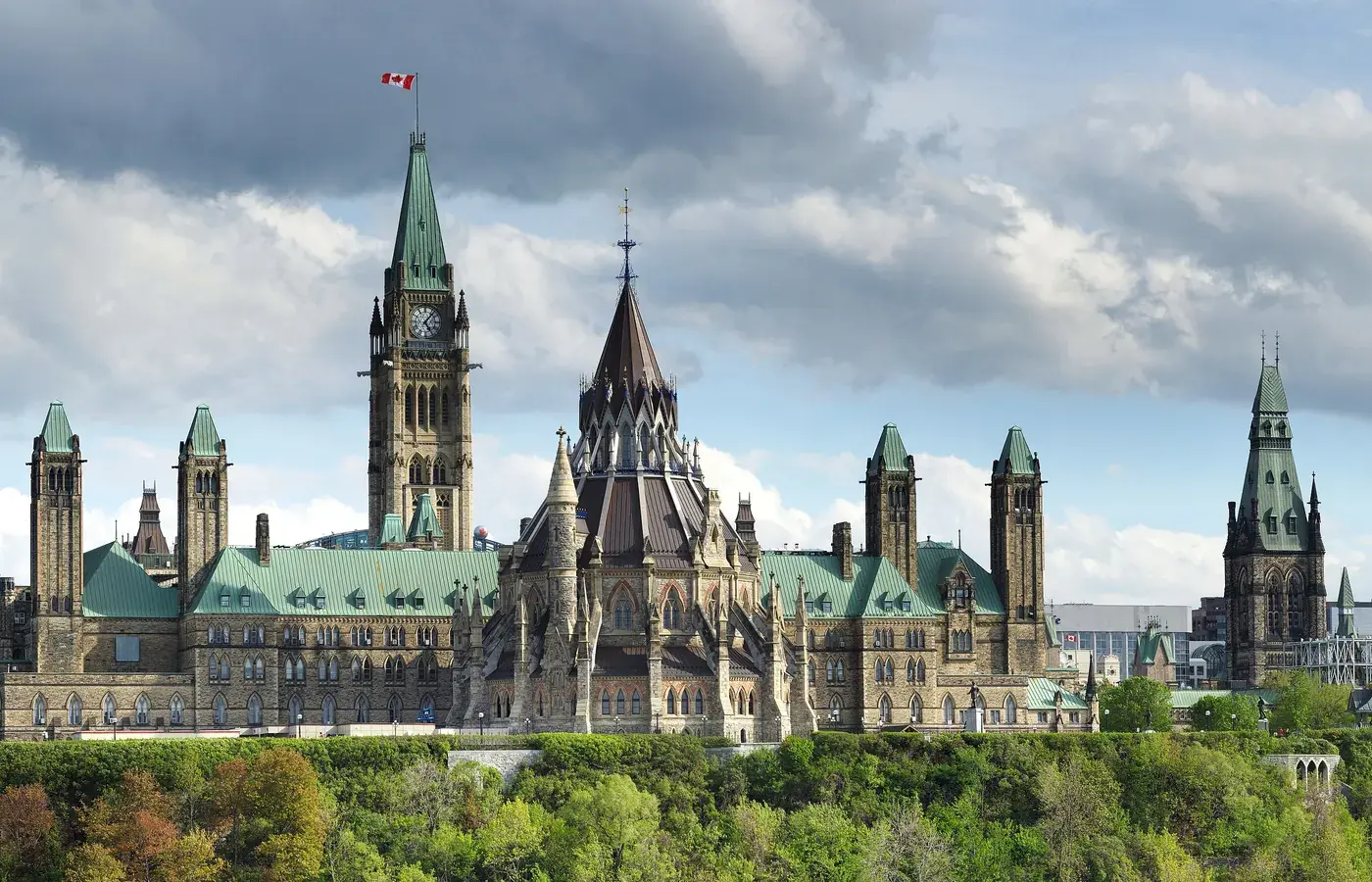
What Ottawa is known for
Ottawa is Canada's capital and political heart, defined by sandstone government buildings, grand national monuments, and tree-lined waterways. Set along the southern bank of the Ottawa River directly across from Quebec, the city blends English and French heritage into everyday civic life. It has the calm, orderly presence of a national centre while remaining approachable and easy to explore on foot.
Visitors are drawn by the city's parks, extensive multi-use paths, and world-class cultural institutions. The Rideau Canal winds directly through the downtown core, offering green pathways in the warmer months and a frozen ribbon for ice skating in the depths of winter. Ceremonial guard parades, national museums, and tranquil river lookouts give Ottawa a distinct identity among Canadian cities.
A short history
The Ottawa River valley has been the homeland of the Algonquin Anishinaabe people for thousands of years. They travelled and traded along the Kichi Sībi, the waterway that later brought European explorers and fur traders into the region during the 1600s.
Permanent European settlement expanded during the late 1820s with the construction of the Rideau Canal, supervised by Lieutenant-Colonel John By of the Royal Engineers. The settlement was initially called Bytown. Driven by the white pine timber trade, it quickly developed into a rough, energetic lumber town with timber rafts floating down the river toward Montreal and Quebec City.
In 1855, Bytown was incorporated as the city of Ottawa. Queen Victoria chose it as the capital of the Province of Canada in 1857, a compromise between French- and English-speaking factions that placed the government safely away from the American border. The designation carried through to Confederation in 1867, making Ottawa the capital of the new Dominion of Canada.
During the mid-20th century, urban planner Jacques Gréber devised a master plan that cleared out heavy industrial rail lines from the downtown core. The plan introduced greenbelts, wide scenic parkways, and landscaped shorelines, creating the open, monument-filled capital that travellers encounter today.
Neighbourhoods
The downtown core and Centretown form the city's civic centre, anchored by the stone towers of Parliament Hill, the heritage commercial streets of the ByWard Market, and rows of Victorian red-brick townhouses. Just south, along the banks of the canal, the Glebe features quiet residential streets lined with mature maples, century-old porches, and a steady stream of walkers heading toward Lansdowne Park.
West of downtown, neighbourhoods such as Hintonburg and Westboro bring a creative, community-focused energy to the city. These districts feature independent craft producers, small galleries, and local markets along Wellington Street West and Richmond Road. Just across the bridges in Gatineau, Quebec, the atmosphere shifts to French-Canadian bistros, riverside promenades, and panoramic views looking back at the Parliament buildings.
Food and drink
Ottawa's food culture reflects its geographic position between rural Ontario and francophone Quebec, alongside strong immigrant culinary traditions. Local bakeries and market stalls serve hot, hand-stretched fried dough pastries topped with cinnamon, sugar, and lemon juice, a beloved regional sweet. Shawarma has become a signature comfort food across the city, introduced by a large Lebanese-Canadian community. The proximity to Quebec brings fresh cheese curds and classic poutine to neighbourhood chip stands, while the surrounding Ottawa Valley supplies fresh maple syrup, seasonal produce, and locally brewed craft beer to tavern tables.
Music, arts and culture
As the national capital, Ottawa hosts significant cultural festivals and institutions throughout the year. The National Arts Centre presents orchestra, dance, and theatre in both official languages across multiple stages. In spring, the Canadian Tulip Festival colours major public parks with hundreds of thousands of blooms, honouring the historic connection between Canada and the Netherlands. Summer brings outdoor celebrations such as the TD Ottawa Jazz Festival and Ottawa Bluesfest on the river flats, while winter features Winterlude, with outdoor ice sculptures and seasonal celebrations celebrating the northern climate.
Top things to do
A visit to Ottawa generally begins at Parliament Hill, where visitors can walk the grounds, admire the Neo-Gothic architecture, and look out over the river from behind the Peace Tower. The Rideau Canal offers paths for cycling and walking that stretch south from the historic stone locks at the river through downtown and past Dows Lake. Across the canal, the ByWard Market square provides an open-air public space surrounded by food vendors, buskers, and open squares.
The city's collection of national museums is unmatched in Canada. The National Gallery of Canada presents historic, contemporary, and Indigenous works beneath soaring glass pavilions. Just across the Alexandra Bridge in Gatineau, the Canadian Museum of History houses the world's largest indoor collection of totem poles and detailed exhibits on the human history of Canada. Other notable stops include the Canadian War Museum, the Canada Science and Technology Museum, and the Canada Aviation and Space Museum.
Day trips
Just across the river in Quebec, Gatineau Park offers thousands of hectares of protected wilderness with hiking trails, scenic lookouts, and cross-country ski routes. Historic mill towns in the surrounding countryside, such as Almonte and the stone-built village of Merrickville along the Rideau waterway, make for an easy day trip by car to explore heritage architecture and local craft shops. For those interested in regional history, the Upper Canada Village living-history site along the St. Lawrence River is also within a day's drive.
Before you go
Hours, closures and event schedules change, check official sources before you go. For travel advice, start with the Government of Canada's Travel advice and advisories.
Nearby starting points on this site include Toronto, Montreal and Quebec City.
Best time to go
Late spring through fall is comfortable for the canal, Parliament and path walks. Winter is cold, and the Rideau Canal Skateway opens only when ice is officially thick enough (dates change every year). Summer festivals are frequent; check official event pages.
Getting there from Canada
Most visitors from other parts of Canada arrive at Ottawa International, by VIA Rail into the downtown station, or by road. The airport is south of the city; downtown is a short drive or bus ride.
Official travel advice
Travelling inside Canada does not use a country travel-advice page. Use official park, ferry and highway notices where they are mentioned above.
Search flights, cars, tours and airport rides under Plan your trip below. Checkout is on the partner's site.