
What Roatán is known for
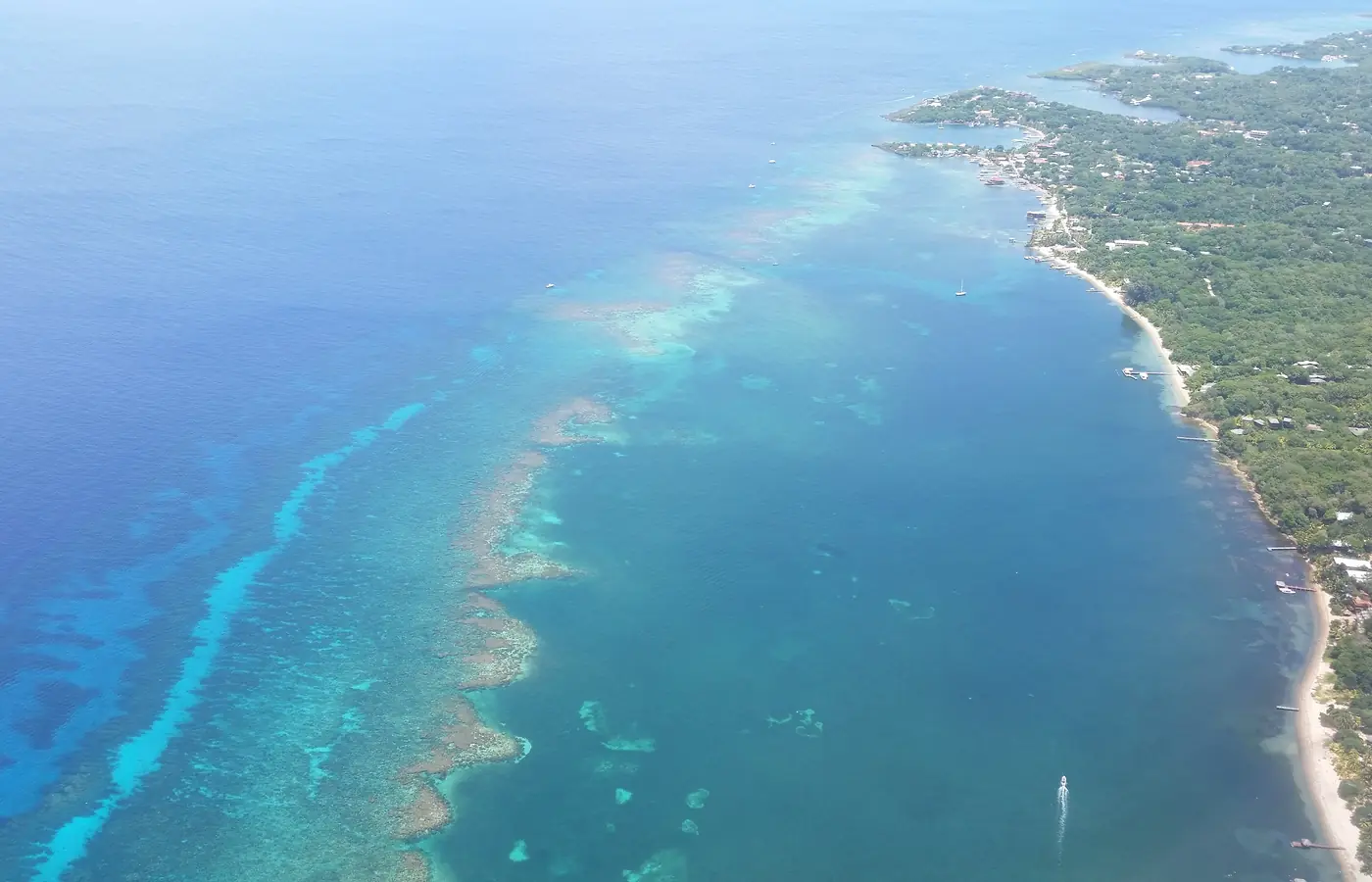
Roatán is the largest of Honduras's Bay Islands, resting in the western Caribbean Sea along the southern edge of the Mesoamerican Barrier Reef. Divers and snorkelers travel from all over to explore its clear coastal waters, where coral gardens, reef drop-offs, and sea life lie remarkably close to shore.
Beyond the reef, the island carries a distinct character shaped by Indigenous, Afro-Caribbean, British, and mainland Honduran influences. Hilly interiors covered in tropical foliage lead down to white-sand beaches, creating an easygoing pace that appeals to travellers seeking natural scenery and quiet coastal life.
A short history
Indigenous groups, most notably the Pech, lived on Roatán before European contact. Christopher Columbus made landfall in the Bay Islands in 1502 during his fourth voyage, beginning a period of Spanish exploration that disrupted Indigenous communities through forced labour and displacement.
By the seventeenth century, Roatán's secluded coves and deep natural harbours drew English, French, and Dutch buccaneers who used the island as a base to intercept Spanish treasure ships. Great Britain and Spain contested control of the territory for over a century, building temporary fortifications and skirmishing for trade dominance.
A critical turning point occurred in 1797, when the British military deported several thousand Garifuna people from the Caribbean island of Saint Vincent to Roatán. While many eventually crossed to the Central American mainland, the community of Punta Gorda on Roatán remains the oldest Garifuna settlement in Central America. Britain formally transferred sovereignty of the Bay Islands to Honduras in 1859.
Fishing, fruit trade, and boatbuilding formed the backbone of the island's economy for much of the twentieth century. The subsequent establishment of marine reserves and conservation efforts helped turn the island into an internationally recognized centre for eco-conscious travel.
Neighbourhoods
Coxen Hole functions as the island's municipal capital and main transport hub, featuring administrative offices, open-air markets, and everyday island commerce. West End is a walkable coastal village with a relaxed feel, where low-rise wooden buildings line the water of Half Moon Bay.
At the island's western tip, West Bay is known for its wide stretch of soft sand and calm, clear water that opens directly onto shallow coral reefs. The eastern side of the island offers a much quieter perspective; settlements like Oak Ridge feature traditional wooden homes built on stilts over the water, connected by boat docks and mangrove channels.
Food and drink
Roatán's cuisine combines fresh coastal seafood with traditional Honduran comfort food. Whole fried snapper served with coconut rice, red beans, and fried plantains is an everyday staple across the island. Travellers quickly discover baleadas, warm flour tortillas filled with refried beans, hard cheese, and additions like scrambled eggs or avocado. Coconut milk frequently flavours local stews and soups, including the traditional sopa de caracol, while drinks made from passion fruit, tamarind, and lime offer cool refreshment in the tropical climate.
Music, arts and culture
The island's cultural identity is expressed through music, maritime traditions, and a multilingual population that speaks both English and Spanish. In Punta Gorda, the Garifuna culture remains strong, celebrated through drumming, traditional storytelling, and the rhythmic punta dance. Local artisans carve household goods and decorative items from native hardwoods, and community gatherings frequently celebrate the shared seafaring history that unites the island's diverse heritage.
Top things to do
Snorkelling and diving within the Roatán Marine Park are central to any visit, with shallow coral reefs easily reached from the sand at West Bay. Travellers can swim among parrotfish, rays, and sea turtles while observing marine conservation efforts firsthand along the protected barrier reef.
On land, the Carambola Botanical Gardens near Sandy Bay provides shaded trails through native rainforest and fruit groves, ending at a hilltop lookout over the ocean. On the eastern end of Roatán, visitors can arrange a ride in a traditional wooden dory through the mangrove canals of Oak Ridge, gaining insight into the island's historical boat-based transport networks.
Day trips
A short ferry crossing connects Roatán to Utila, a smaller Bay Island known for its flat terrain, quiet harbour village, and expansive coral reefs. Travellers can also take a boat ride south to the Cayos Cochinos archipelago, a protected biological reserve of small cays and clear waters where traditional Garifuna fishing communities welcome daytime visitors. To the east, the island of Guanaja offers an easy boat journey for those interested in quiet beaches, pine-covered ridges, and freshwater waterfalls.
Before you go
Confirm entry rules and marine-park access with official sources before you go, starting with the Government of Canada's Honduras travel advice.
Other Central American starting points on this site include Belize, Costa Rica and Guatemala.
Best time to go
The Bay Islands are tropical. The drier months are often February to June or so; fall can be wetter. The official Atlantic hurricane season is 1 June to 30 November. Read official advice for Honduras, including any regional notes, not only for the islands.
Getting there from Canada
Flights from Canada typically reach Roatan (Juan Manuel Galvez) via a U.S. or regional hub, sometimes with a change in San Pedro Sula or mainland Honduras. West End, West Bay and Coxen Hole are then a drive or taxi ride.
Official travel advice
Read the Government of Canada's Honduras travel advice before you go. Rules and conditions can change.
Search flights, cars, tours and airport rides under Plan your trip below. Checkout is on the partner's site.