What Central America is known for
Central America is the narrow isthmus that links Mexico to South America, with the Pacific Ocean on one side and the Caribbean Sea on the other. For such a slender strip of land, it holds remarkable variety: volcanic highlands, cloud forests, lowland rainforests, colonial-era towns, and hundreds of kilometres of coastline facing two very different seas.
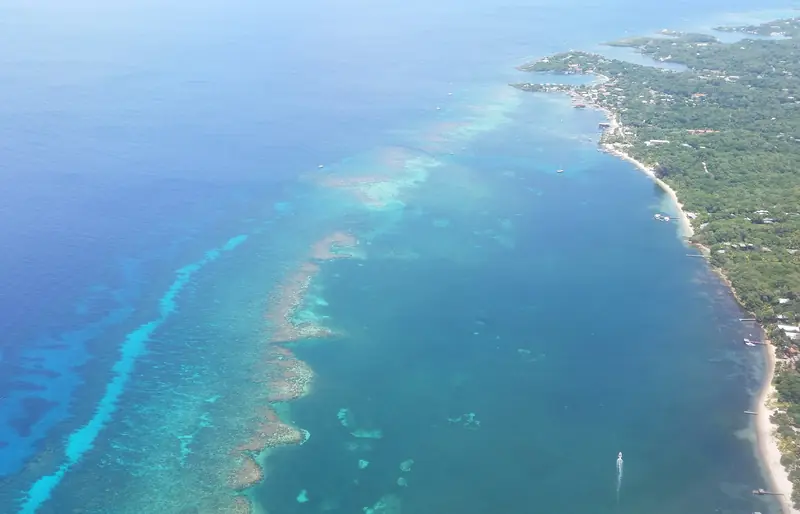
Canadian travellers know the region best as a warm-weather escape, but it rewards more than a beach week. Costa Rica is widely recognized for its national parks and protected rainforest, Belize for its Caribbean barrier reef, Panama for the canal that joins the Atlantic and Pacific, and Guatemala for highland lakes and Maya heritage. Roatán, in the Bay Islands of Honduras, sits near the same Caribbean reef system that draws divers and snorkellers to Belize.
A short history
The region has been home to Indigenous peoples for thousands of years, and it formed part of the world of the Maya civilization, whose cities, writing and astronomy flourished across what are now Guatemala, Belize and western Honduras. Sites such as Tikal in Guatemala and Caracol in Belize stand among the best-known remains of that era. Other Indigenous nations, past and present, have shaped every part of the isthmus, and their languages and traditions remain part of daily life.
Spanish colonization began in the early sixteenth century, and most of the region was governed from the Captaincy General of Guatemala. Independence came in the 1820s, followed by decades in which the modern nations gradually took shape; Panama separated from Colombia in 1903, and Belize, long a British colony, became independent in 1981. The Panama Canal, opened in 1914, transformed world shipping and remains one of the most significant engineering works ever built.
Places to start
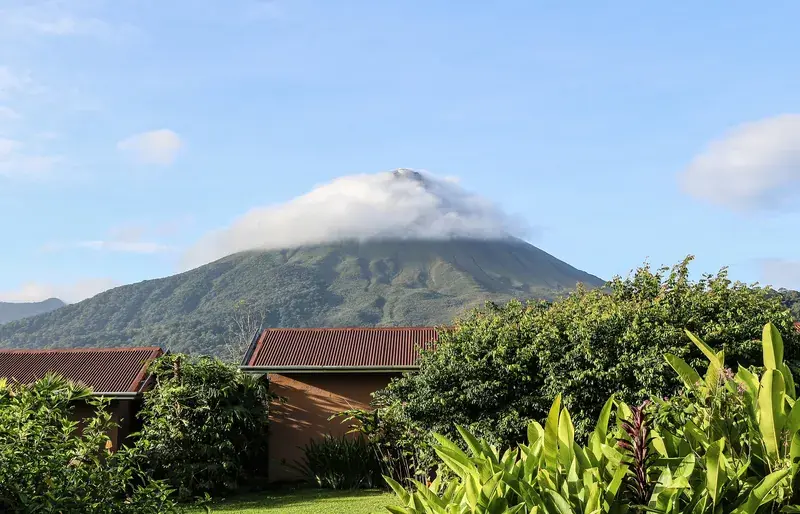
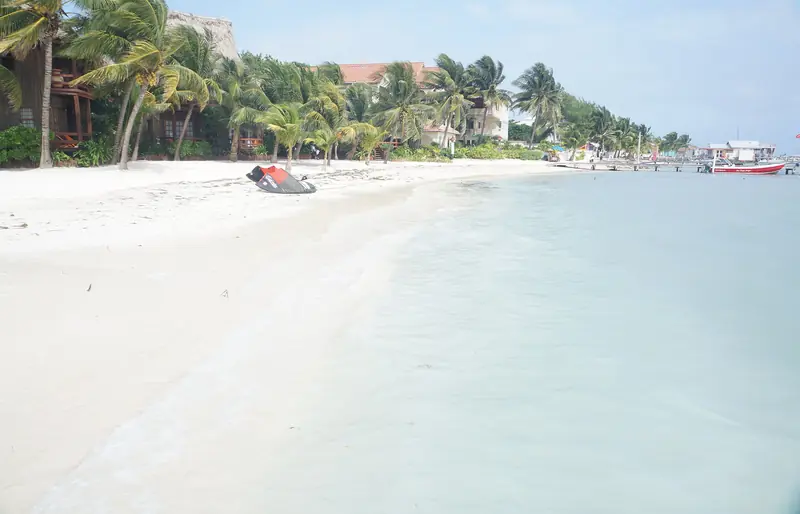
Because each country is distinct, with its own entry rules and rhythms, most travellers do well to pick one base rather than try to see everything at once. In Costa Rica, common starting points include the Arenal volcano area, the Monteverde cloud forest and the beaches of Guanacaste. Belize pairs reef time around Ambergris Caye or Caye Caulker with inland Maya sites and rainforest lodges, while Roatán offers an easygoing island base for snorkelling and diving on the Mesoamerican reef.
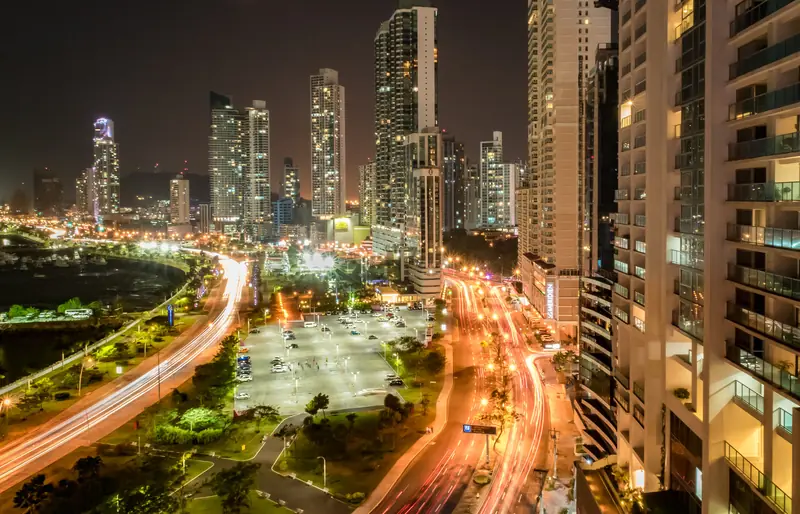
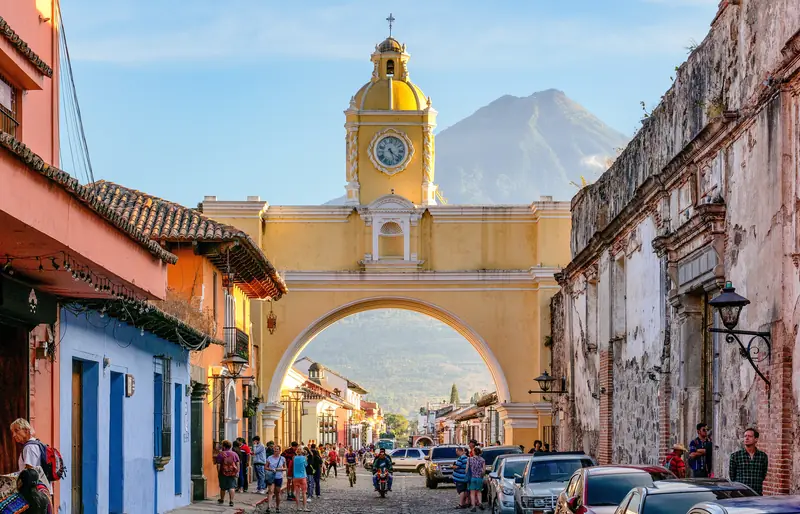
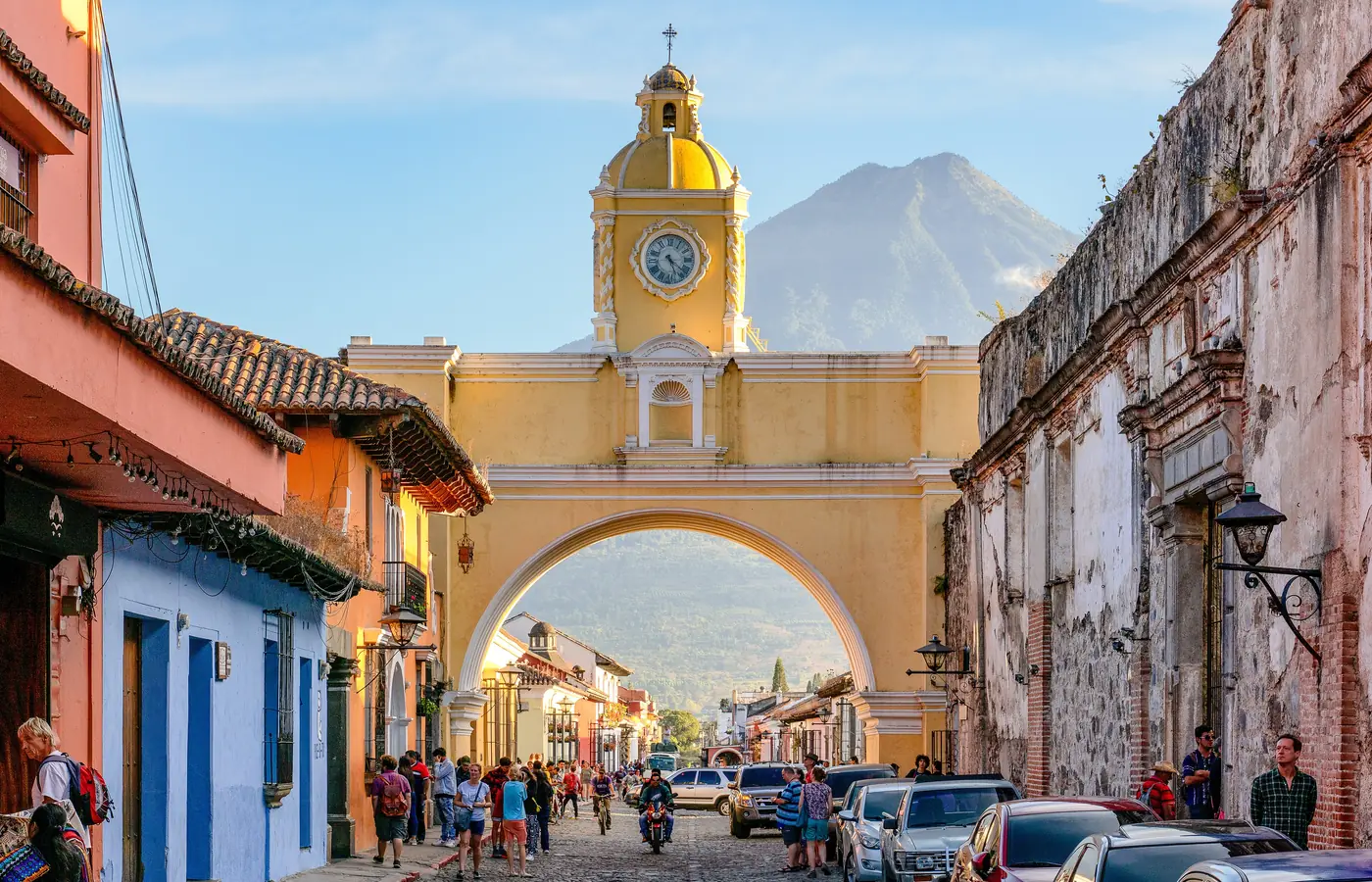
In Guatemala, the colonial streets of Antigua, the highland shores of Lake Atitlán and the Maya city of Tikal anchor many first trips. Panama City mixes a modern skyline with the historic Casco Viejo district and easy access to the canal's locks and nearby rainforests. Wherever you land, check official park and reef rules before you go, since some sites require reservations or have visitor limits.
Food and culture
Food across the isthmus shares a foundation of corn, beans, rice and fresh seafood, with each country adding its own character. Gallo pinto is a daily staple in Costa Rica, pupusas in neighbouring El Salvador, and rice and beans cooked in coconut milk along the Caribbean coasts of Belize, Honduras and Panama. Guatemala's highland markets overflow with colour and textiles, and Maya languages and traditions remain strong there. Music, festivals and religious celebrations fill the calendar in every country, and a basic effort with Spanish goes a long way, though English is the official language of Belize and is widely spoken on the Bay Islands.
When to go
Much of the region has a drier season roughly from December to April and a wetter season from May to November, which makes winter and early spring popular with Canadians escaping the cold. The Caribbean side of these countries often follows a different rain pattern, so a cloudy week on one coast can mean sunshine on the other. Hurricane season in the Atlantic basin runs officially from June to November and matters more for Caribbean islands such as Roatán than for Pacific slopes. Weather varies year to year, so check current forecasts and official seasonal information before you travel.
Before you go
Hours, weather and entry rules change; check official sources before you go. For travel advice, start with the Government of Canada's Travel advice and advisories.
Related region guides: Mexico · Caribbean · United States.
Related tips: Winter sun escapes from Canada · All-inclusive basics.
Best time to go
Many highland and Pacific-side destinations have a drier period roughly from December to April and a wetter period from May to November, but the Caribbean coasts of these countries can follow a different rain pattern. Official Atlantic hurricane-season dates (1 June to 30 November) matter more for some Caribbean coasts and islands (such as Roatan) than for southern Pacific slopes.
Getting there from Canada
Flights from Canada typically reach the main capitals or leisure airports (San Jose, Liberia, Panama City, Guatemala City, Belize City, Roatan) via a U.S. or regional hub, with some nonstops to Costa Rica or other gateways in season. Cross-border road trips are a separate plan with official border rules.
Official travel advice
Use the Government of Canada travel advice for each country you will visit (Belize, Panama, Guatemala, Honduras, Costa Rica and their neighbours are listed separately on travel.gc.ca).
Search flights, cars, tours and airport rides under Plan your trip below. Checkout is on the partner's site.